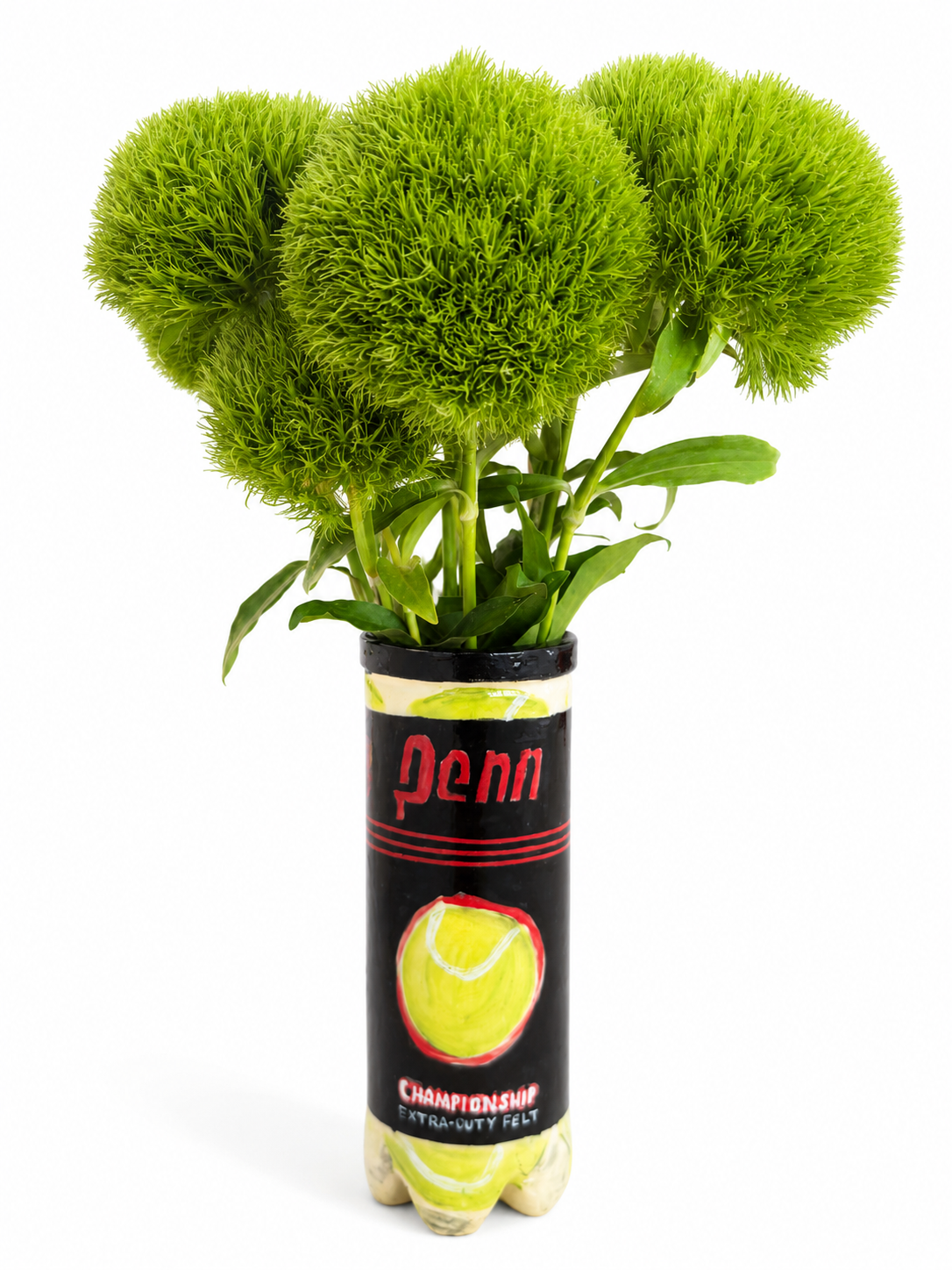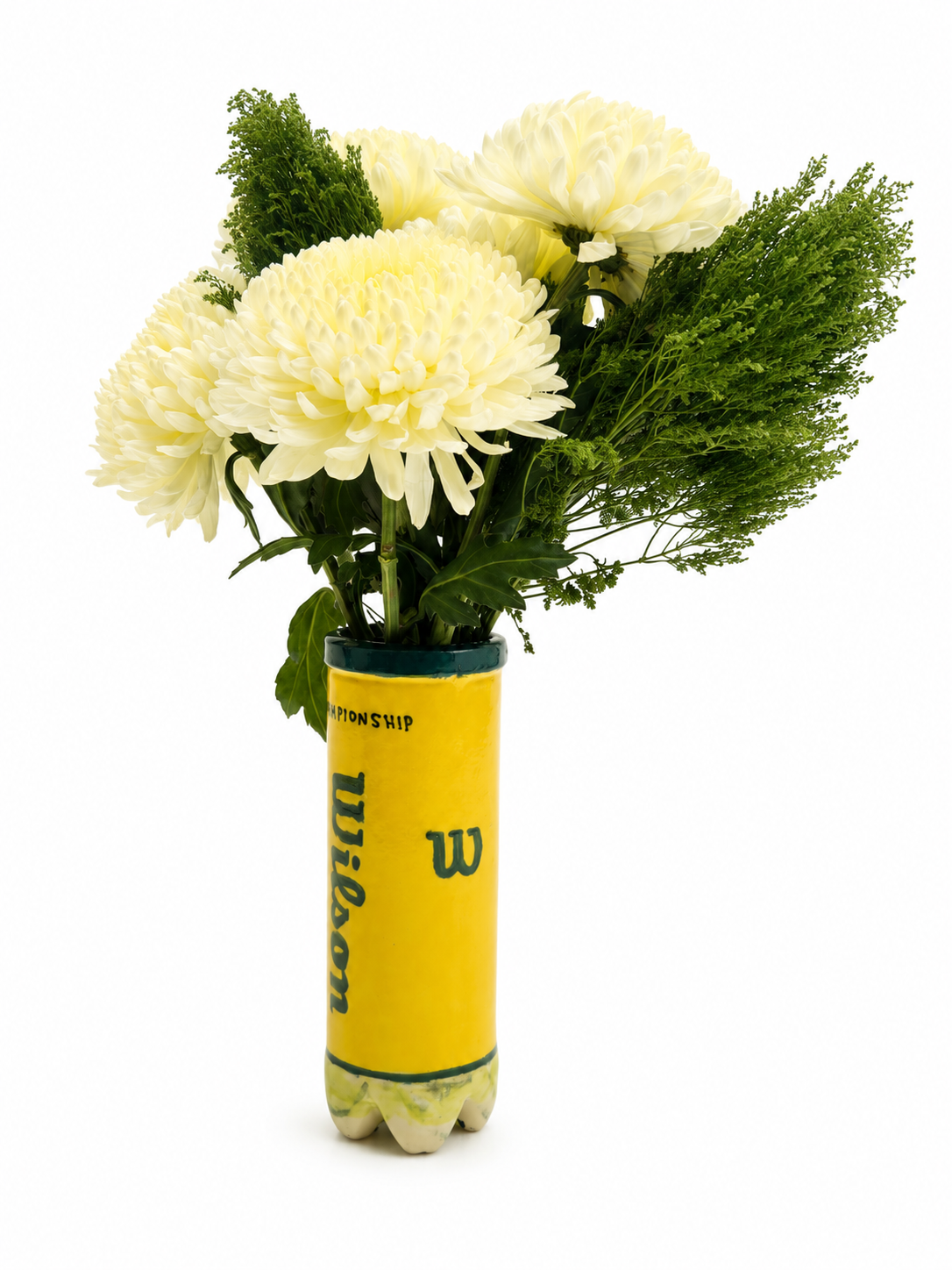


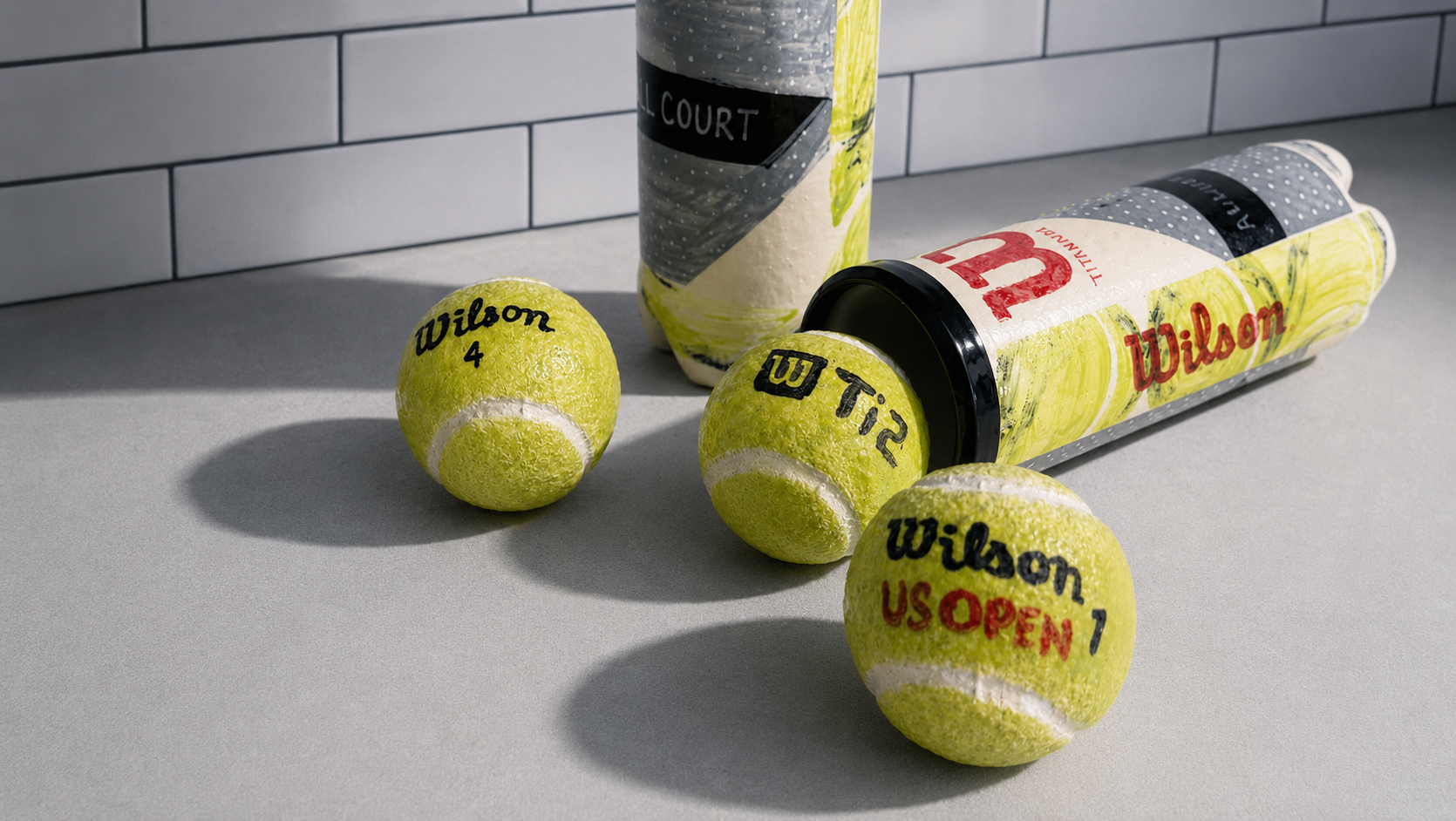
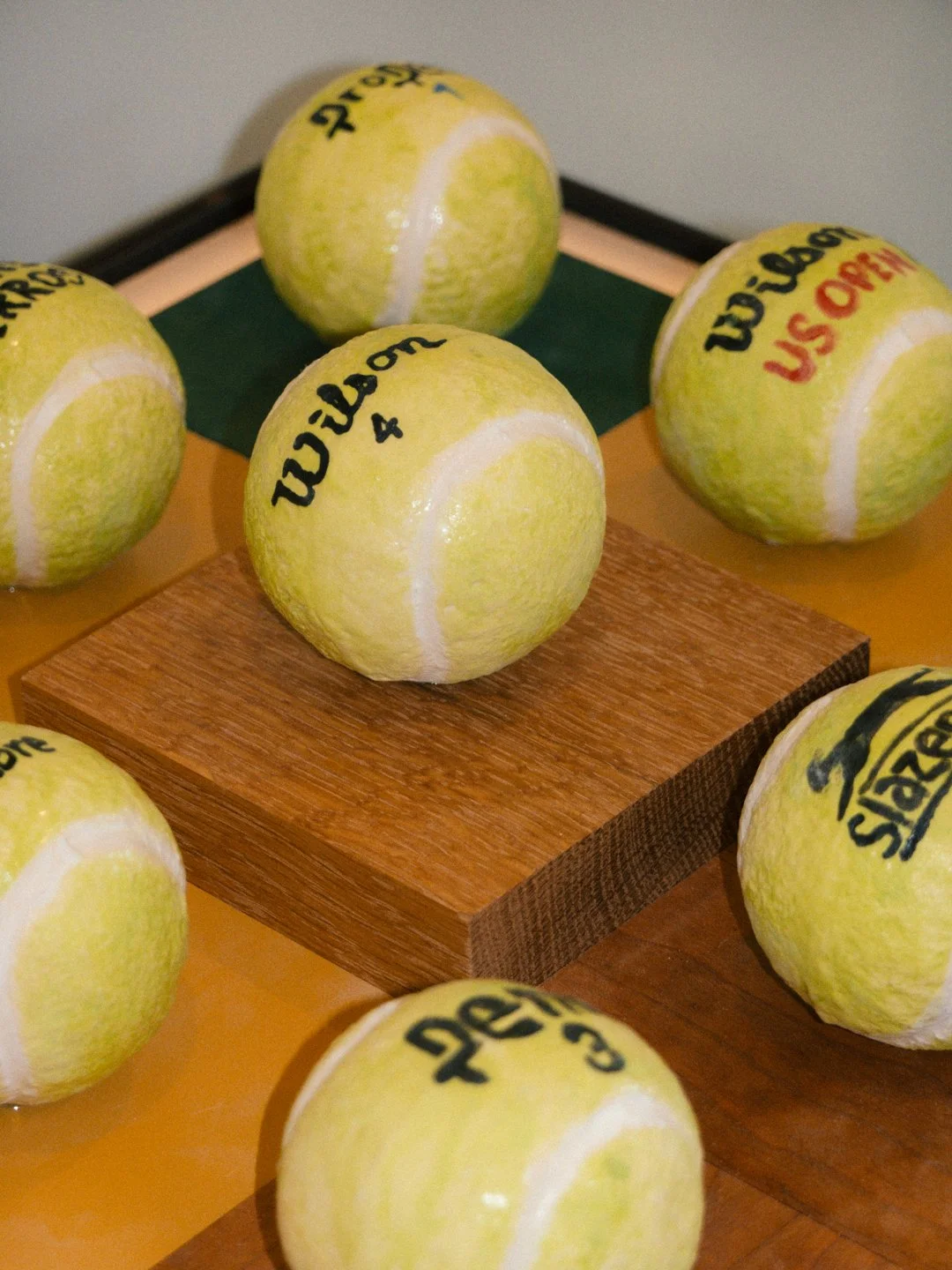
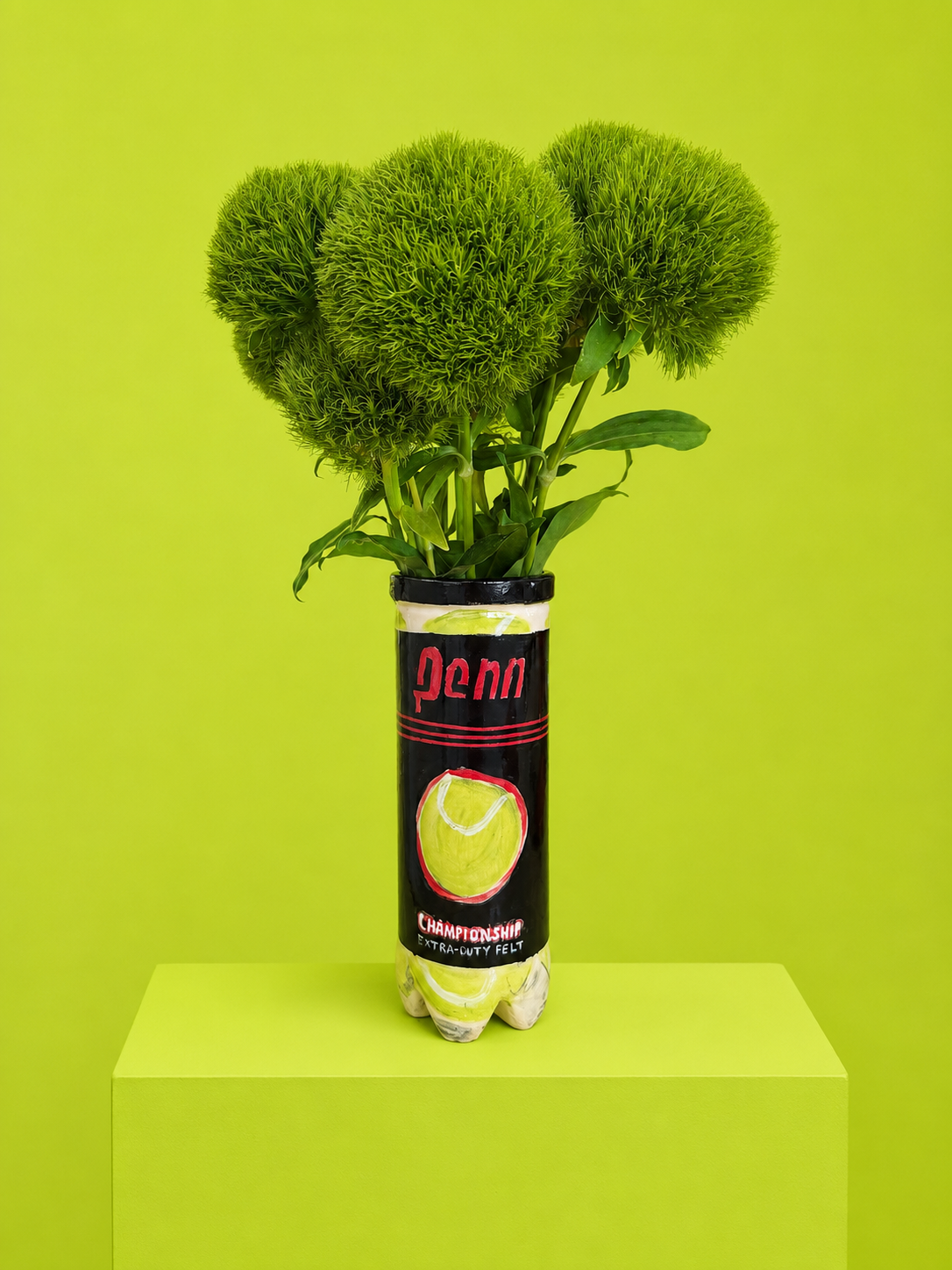
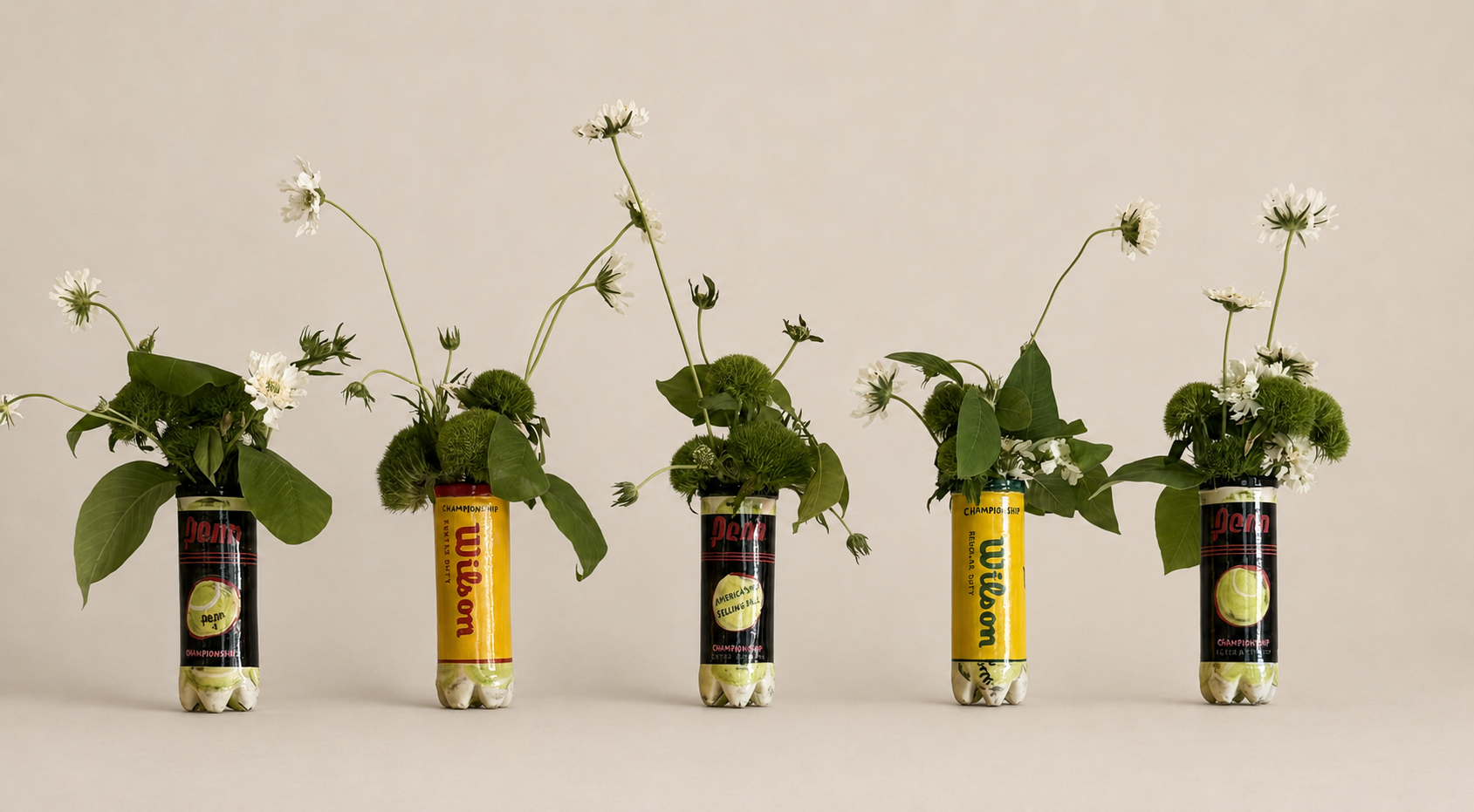

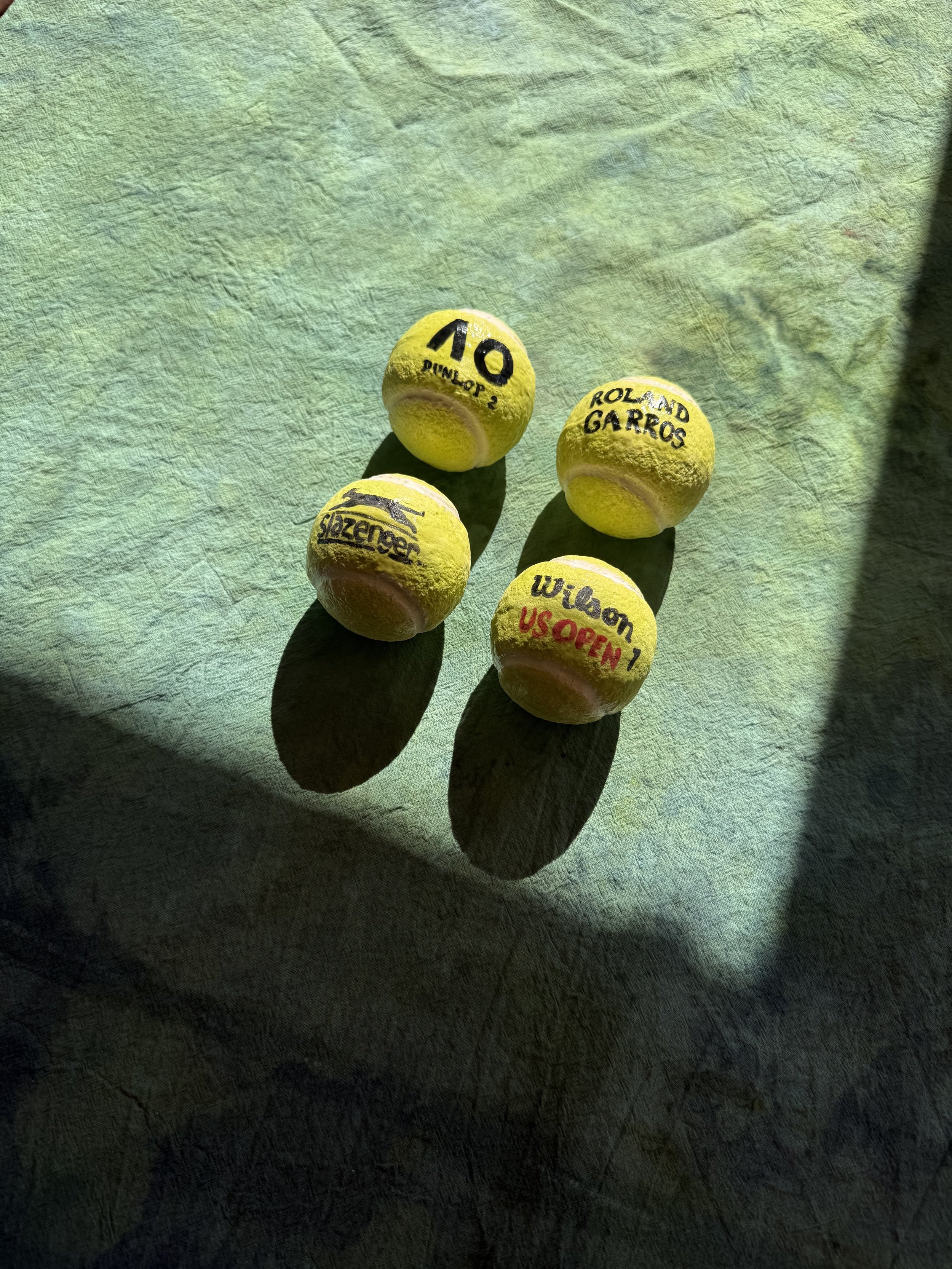
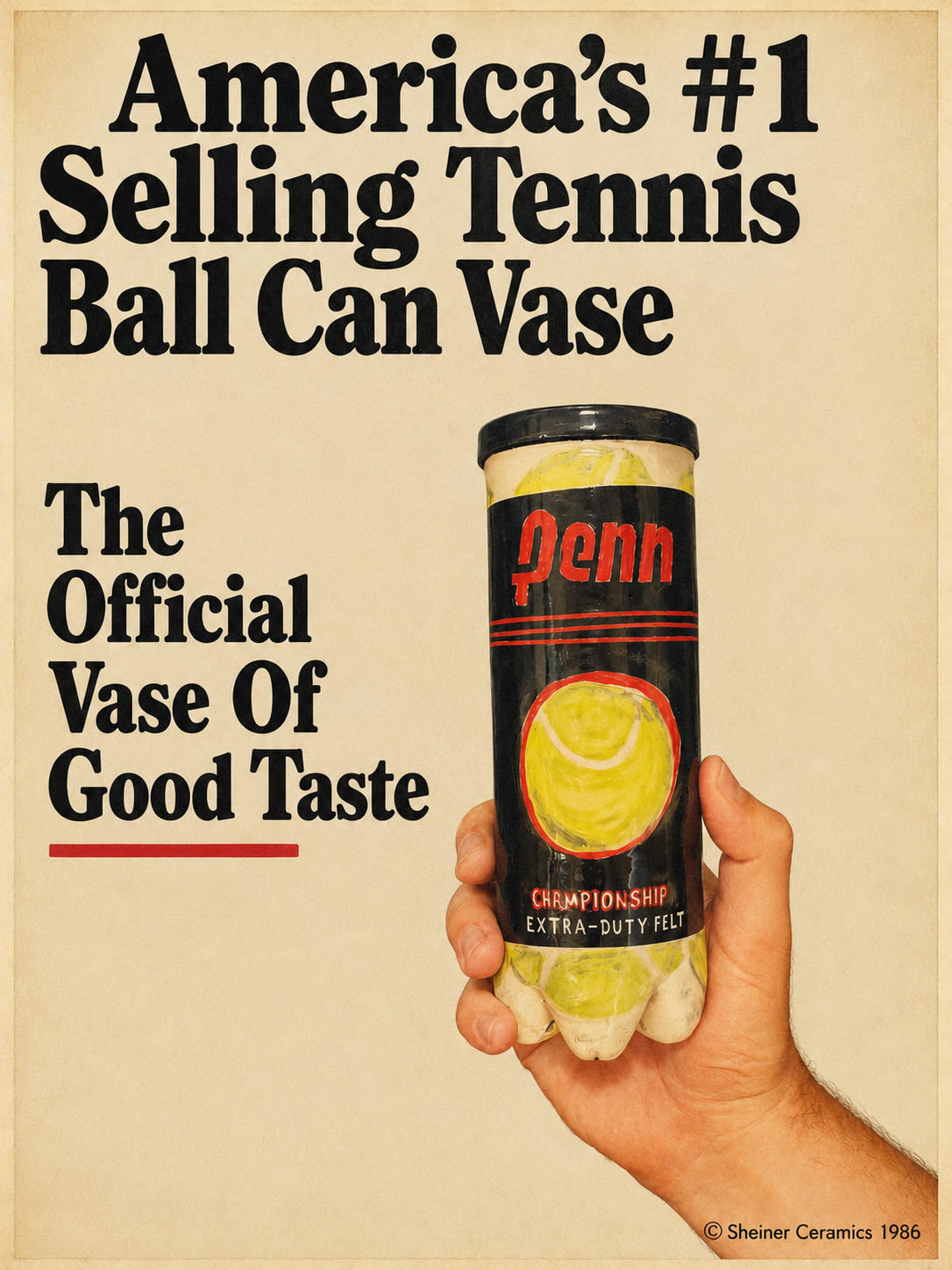
SHEINER CERAMICS creates handcrafted semi-functional ceramic sculptures, blurring the line between artwork and useable object. Sculpture meant to be enjoyed whether they’re being used or not.
Inspired by the graphic language of advertising, sports, and everyday American life, each piece transforms an ordinary object into something unexpected, equal parts fine art, design object, and functional ware. Every work is designed, hand-built, painted, and glazed by artist Jake Sheiner in Los Angeles, making each one entirely unique
COLLECTIONS
TENNIS
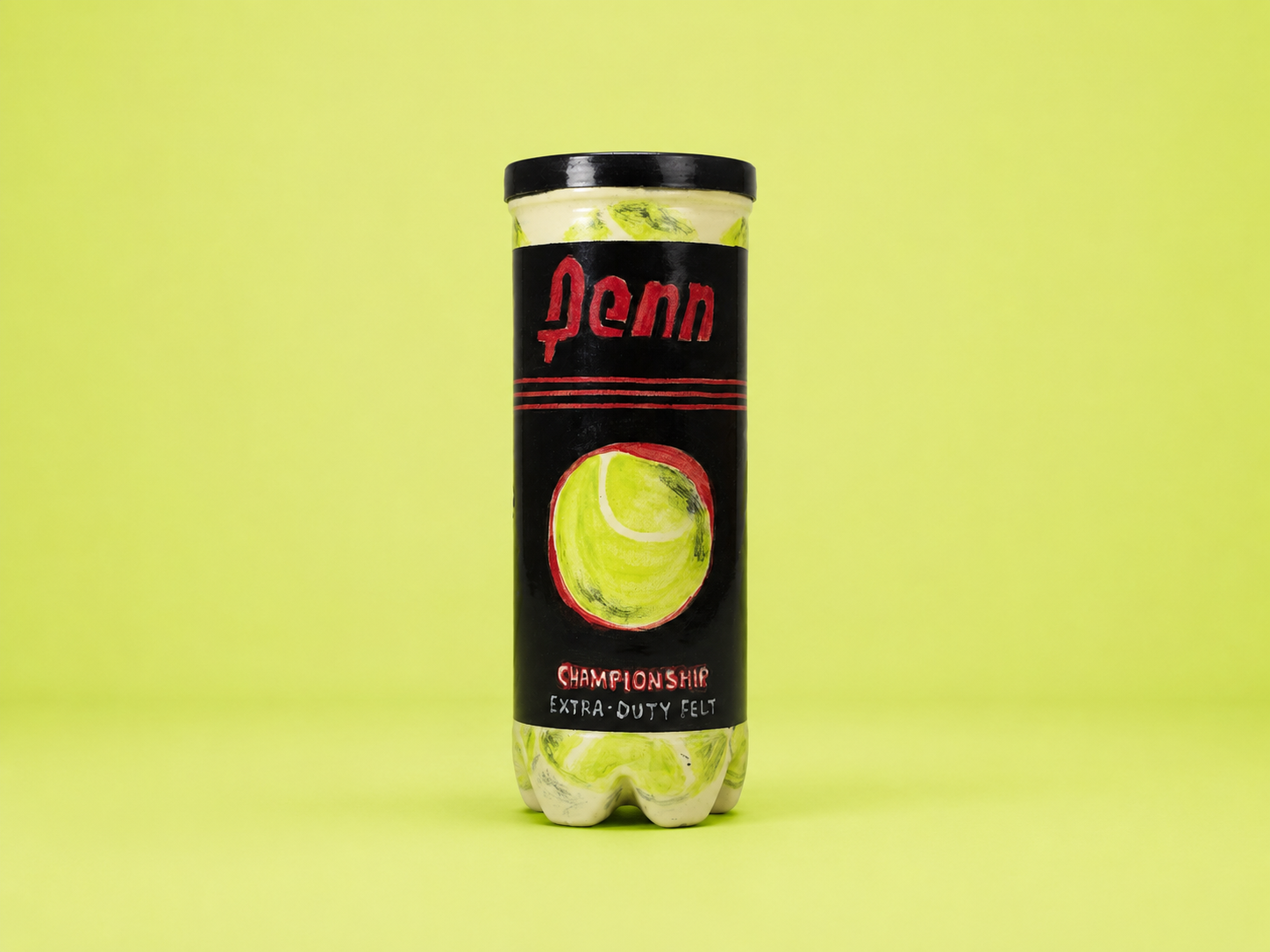
The Penn Tennis Ball Vase s part of an new body of work by Los Angeles artist Jake Sheiner through Sheiner Ceramics. Drawing on one of tennis’s most recognizable forms, the work transforms the familiar, disposable tennis ball can into a singular ceramic object..
Each vase is cast in stoneware from an original mold, individually hand-painted with underglazes, and finished with a clear glaze. Rather than pursuing mechanical precision, each work embraces visible brushwork, subtle shifts in color, and variations in surface, allowing each piece to retain the evidence of the hand.
Conceived as a semi-functional ceramic sculpture, the vase draws on the visual language and aesthetics of tennis. The work plays with the line between utility and sculpture while celebrating the colors, graphics, and design that give tennis its distinct visual identity.
Every vase is produced in small batches and completed entirely by hand in Sheiner's Los Angeles studio. No two are exactly alike; variations in painting, glaze, and surface are inherent to the work and underscore its individuality.
Product image shows front and back of the vase.
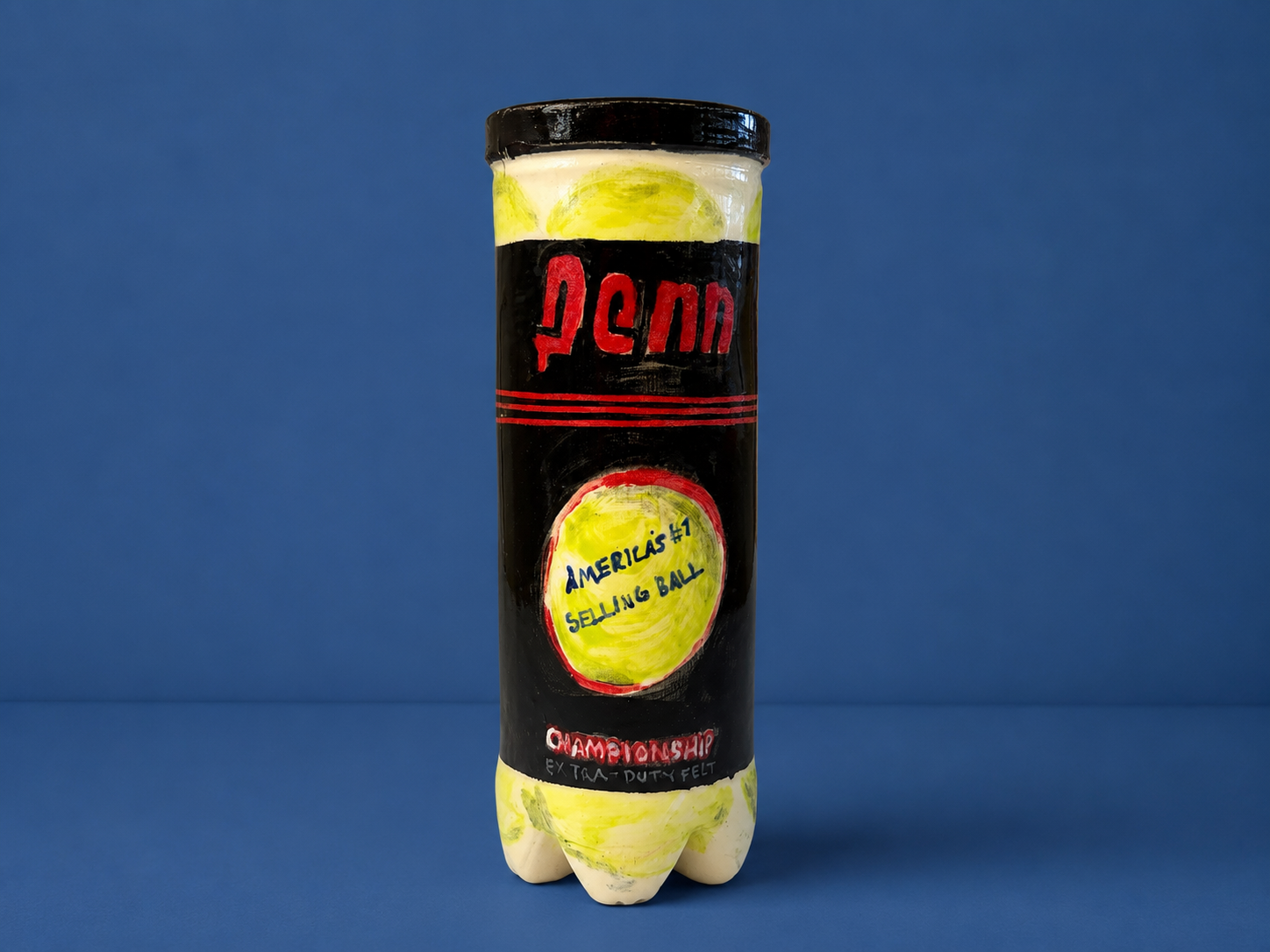
The Penn Tennis Ball Vase s part of an new body of work by Los Angeles artist Jake Sheiner through Sheiner Ceramics. Drawing on one of tennis’s most recognizable forms, the work transforms the familiar, disposable tennis ball can into a singular ceramic object..
Each vase is cast in stoneware from an original mold, individually hand-painted with underglazes, and finished with a clear glaze. Rather than pursuing mechanical precision, each work embraces visible brushwork, subtle shifts in color, and variations in surface, allowing each piece to retain the evidence of the hand.
Conceived as a semi-functional ceramic sculpture, the vase draws on the visual language and aesthetics of tennis. The work plays with the line between utility and sculpture while celebrating the colors, graphics, and design that give tennis its distinct visual identity.
Every vase is produced in small batches and completed entirely by hand in Sheiner's Los Angeles studio. No two are exactly alike; variations in painting, glaze, and surface are inherent to the work and underscore its individuality.
Product image shows front and back of the vase.
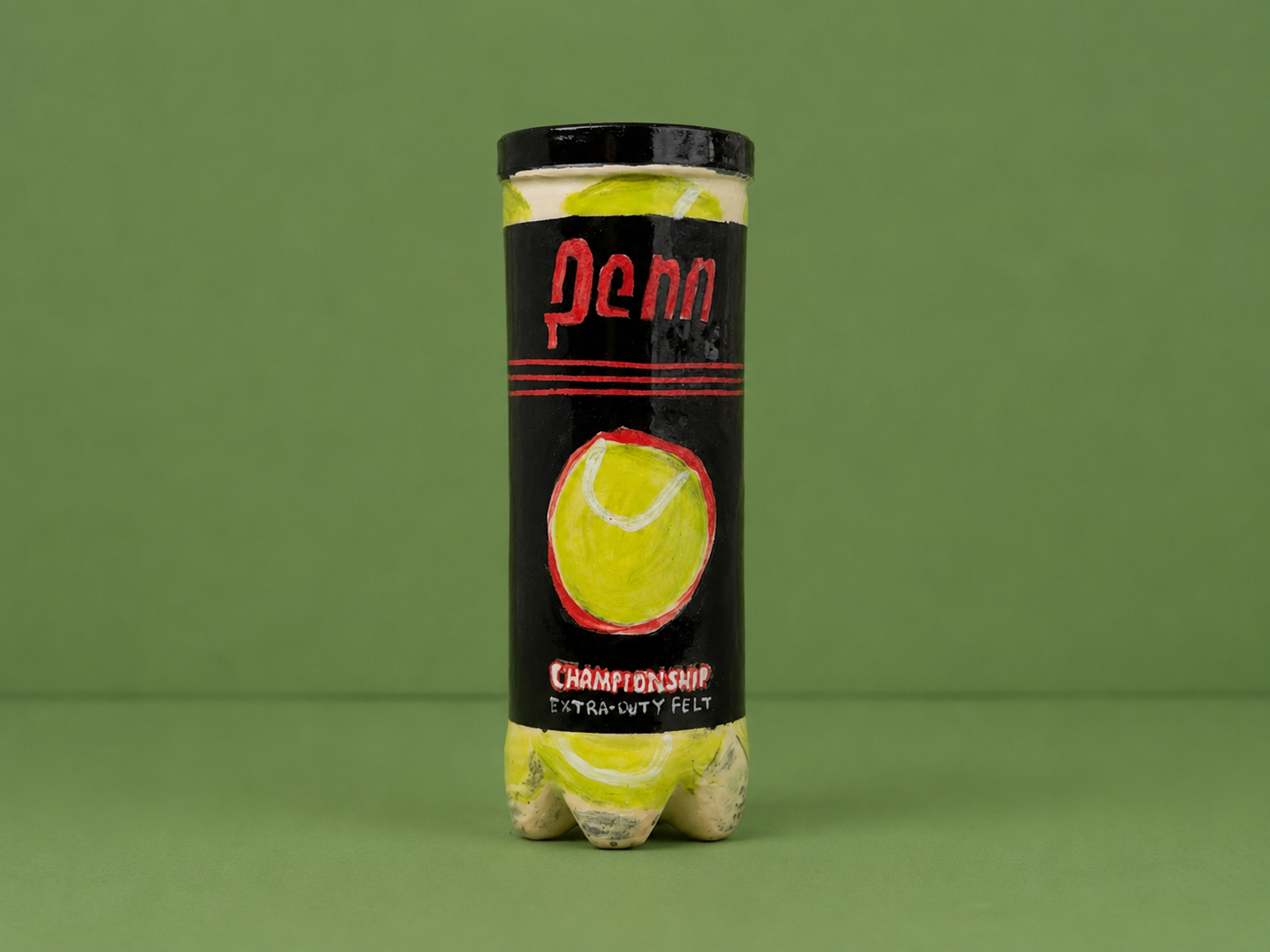
The Penn Tennis Ball Vase s part of an new body of work by Los Angeles artist Jake Sheiner through Sheiner Ceramics. Drawing on one of tennis’s most recognizable forms, the work transforms the familiar, disposable tennis ball can into a singular ceramic object..
Each vase is cast in stoneware from an original mold, individually hand-painted with underglazes, and finished with a clear glaze. Rather than pursuing mechanical precision, each work embraces visible brushwork, subtle shifts in color, and variations in surface, allowing each piece to retain the evidence of the hand.
Conceived as a semi-functional ceramic sculpture, the vase draws on the visual language and aesthetics of tennis. The work plays with the line between utility and sculpture while celebrating the colors, graphics, and design that give tennis its distinct visual identity.
Every vase is produced in small batches and completed entirely by hand in Sheiner's Los Angeles studio. No two are exactly alike; variations in painting, glaze, and surface are inherent to the work and underscore its individuality.
Product image shows front and back of the vase.
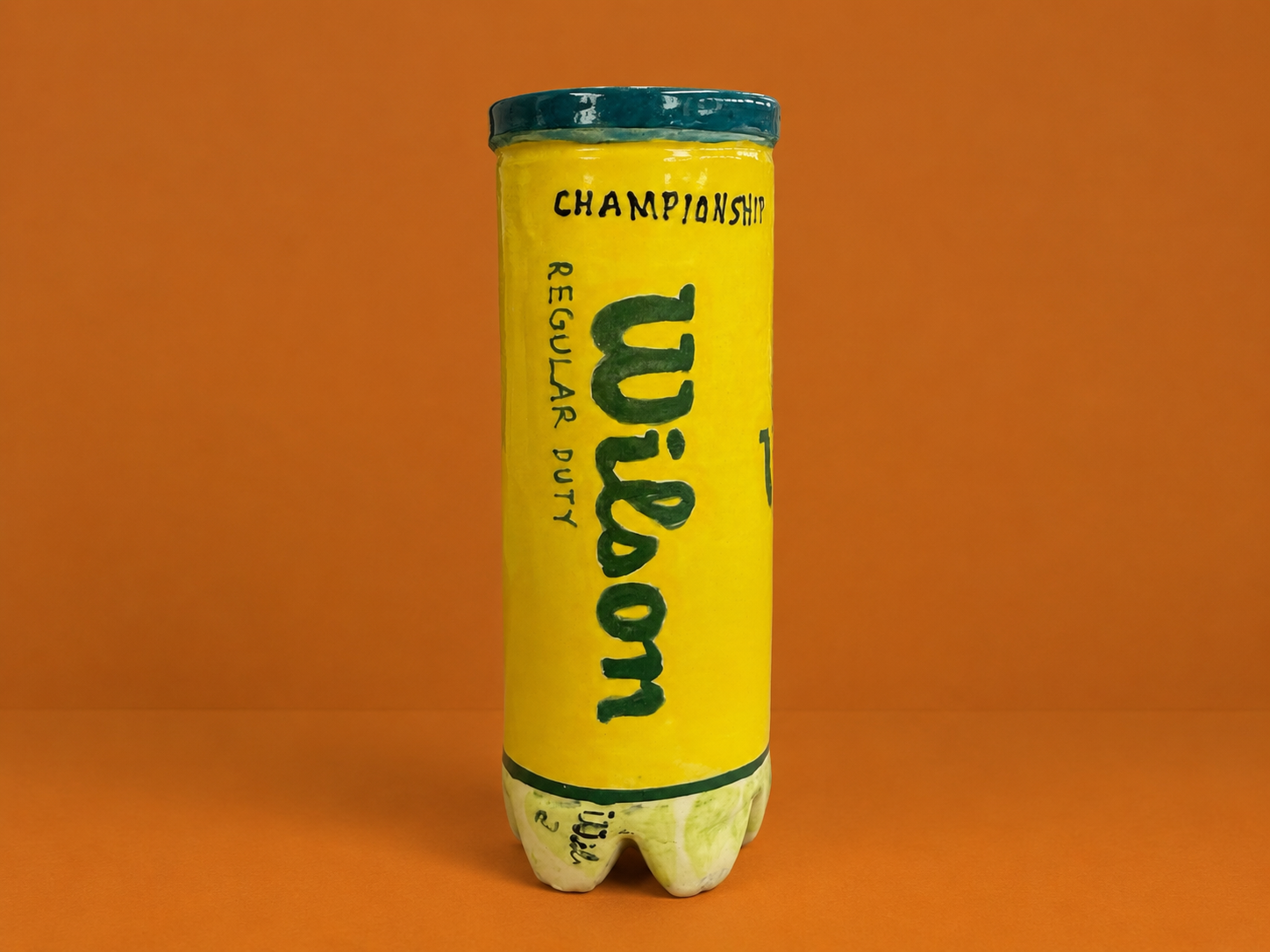
Wilson Regular Duty Tennis Ball Vase is part of an new body of work by Los Angeles artist Jake Sheiner through Sheiner Ceramics. Drawing on one of tennis’s most recognizable forms, the work transforms the familiar, disposable tennis ball can into a singular ceramic object..
Each vase is cast in stoneware from an original mold, individually hand-painted with underglazes, and finished with a clear glaze. Rather than pursuing mechanical precision, each work embraces visible brushwork, subtle shifts in color, and variations in surface, allowing each piece to retain the evidence of the hand.
Conceived as a semi-functional ceramic sculpture, the vase draws on the visual language and aesthetics of tennis. The work plays with the line between utility and sculpture while celebrating the colors, graphics, and design that give tennis its distinct visual identity.
Every vase is produced in small batches and completed entirely by hand in Sheiner's Los Angeles studio. No two are exactly alike; variations in painting, glaze, and surface are inherent to the work and underscore its individuality.
Product image shows front and back of the vase.
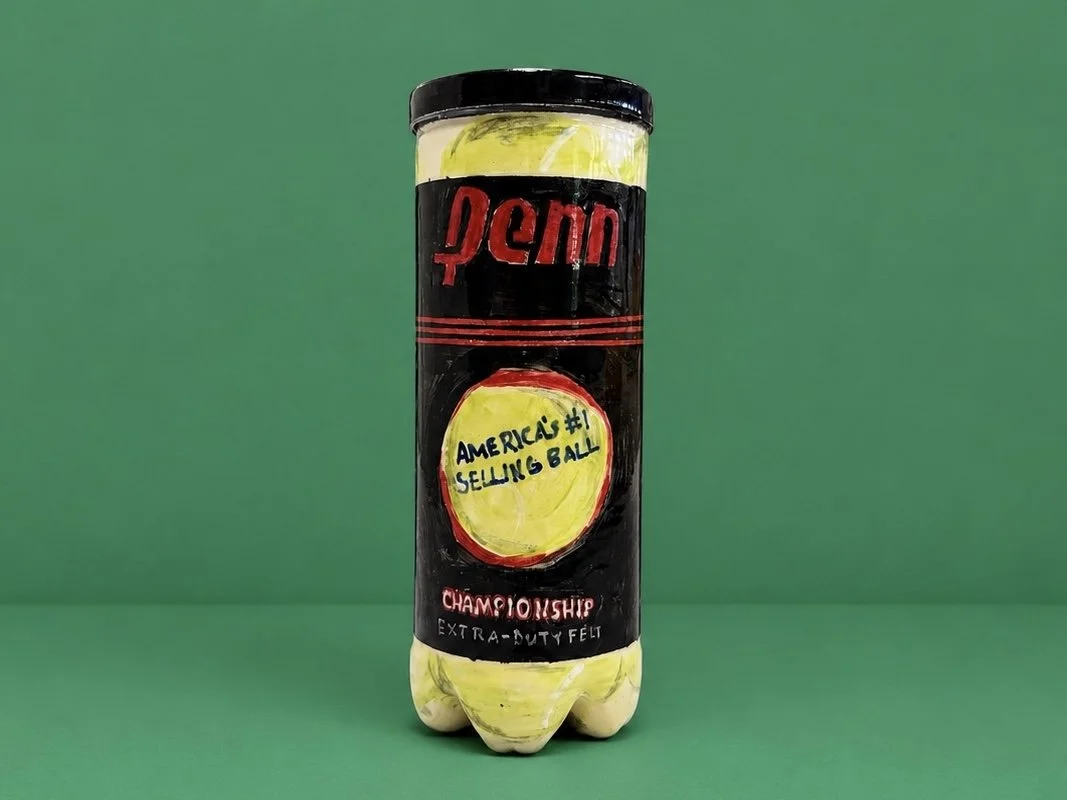
The Penn Tennis Ball Vase s part of an new body of work by Los Angeles artist Jake Sheiner through Sheiner Ceramics. Drawing on one of tennis’s most recognizable forms, the work transforms the familiar, disposable tennis ball can into a singular ceramic object..
Each vase is cast in stoneware from an original mold, individually hand-painted with underglazes, and finished with a clear glaze. Rather than pursuing mechanical precision, each work embraces visible brushwork, subtle shifts in color, and variations in surface, allowing each piece to retain the evidence of the hand.
Conceived as a semi-functional ceramic sculpture, the vase draws on the visual language and aesthetics of tennis. The work plays with the line between utility and sculpture while celebrating the colors, graphics, and design that give tennis its distinct visual identity.
Every vase is produced in small batches and completed entirely by hand in Sheiner's Los Angeles studio. No two are exactly alike; variations in painting, glaze, and surface are inherent to the work and underscore its individuality.
Product image shows front and back of the vase.
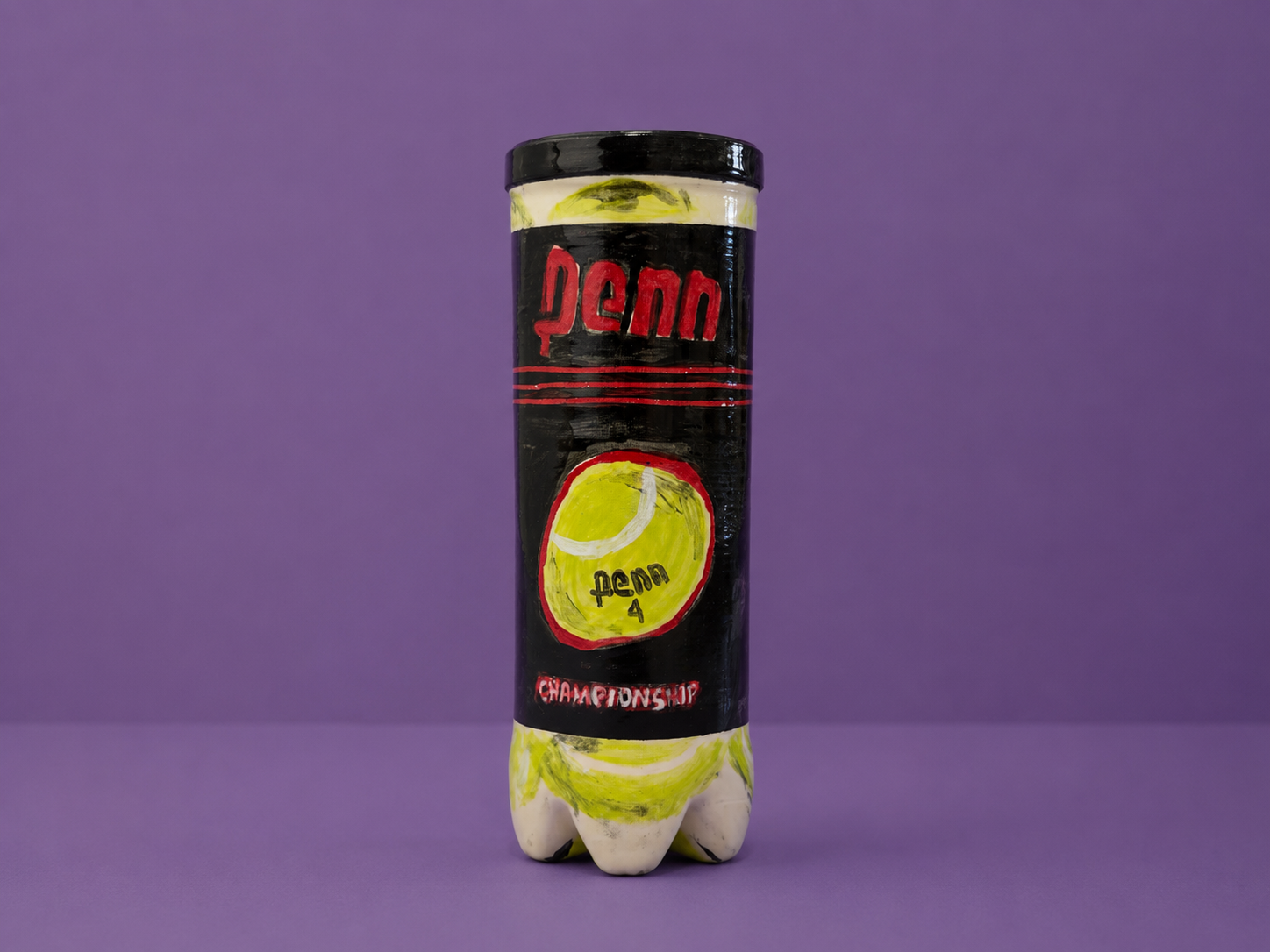
The Penn Tennis Ball Vase is part of an new body of work by Los Angeles artist Jake Sheiner through Sheiner Ceramics. Drawing on one of tennis’s most recognizable forms, the work transforms the familiar, disposable tennis ball can into a singular ceramic object..
Each vase is cast in stoneware from an original mold, individually hand-painted with underglazes, and finished with a clear glaze. Rather than pursuing mechanical precision, each work embraces visible brushwork, subtle shifts in color, and variations in surface, allowing each piece to retain the evidence of the hand.
Conceived as a semi-functional ceramic sculpture, the vase draws on the visual language and aesthetics of tennis. The work plays with the line between utility and sculpture while celebrating the colors, graphics, and design that give tennis its distinct visual identity.
Every vase is produced in small batches and completed entirely by hand in Sheiner's Los Angeles studio. No two are exactly alike; variations in painting, glaze, and surface are inherent to the work and underscore its individuality.
Product image shows front and back of the vase.
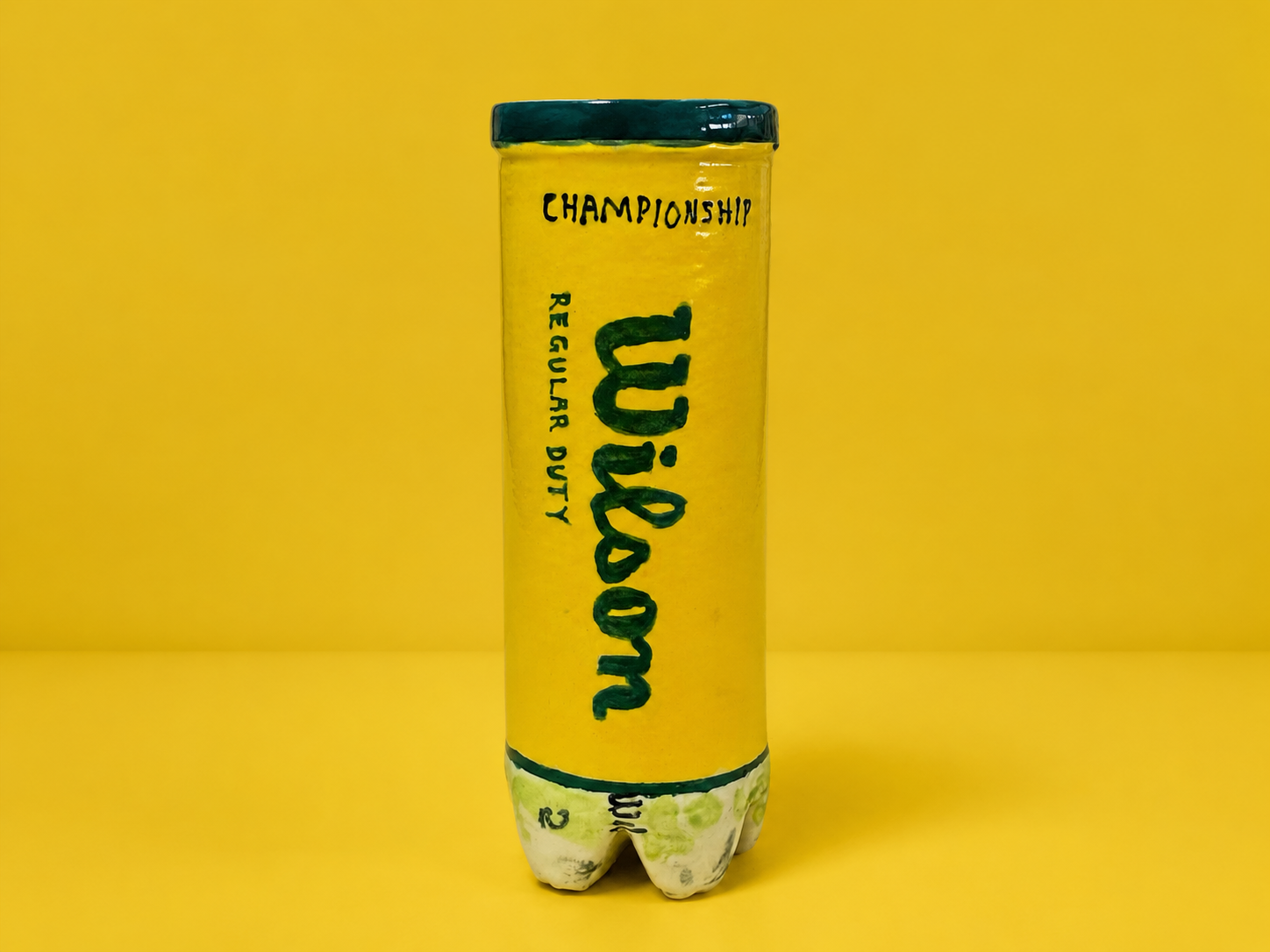
Wilson Regular Duty Tennis Ball Vase s part of an new body of work by Los Angeles artist Jake Sheiner through Sheiner Ceramics. Drawing on one of tennis’s most recognizable forms, the work transforms the familiar, disposable tennis ball can into a singular ceramic object..
Each vase is cast in stoneware from an original mold, individually hand-painted with underglazes, and finished with a clear glaze. Rather than pursuing mechanical precision, each work embraces visible brushwork, subtle shifts in color, and variations in surface, allowing each piece to retain the evidence of the hand.
Conceived as a semi-functional ceramic sculpture, the vase draws on the visual language and aesthetics of tennis. The work plays with the line between utility and sculpture while celebrating the colors, graphics, and design that give tennis its distinct visual identity.
Every vase is produced in small batches and completed entirely by hand in Sheiner's Los Angeles studio. No two are exactly alike; variations in painting, glaze, and surface are inherent to the work and underscore its individuality.
Product image shows front and back of the vase.
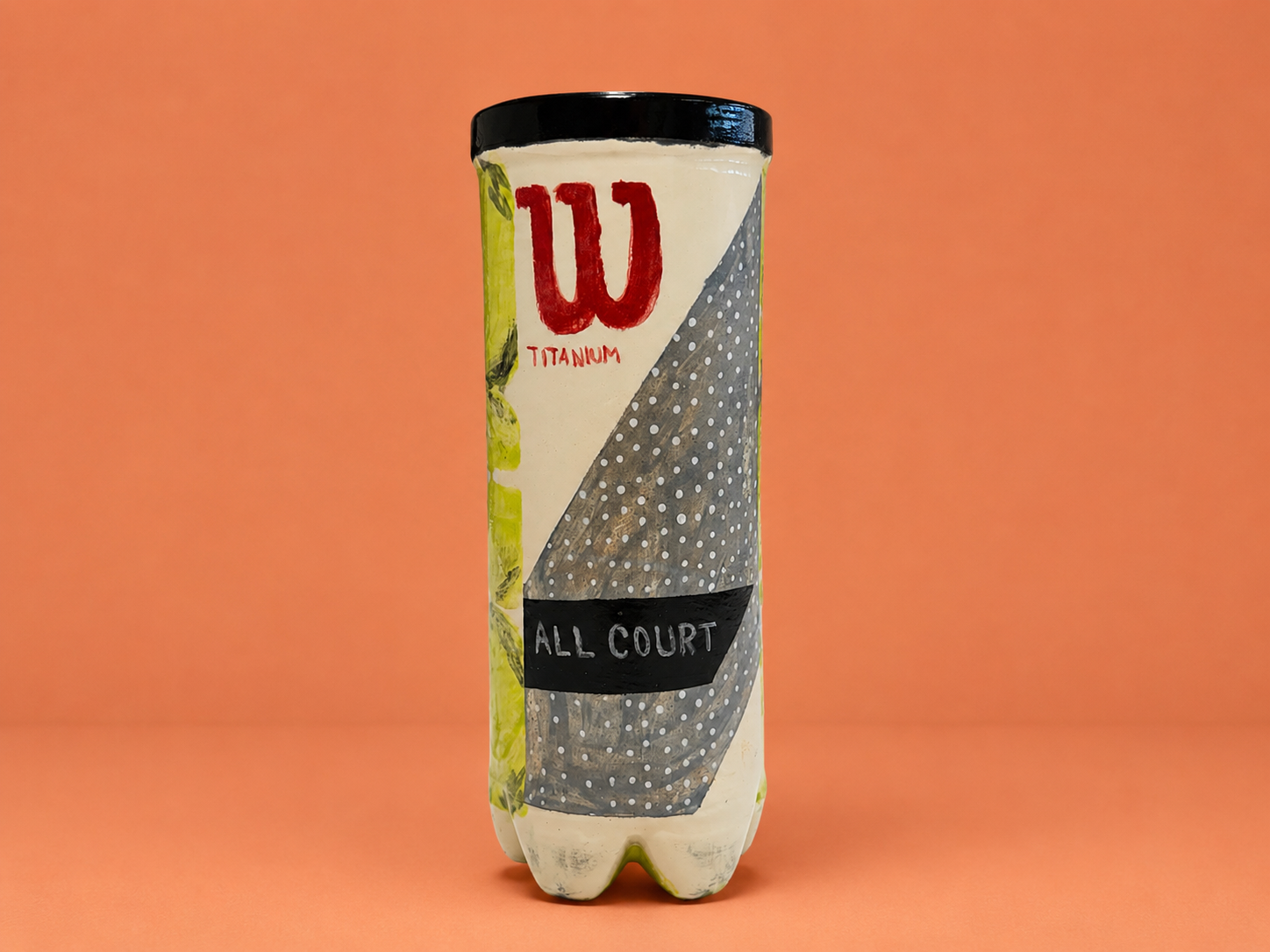
Wilson Titanium Tennis Ball Vases part of an new body of work by Los Angeles artist Jake Sheiner through Sheiner Ceramics. Drawing on one of tennis’s most recognizable forms, the work transforms the familiar, disposable tennis ball can into a singular ceramic object..
Each vase is cast in stoneware from an original mold, individually hand-painted with underglazes, and finished with a clear glaze. Rather than pursuing mechanical precision, each work embraces visible brushwork, subtle shifts in color, and variations in surface, allowing each piece to retain the evidence of the hand.
Conceived as a semi-functional ceramic sculpture, the vase draws on the visual language and aesthetics of tennis. The work plays with the line between utility and sculpture while celebrating the colors, graphics, and design that give tennis its distinct visual identity.
Every vase is produced in small batches and completed entirely by hand in Sheiner's Los Angeles studio. No two are exactly alike; variations in painting, glaze, and surface are inherent to the work and underscore its individuality.
Product image shows front and back of the vase.
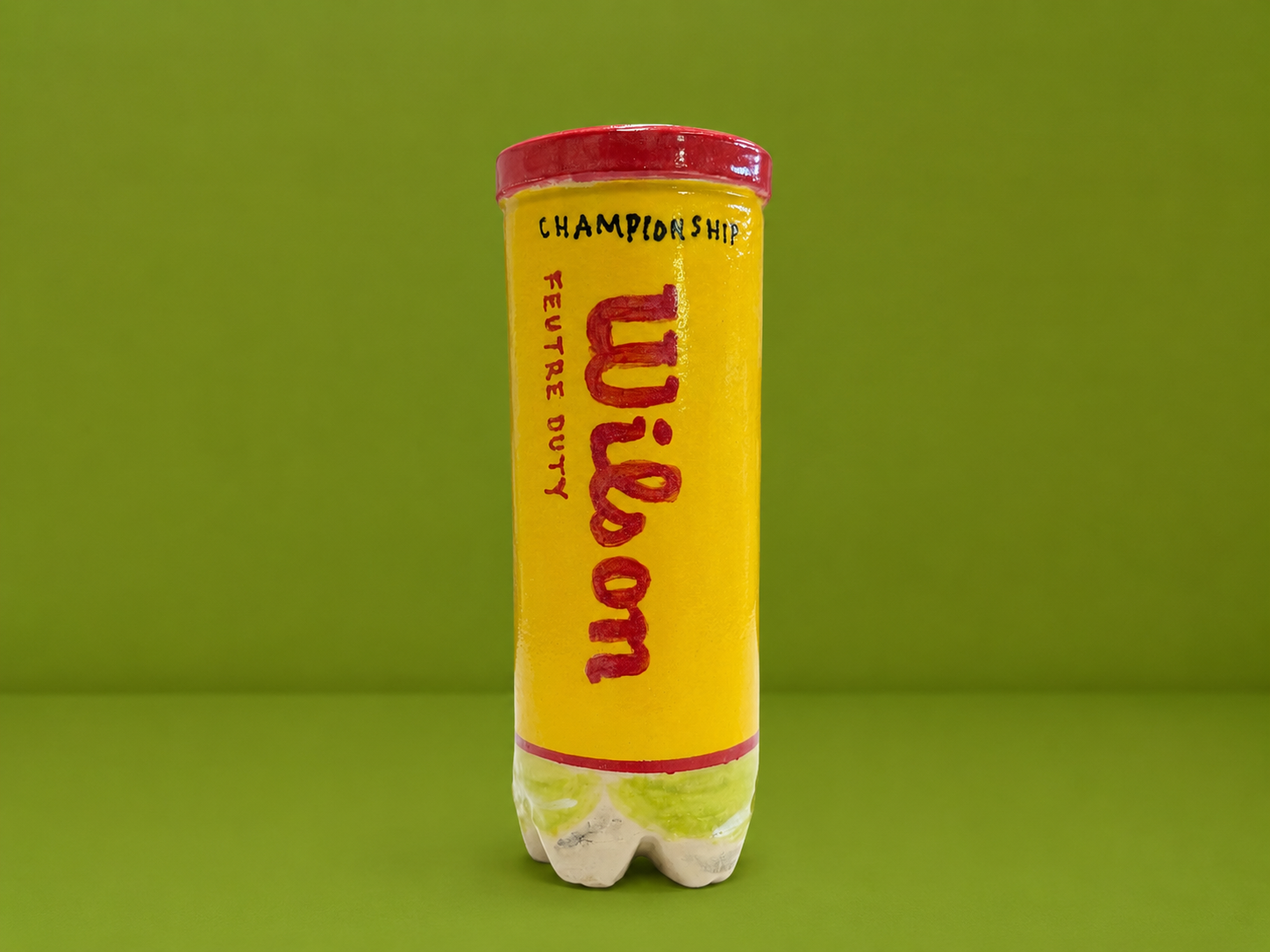
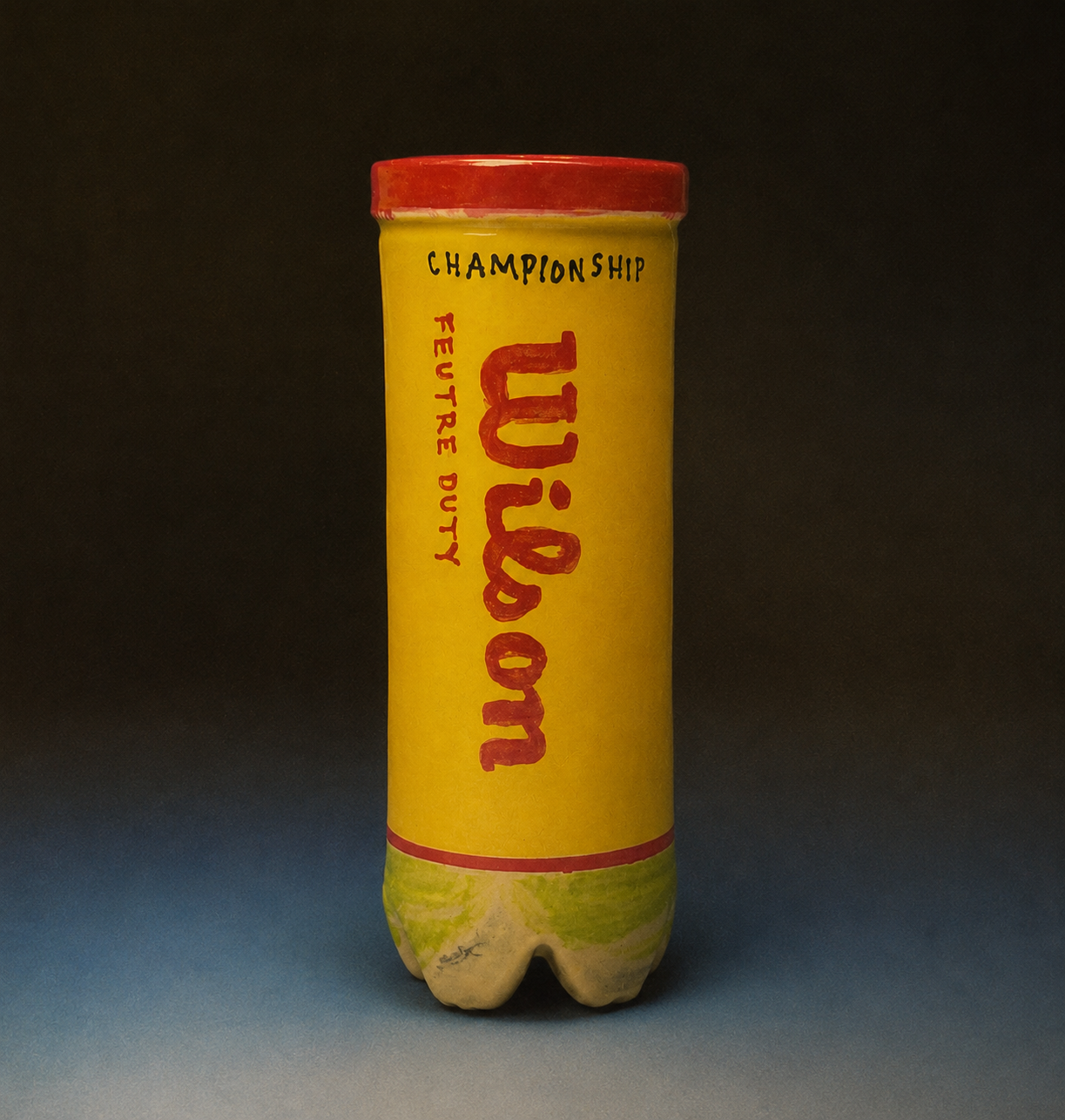
Wilson Feutre Duty Tennis Ball Vase is part of an new body of work by Los Angeles artist Jake Sheiner through Sheiner Ceramics. Drawing on one of tennis’s most recognizable forms, the work transforms the familiar, disposable tennis ball can into a singular ceramic object..
Each vase is cast in stoneware from an original mold, individually hand-painted with underglazes, and finished with a clear glaze. Rather than pursuing mechanical precision, each work embraces visible brushwork, subtle shifts in color, and variations in surface, allowing each piece to retain the evidence of the hand.
Conceived as a semi-functional ceramic sculpture, the vase draws on the visual language and aesthetics of tennis. The work plays with the line between utility and sculpture while celebrating the colors, graphics, and design that give tennis its distinct visual identity.
Every vase is produced in small batches and completed entirely by hand in Sheiner's Los Angeles studio. No two are exactly alike; variations in painting, glaze, and surface are inherent to the work and underscore its individuality.
Product image shows front and back of the vase.
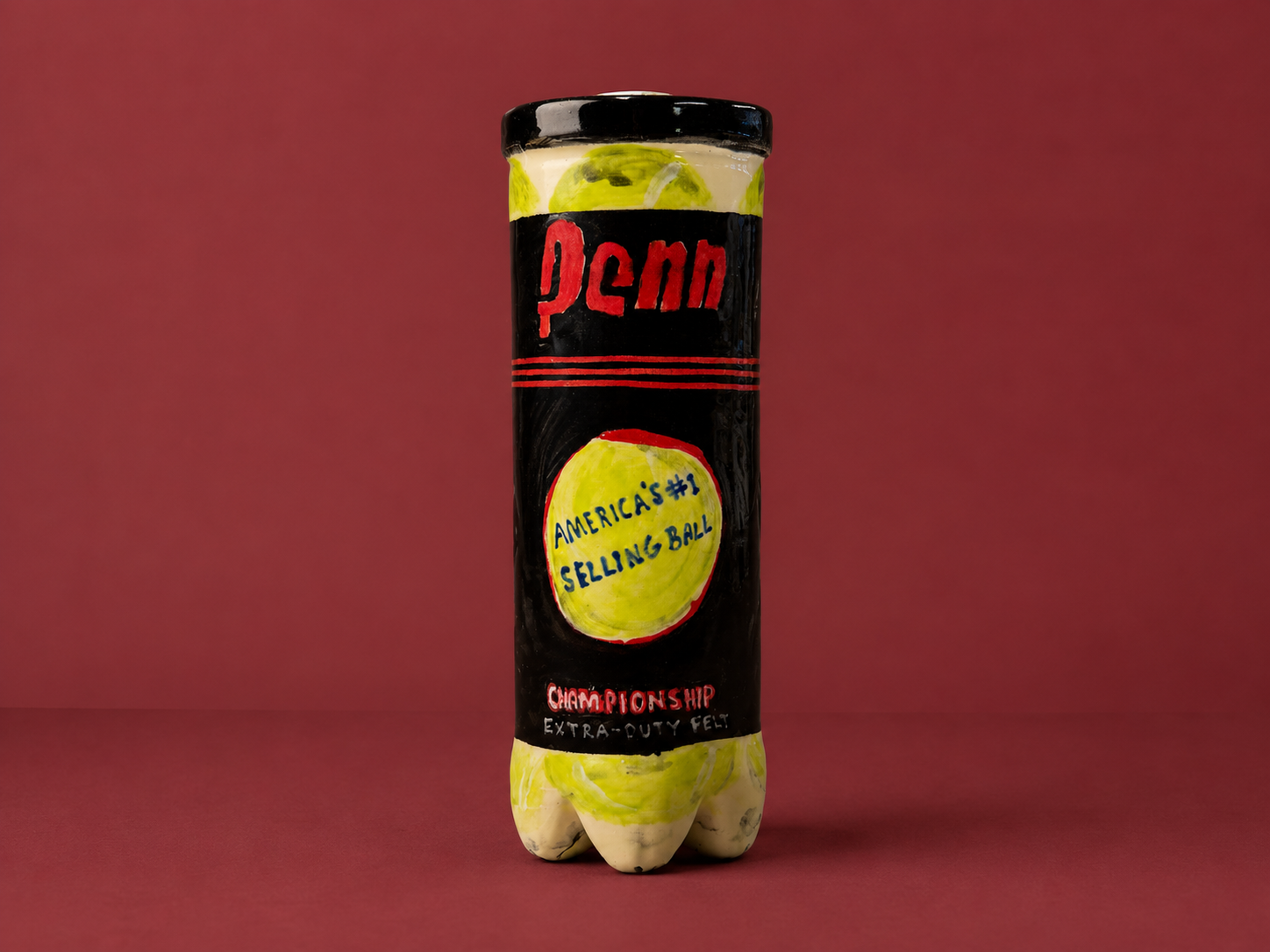
The Penn Tennis Ball Can Vase s part of an new body of work by Los Angeles artist Jake Sheiner through Sheiner Ceramics. Drawing on one of tennis’s most recognizable forms, the work transforms the familiar, disposable tennis ball can into a singular ceramic object..
Each vase is cast in stoneware from an original mold, individually hand-painted with underglazes, and finished with a clear glaze. Rather than pursuing mechanical precision, each work embraces visible brushwork, subtle shifts in color, and variations in surface, allowing each piece to retain the evidence of the hand.
Conceived as a semi-functional ceramic sculpture, the vase draws on the visual language and aesthetics of tennis. The work plays with the line between utility and sculpture while celebrating the colors, graphics, and design that give tennis its distinct visual identity.
Every vase is produced in small batches and completed entirely by hand in Sheiner's Los Angeles studio. No two are exactly alike; variations in painting, glaze, and surface are inherent to the work and underscore its individuality.
Product image shows front and back of the vase.
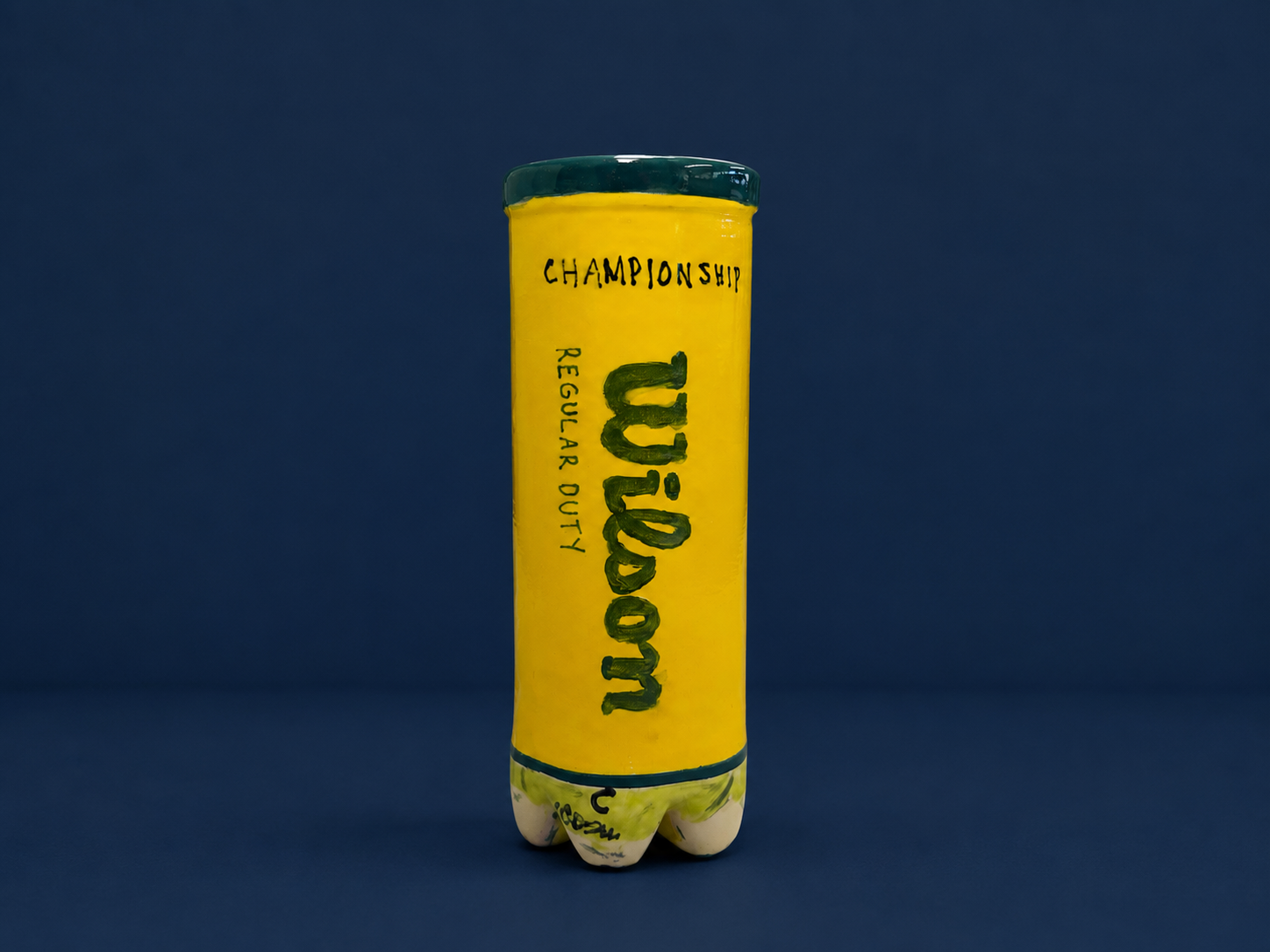
Wilson Regular Duty Tennis Ball Vase is part of an new body of work by Los Angeles artist Jake Sheiner through Sheiner Ceramics. Drawing on one of tennis’s most recognizable forms, the work transforms the familiar, disposable tennis ball can into a singular ceramic object..
Each vase is cast in stoneware from an original mold, individually hand-painted with underglazes, and finished with a clear glaze. Rather than pursuing mechanical precision, each work embraces visible brushwork, subtle shifts in color, and variations in surface, allowing each piece to retain the evidence of the hand.
Conceived as a semi-functional ceramic sculpture, the vase draws on the visual language and aesthetics of tennis. The work plays with the line between utility and sculpture while celebrating the colors, graphics, and design that give tennis its distinct visual identity.
Every vase is produced in small batches and completed entirely by hand in Sheiner's Los Angeles studio. No two are exactly alike; variations in painting, glaze, and surface are inherent to the work and underscore its individuality.
Product image shows front and back of the vase.
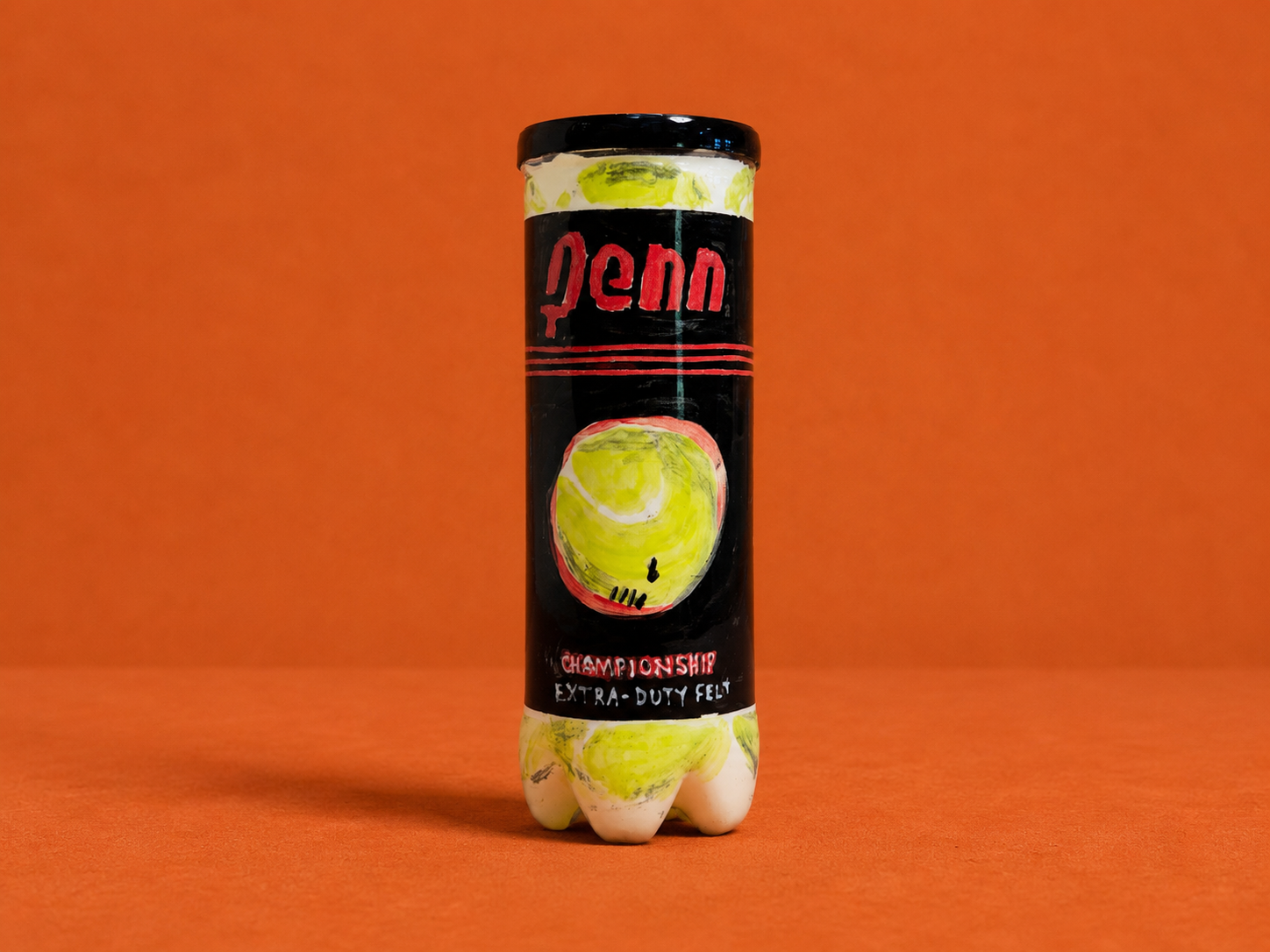
The Penn Tennis Ball Vase is part of an new body of work by Los Angeles artist Jake Sheiner through Sheiner Ceramics. Drawing on one of tennis’s most recognizable forms, the work transforms the familiar, disposable tennis ball can into a singular ceramic object..
Each vase is cast in stoneware from an original mold, individually hand-painted with underglazes, and finished with a clear glaze. Rather than pursuing mechanical precision, each work embraces visible brushwork, subtle shifts in color, and variations in surface, allowing each piece to retain the evidence of the hand.
Conceived as a semi-functional ceramic sculpture, the vase draws on the visual language and aesthetics of tennis. The work plays with the line between utility and sculpture while celebrating the colors, graphics, and design that give tennis its distinct visual identity.
Every vase is produced in small batches and completed entirely by hand in Sheiner's Los Angeles studio. No two are exactly alike; variations in painting, glaze, and surface are inherent to the work and underscore its individuality.
Product image shows front and back of the vase.
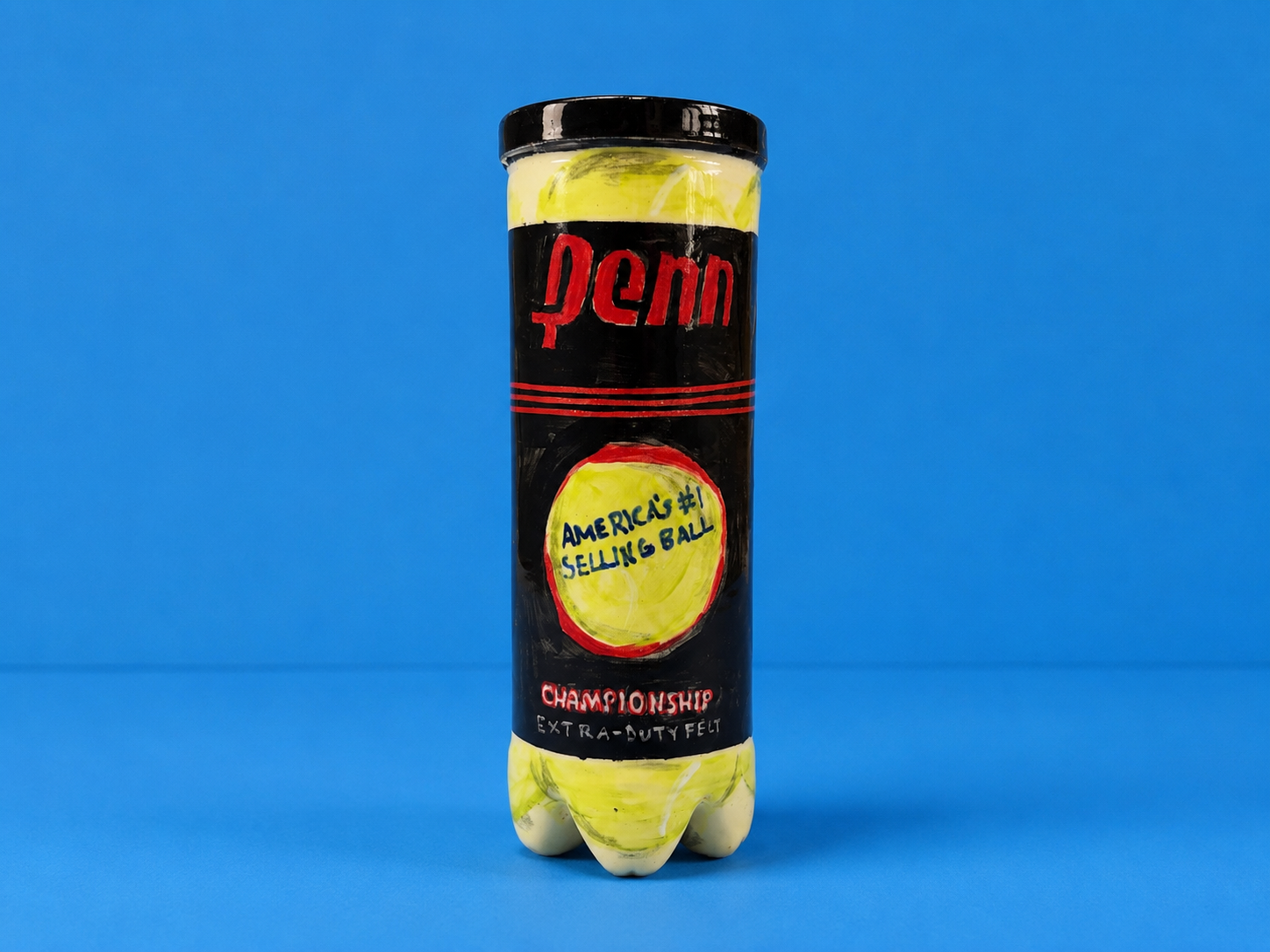
The Penn Tennis Ball Vase iis part of an new body of work by Los Angeles artist Jake Sheiner through Sheiner Ceramics. Drawing on one of tennis’s most recognizable forms, the work transforms the familiar, disposable tennis ball can into a singular ceramic object..
Each vase is cast in stoneware from an original mold, individually hand-painted with underglazes, and finished with a clear glaze. Rather than pursuing mechanical precision, each work embraces visible brushwork, subtle shifts in color, and variations in surface, allowing each piece to retain the evidence of the hand.
Conceived as a semi-functional ceramic sculpture, the vase draws on the visual language and aesthetics of tennis. The work plays with the line between utility and sculpture while celebrating the colors, graphics, and design that give tennis its distinct visual identity.
Every vase is produced in small batches and completed entirely by hand in Sheiner's Los Angeles studio. No two are exactly alike; variations in painting, glaze, and surface are inherent to the work and underscore its individuality.
Product image shows front and back of the vase.
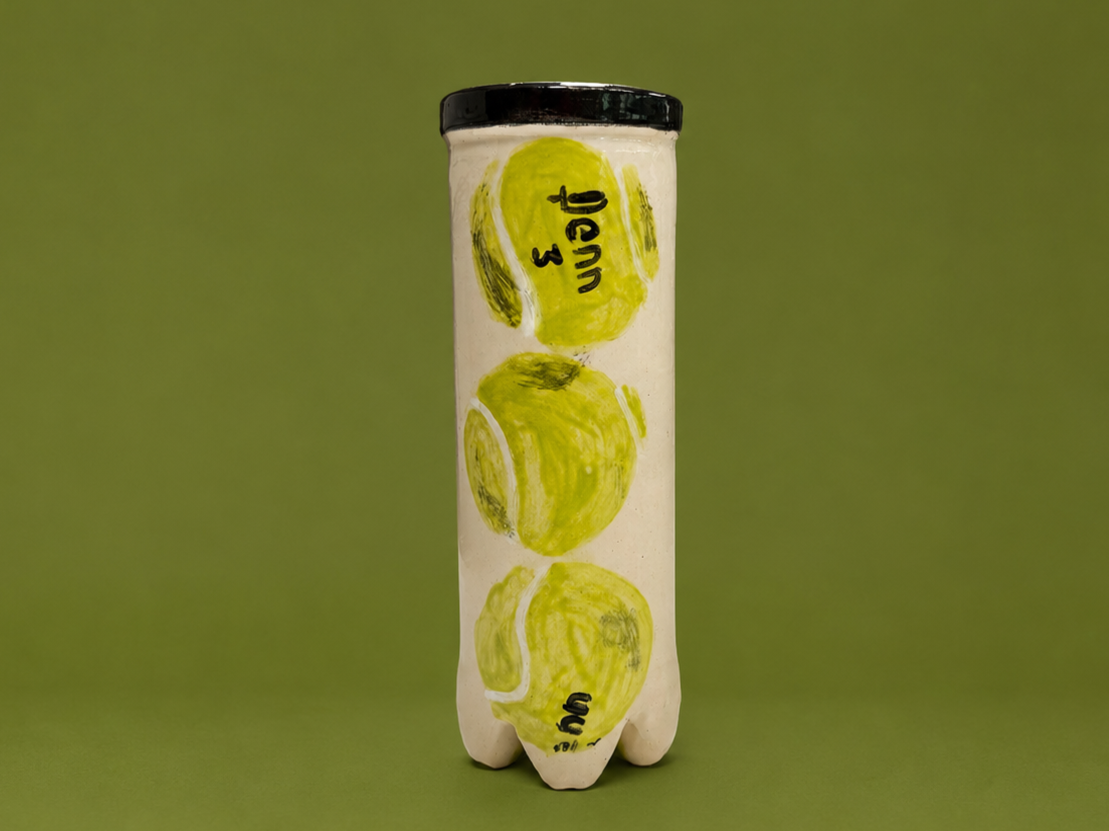
The 3 Ball Tennis Can Vase s part of an new body of work by Los Angeles artist Jake Sheiner through Sheiner Ceramics. Drawing on one of tennis’s most recognizable forms, the work transforms the familiar, disposable tennis ball can into a singular ceramic object..
Each vase is cast in stoneware from an original mold, individually hand-painted with underglazes, and finished with a clear glaze. Rather than pursuing mechanical precision, each work embraces visible brushwork, subtle shifts in color, and variations in surface, allowing each piece to retain the evidence of the hand.
Conceived as a semi-functional ceramic sculpture, the vase draws on the visual language and aesthetics of tennis. The work plays with the line between utility and sculpture while celebrating the colors, graphics, and design that give tennis its distinct visual identity.
Every vase is produced in small batches and completed entirely by hand in Sheiner's Los Angeles studio. No two are exactly alike; variations in painting, glaze, and surface are inherent to the work and underscore its individuality.
Product image shows front and back of the vase.
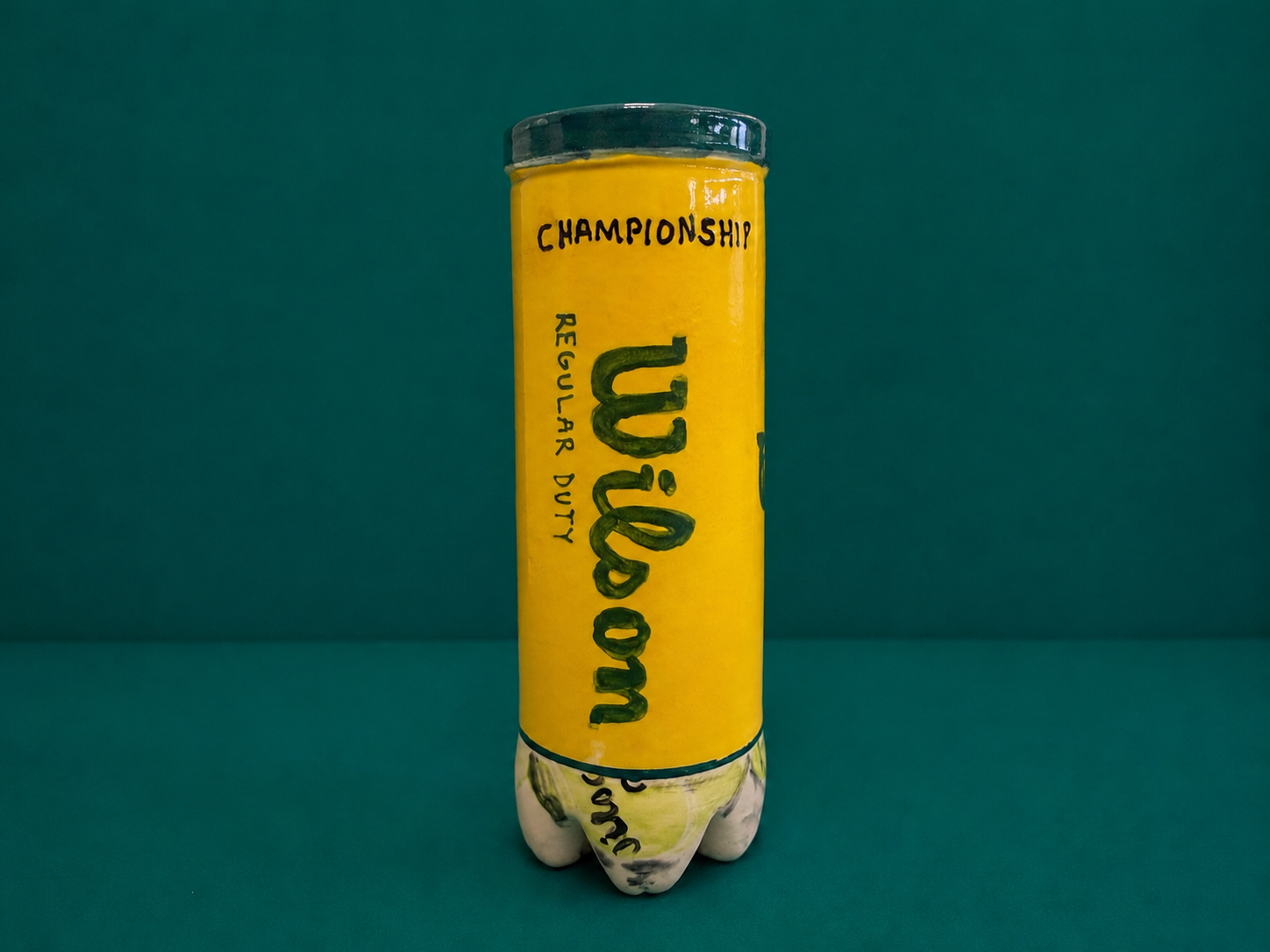
Wilson Regular Duty Tennis Ball Vase s part of an new body of work by Los Angeles artist Jake Sheiner through Sheiner Ceramics. Drawing on one of tennis’s most recognizable forms, the work transforms the familiar, disposable tennis ball can into a singular ceramic object..
Each vase is cast in stoneware from an original mold, individually hand-painted with underglazes, and finished with a clear glaze. Rather than pursuing mechanical precision, each work embraces visible brushwork, subtle shifts in color, and variations in surface, allowing each piece to retain the evidence of the hand.
Conceived as a semi-functional ceramic sculpture, the vase draws on the visual language and aesthetics of tennis. The work plays with the line between utility and sculpture while celebrating the colors, graphics, and design that give tennis its distinct visual identity.
Every vase is produced in small batches and completed entirely by hand in Sheiner's Los Angeles studio. No two are exactly alike; variations in painting, glaze, and surface are inherent to the work and underscore its individuality.
Product image shows front and back of the vase.
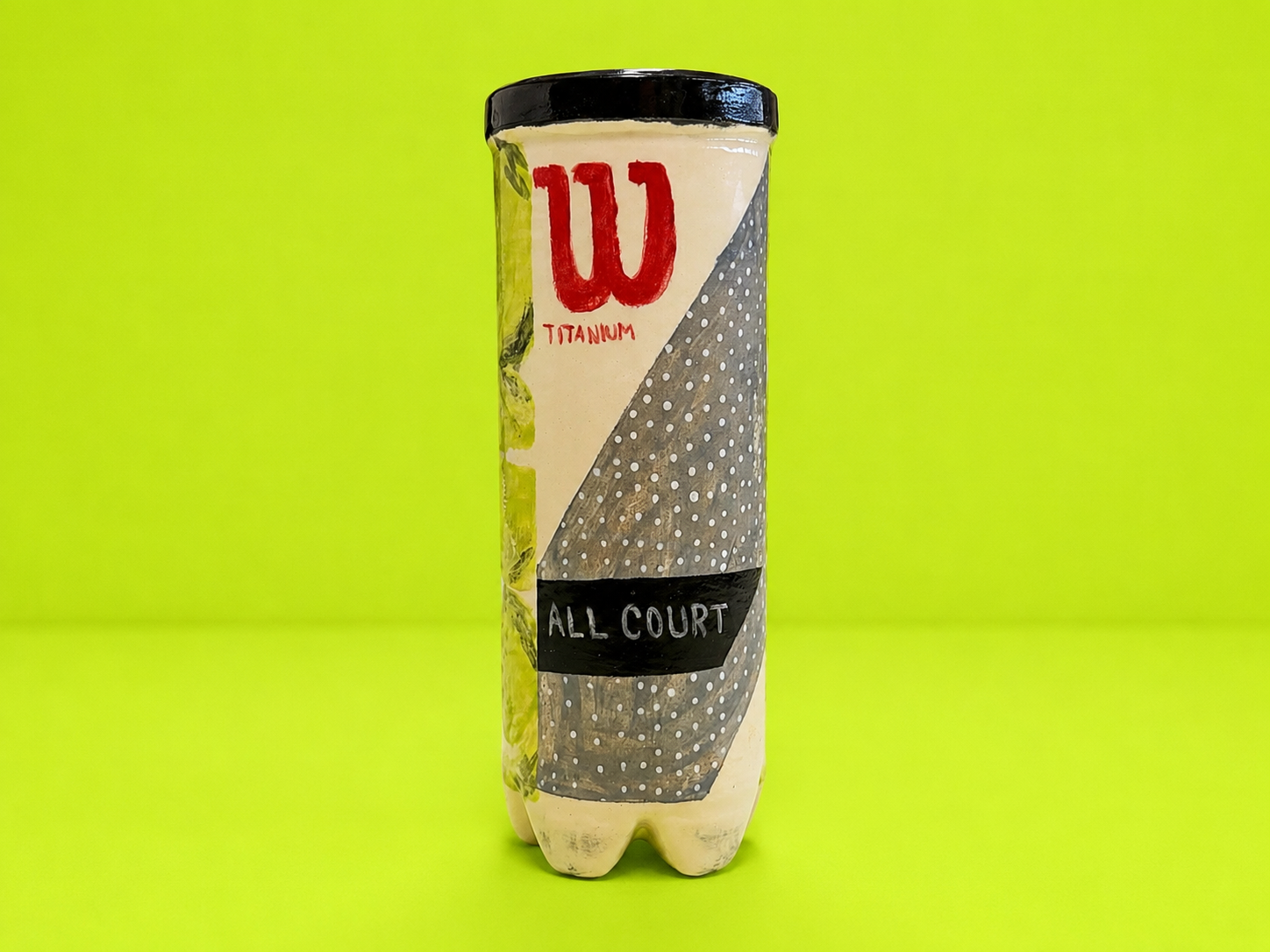
Wilson Titanium Tennis Ball Vase s part of an new body of work by Los Angeles artist Jake Sheiner through Sheiner Ceramics. Drawing on one of tennis’s most recognizable forms, the work transforms the familiar, disposable tennis ball can into a singular ceramic object..
Each vase is cast in stoneware from an original mold, individually hand-painted with underglazes, and finished with a clear glaze. Rather than pursuing mechanical precision, each work embraces visible brushwork, subtle shifts in color, and variations in surface, allowing each piece to retain the evidence of the hand.
Conceived as a semi-functional ceramic sculpture, the vase draws on the visual language and aesthetics of tennis. The work plays with the line between utility and sculpture while celebrating the colors, graphics, and design that give tennis its distinct visual identity.
Every vase is produced in small batches and completed entirely by hand in Sheiner's Los Angeles studio. No two are exactly alike; variations in painting, glaze, and surface are inherent to the work and underscore its individuality.
Product image shows front and back of the vase.
MENORAHS
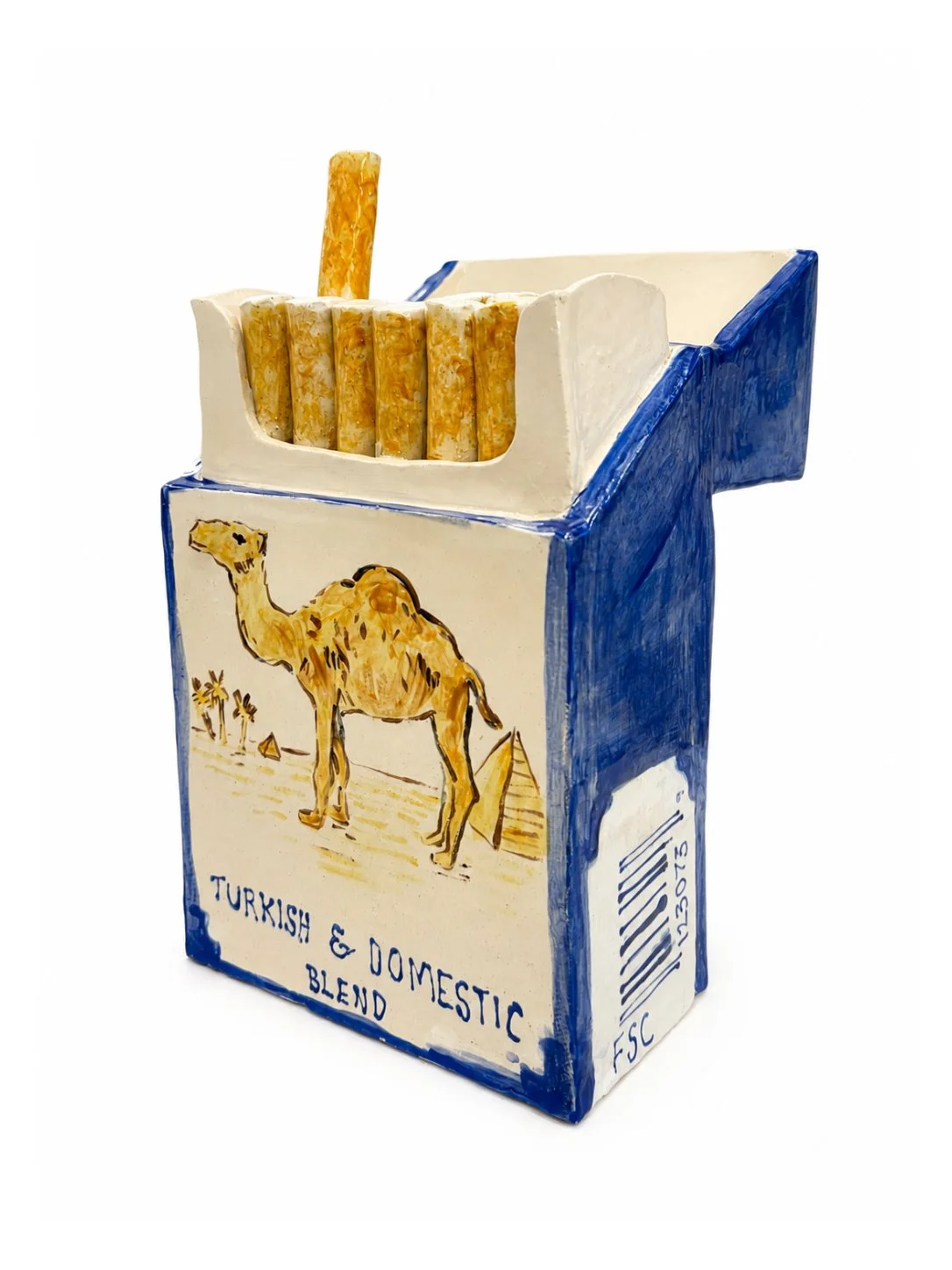
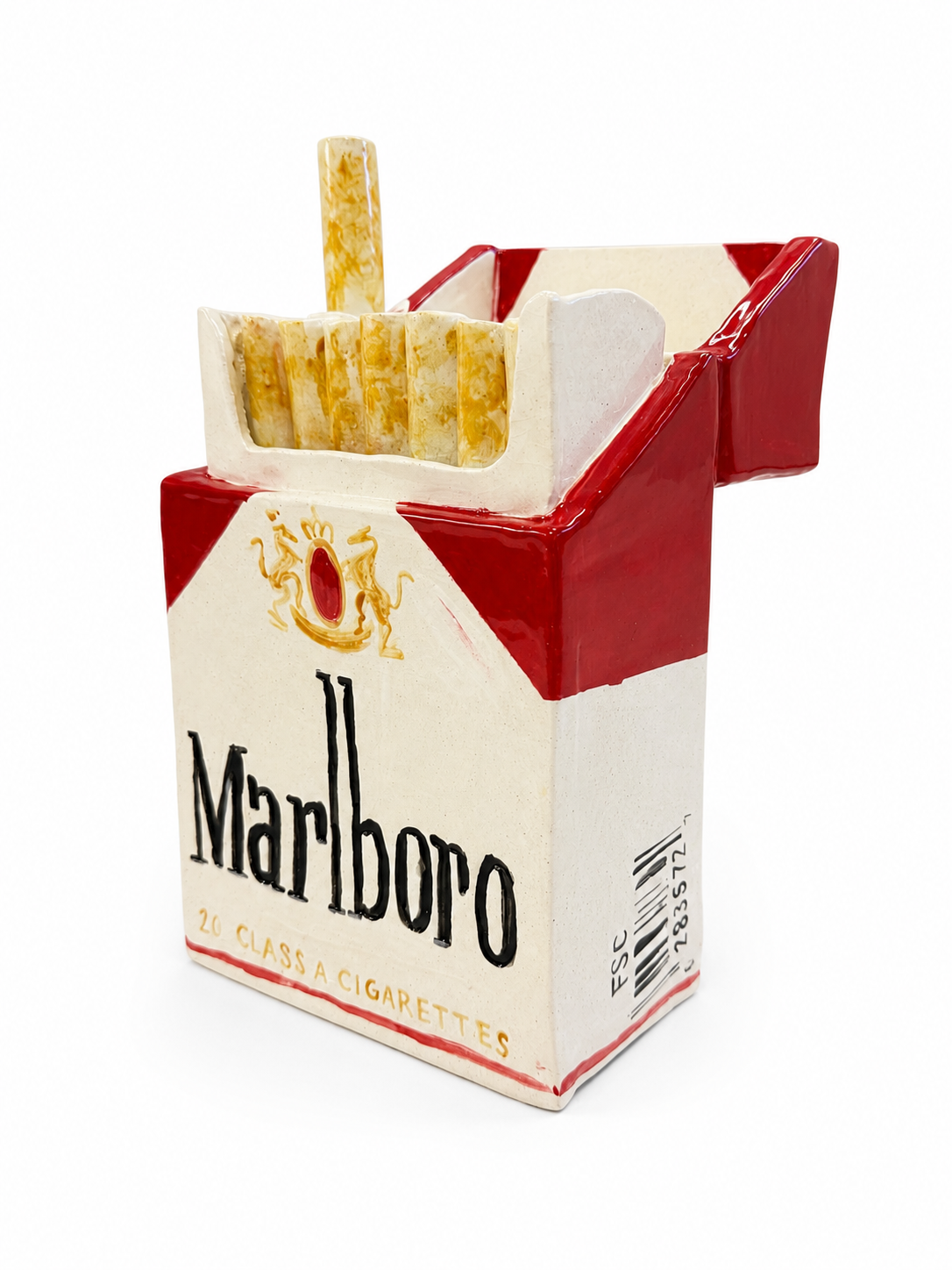
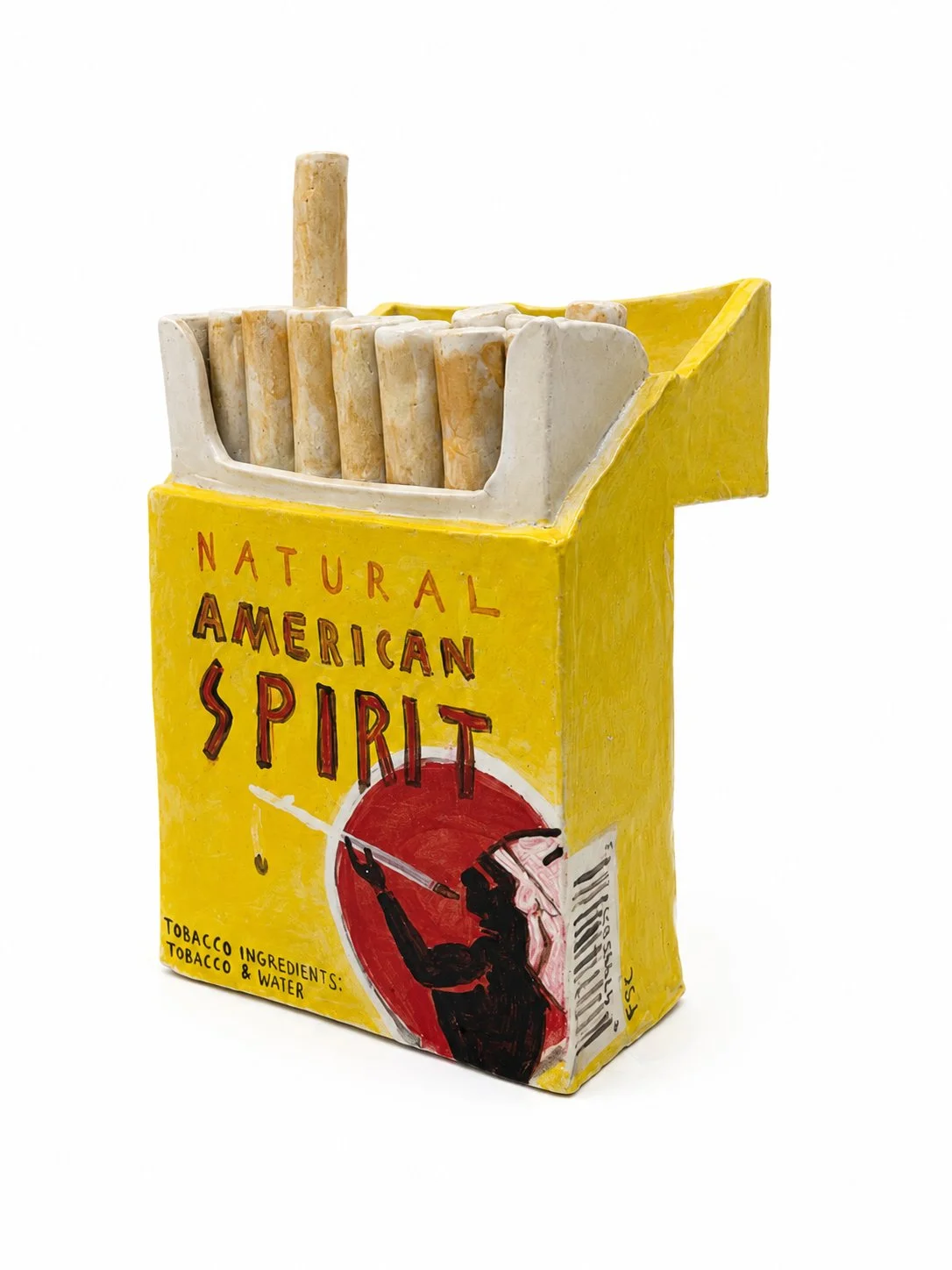
Available for Pre-order!
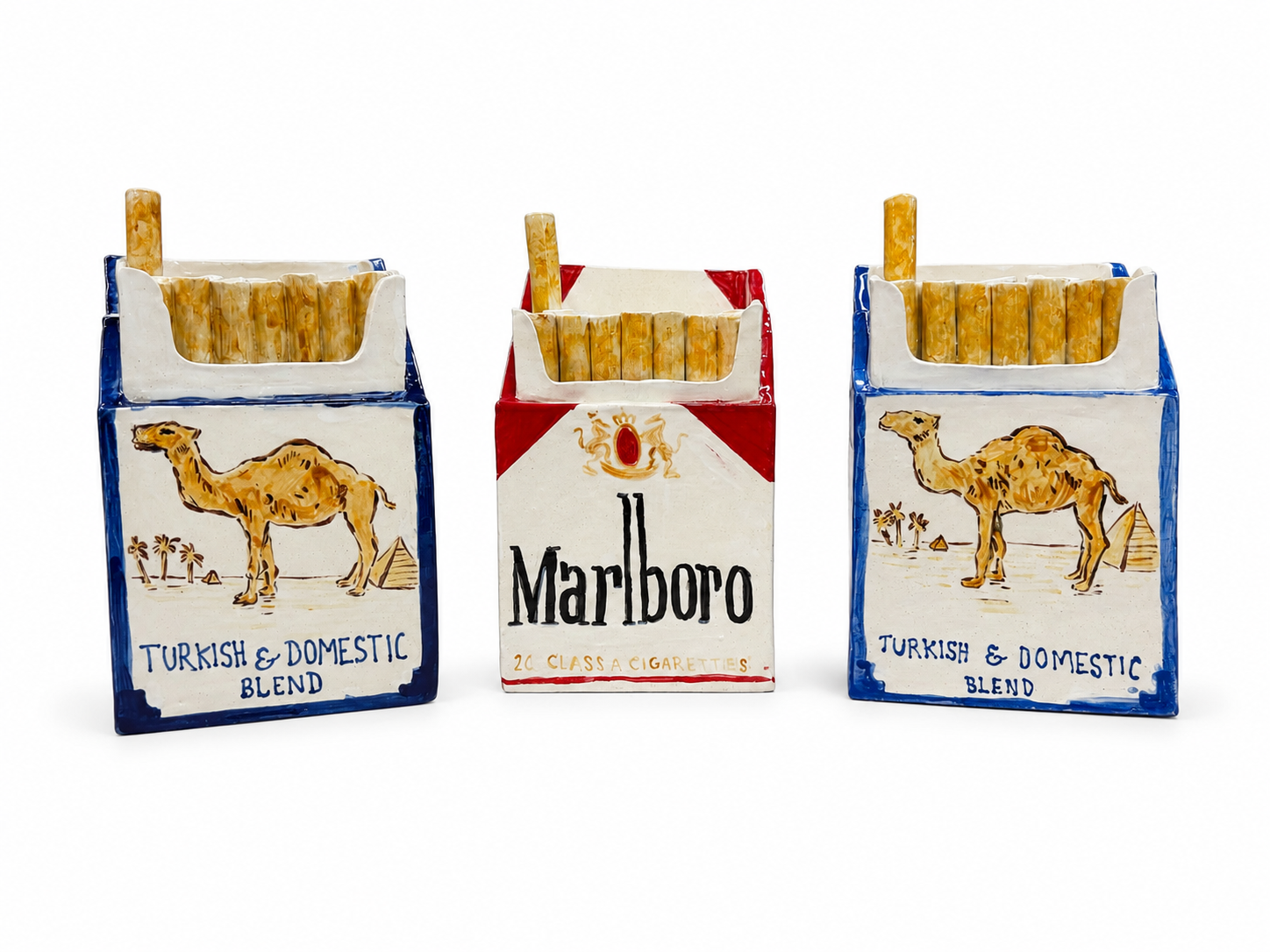
The smoothest way to celebrate Hanukkah. Each menorah takes the familiar form of a hard-pack cigarette box, reimagined as an oversized ceramic sculpture. For 357 days each year, it exists as sculpture; for the eight nights of Hanukkah, it serves as a fully functional menorah. The subversive menorah recommended by 4 out of 5 Rabbis.
Details
Hand-built stoneware ceramic
Individually hand-painted with underglaze and finished with a clear gloss glaze
Functional nine-candle Hanukkah menorah
Each piece is one of a kind
Designed and handcrafted in Los Angeles by artist Jake Sheiner
Every piece is individually made by hand. Subtle variations in brushwork, surface, and finish are an inherent part of the process, ensuring that no two are exactly alike.
Designed, built, hand-painted, and glazed by Jake Sheiner in Los Angeles.
Pre-orders will be filled in the order they're received.
If you are interested in purchasing more than 1 please email me at sheinerceramics@gmail.com to discuss shipping options.

DELI
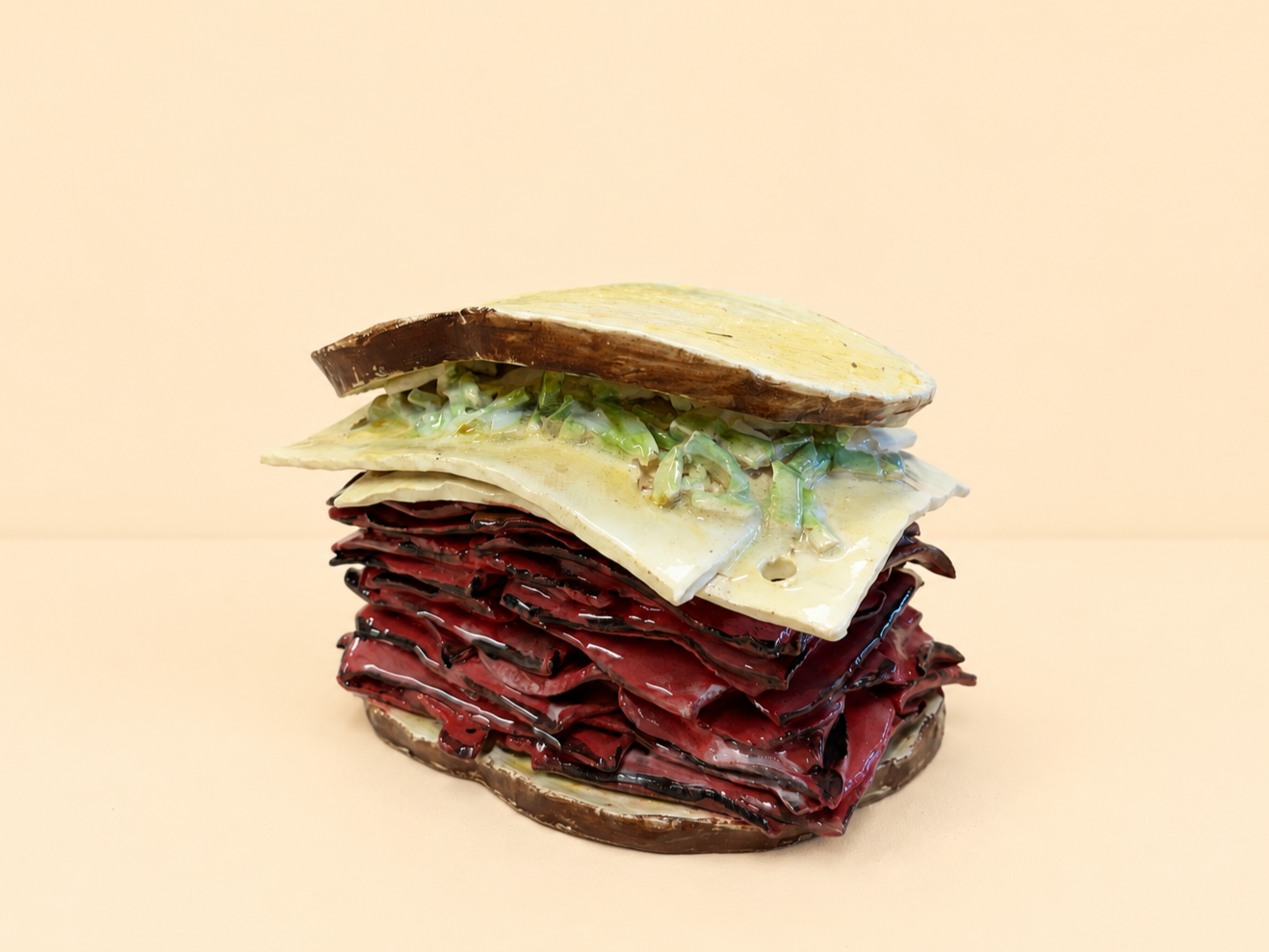
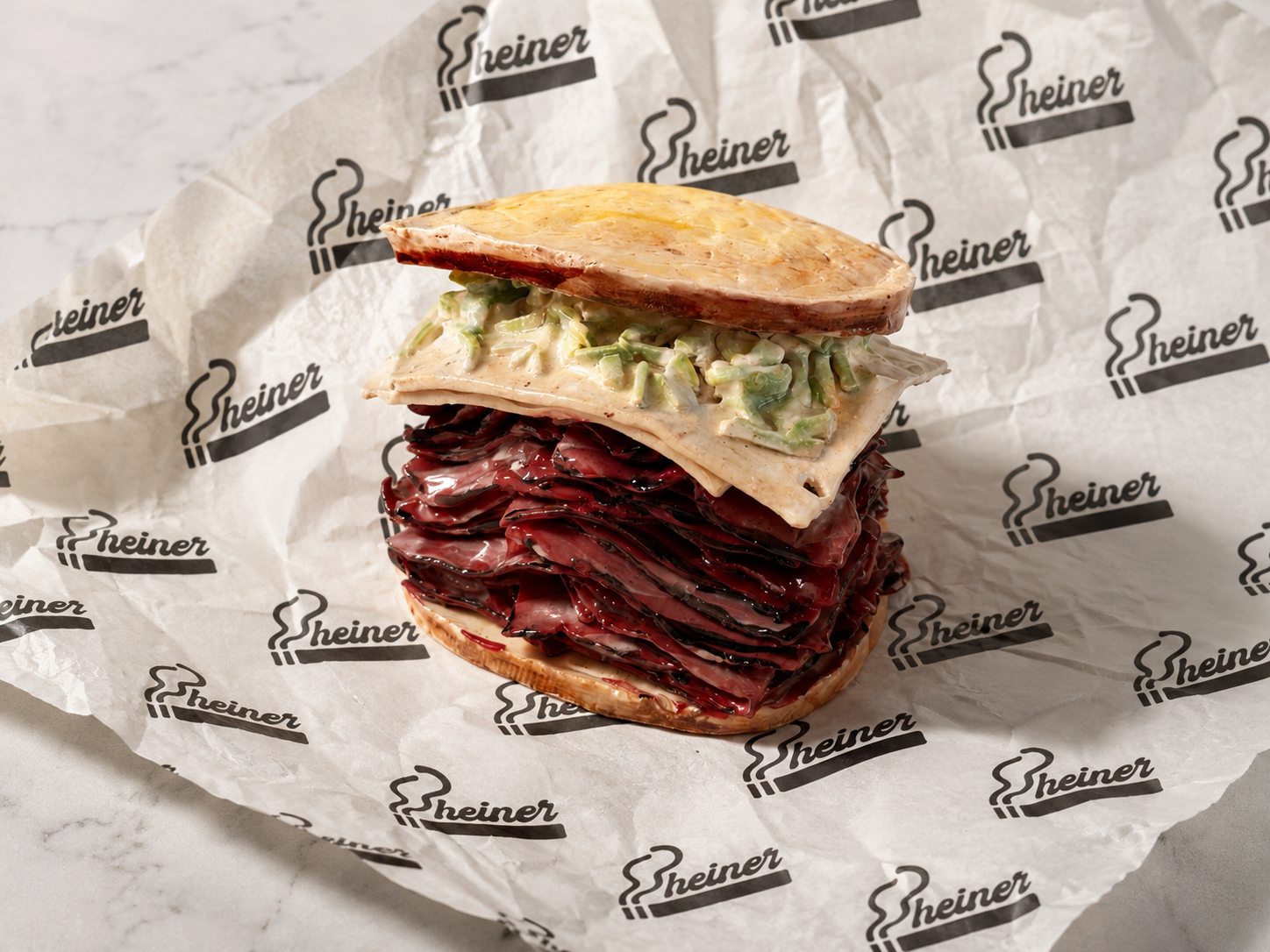
A classic deli sandwich reimagined in glazed stoneware, this sculpture transforms one of the most iconic Jewish deli comfort foods into a permanent object. Towering layers of hand-built pastrami, Swiss cheese, coleslaw, Russian dressing, and toasted rye are rendered with meticulous attention to texture, weight, and excess.
Details
Hand-built ceramic
Individually glazed and kiln fired
One-of-a-kind
Intended as a sculptural object
Approx. 5 H x 5.5 L x 4 W in.
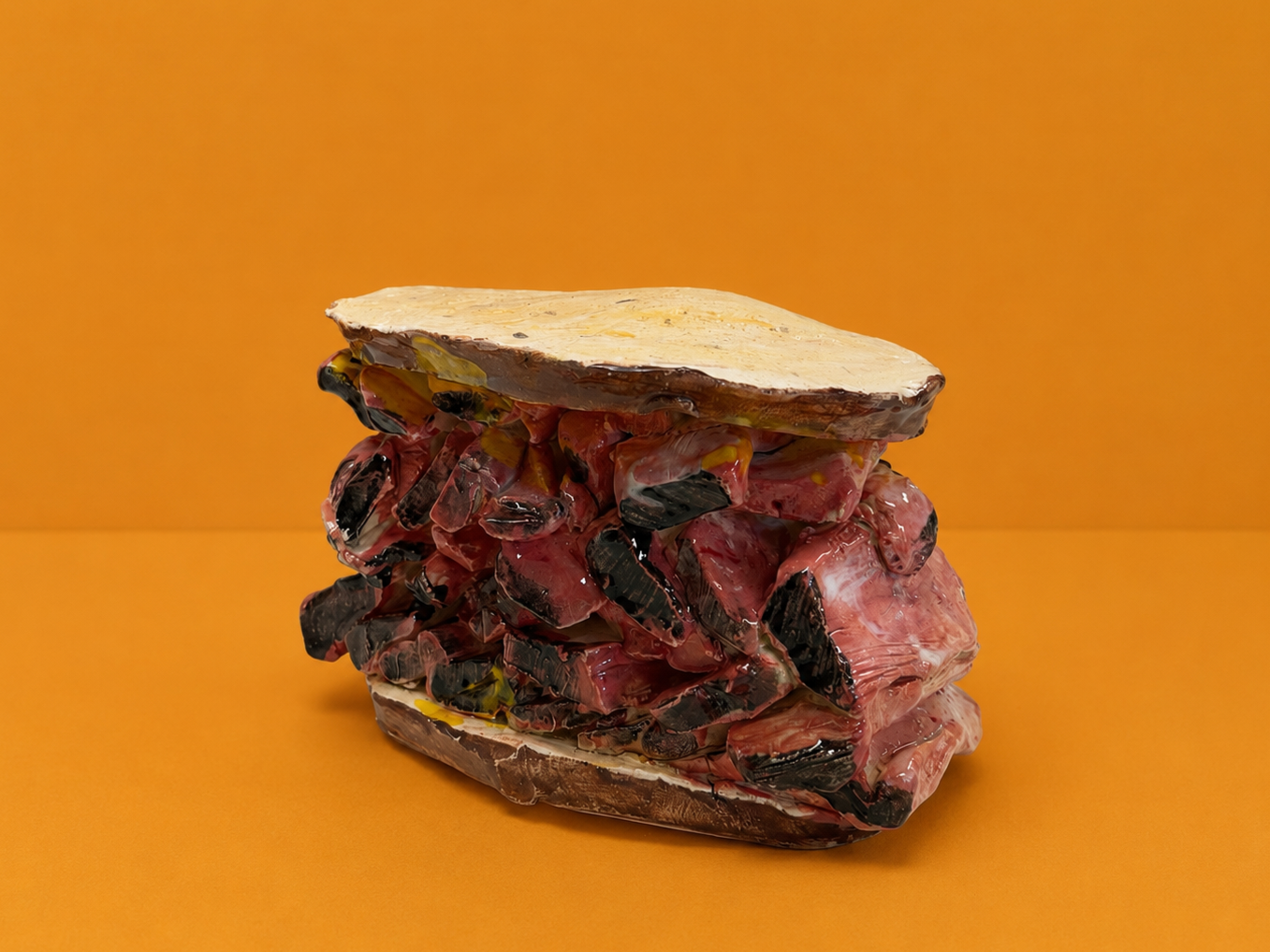
A classic deli sandwich reimagined in glazed stoneware, this sculpture transforms one of the most iconic Jewish deli comfort foods into a permanent object. Towering layers of hand-built Thick Cut Pastrami and mustard on toasted rye are rendered with meticulous attention to texture, weight, and excess.
Details
Hand-built ceramic
Individually glazed and kiln fired
One-of-a-kind
Intended as a sculptural object
Approx. 6H x 6 L x 4.5 W in.
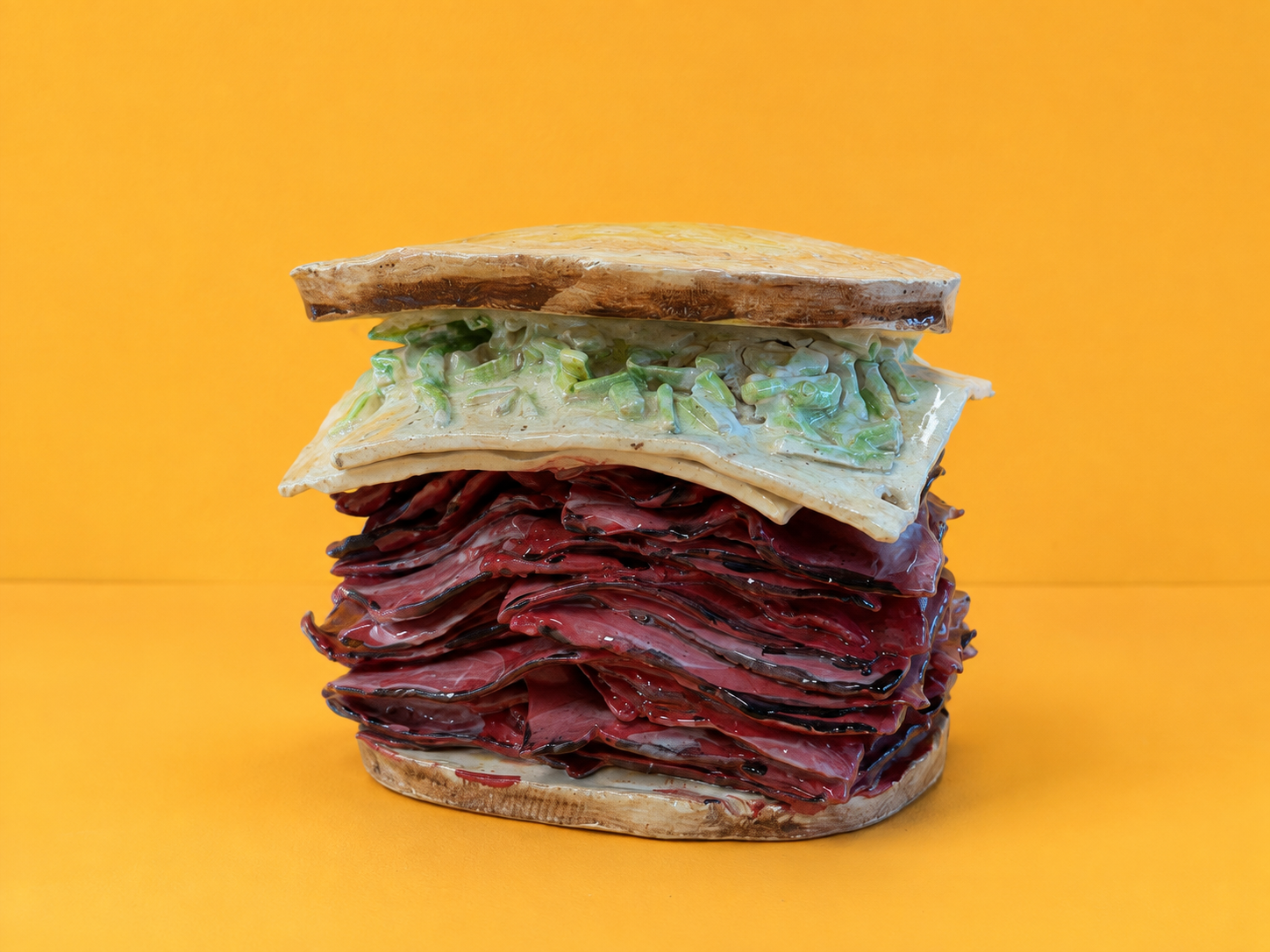
A classic deli sandwich reimagined in glazed stoneware, this sculpture transforms one of the most iconic Jewish deli comfort foods into a permanent object. Towering layers of hand-built pastrami, Swiss cheese, coleslaw, Russian dressing, and toasted rye are rendered with meticulous attention to texture, weight, and excess.
Details
Hand-built ceramic
Individually glazed and kiln fired
One-of-a-kind
Intended as a sculptural object
Approx. 5.5 H x 4.5 L x 3.5 W in.
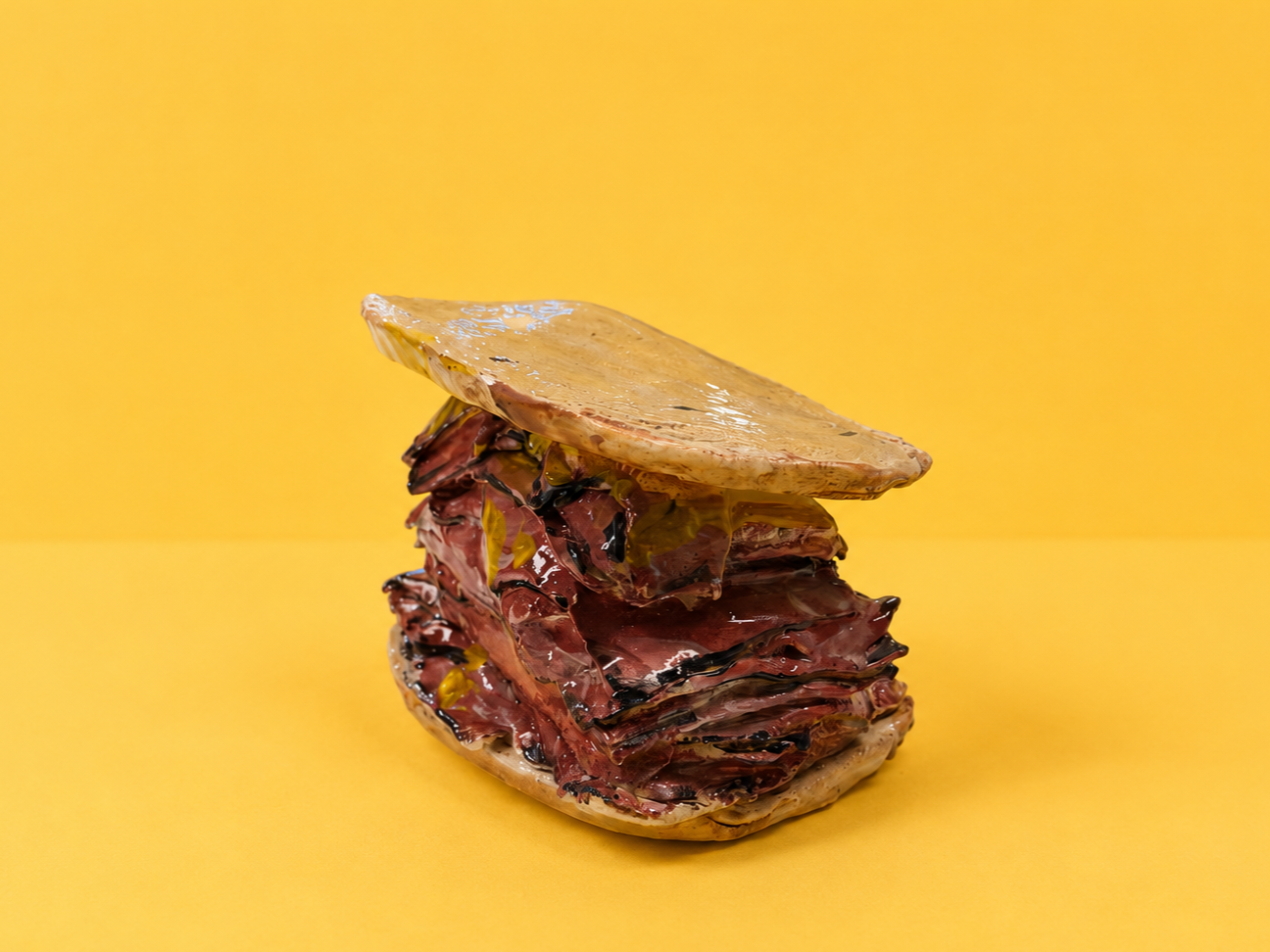
A classic deli sandwich reimagined in glazed stoneware, this sculpture transforms one of the most iconic Jewish deli comfort foods into a permanent object. Layers of hand-built pastrami, with mustard on toasted rye are rendered with meticulous attention to texture, weight, and excess.
Details
Hand-built ceramic
Individually glazed and kiln fired
One-of-a-kind
Intended as a sculptural object
Approx. 3H x 4.5 L x 4.75 W in.
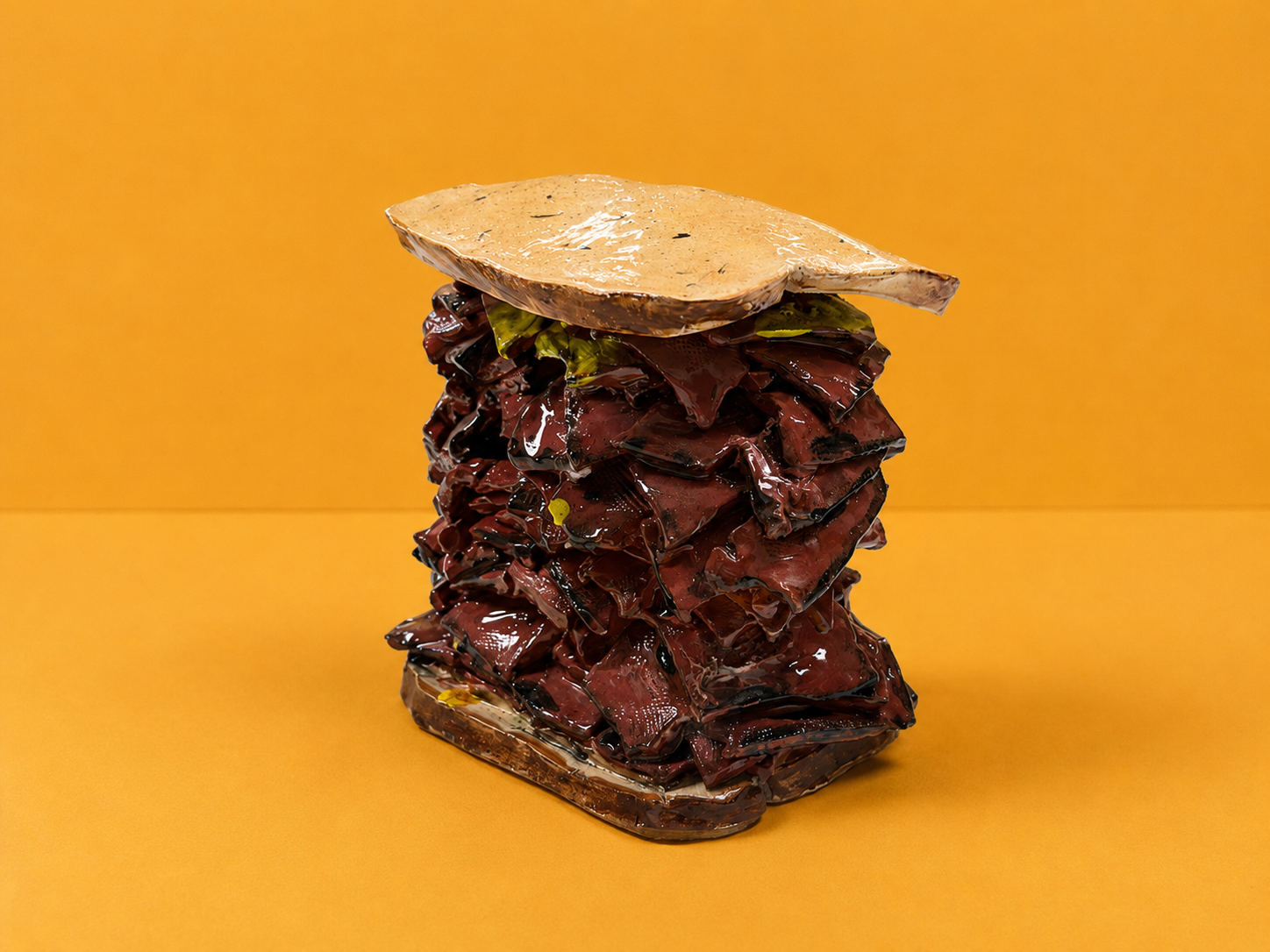
A classic deli sandwich reimagined in glazed stoneware, this sculpture transforms one of the most iconic Jewish deli comfort foods into a permanent object. Towering layers of hand-built Thick Cut Brisket and mustard on toasted rye are rendered with meticulous attention to texture, weight, and excess.
Details
Hand-built ceramic
Individually glazed and kiln fired
One-of-a-kind
Intended as a sculptural object
Approx. 6H x 6 L x 4.5 W in.
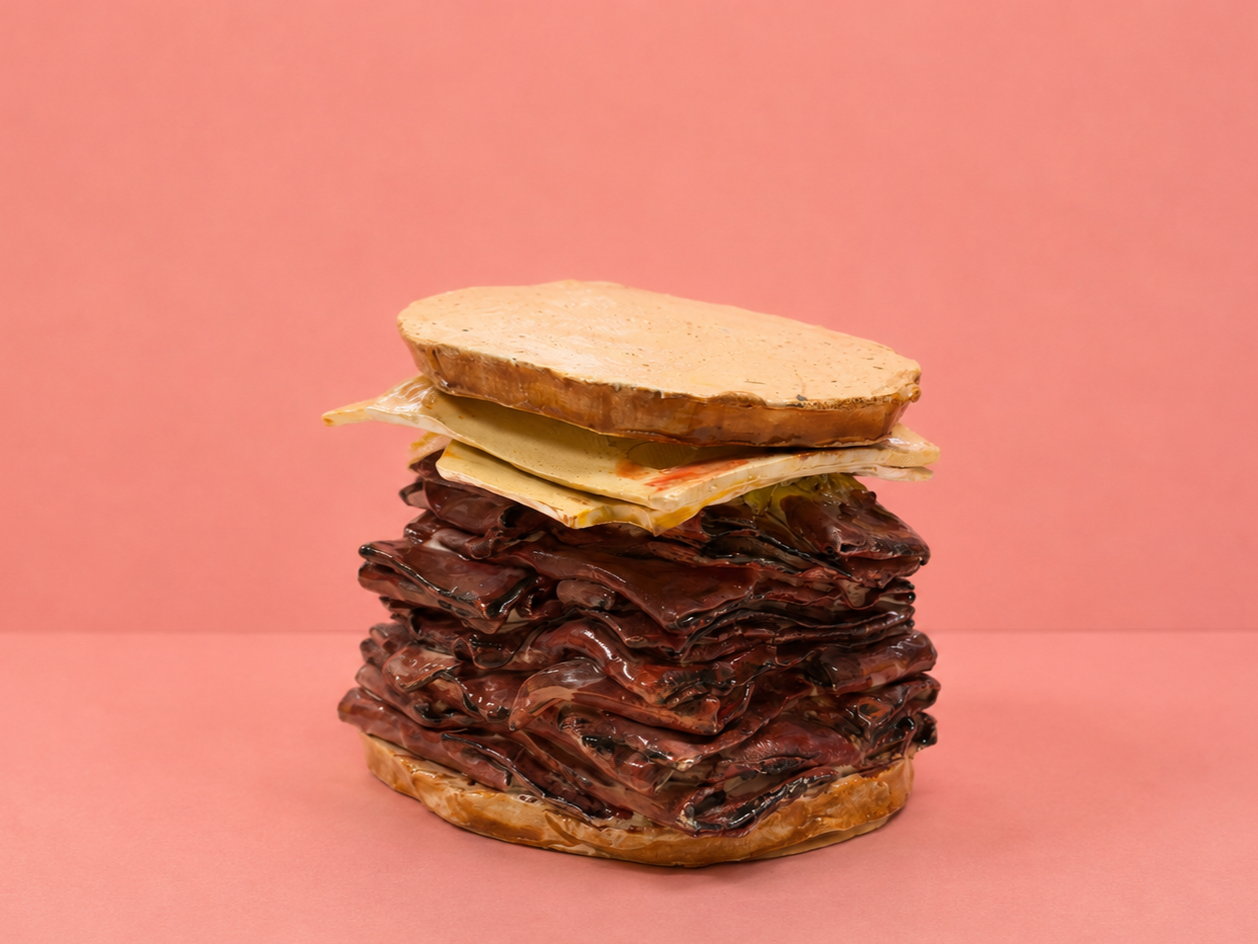
A classic deli sandwich reimagined in glazed stoneware, this sculpture transforms one of the most iconic Jewish deli comfort foods into a permanent object. Towering layers of hand-built Brisket Swiss cheese, coleslaw, Russian dressing, and toasted rye are rendered with meticulous attention to texture, weight, and excess.
Details
Hand-built ceramic
Individually glazed and kiln fired
One-of-a-kind
Intended as a sculptural object
Approx. 5.5 H x 6 L x 4 W in.
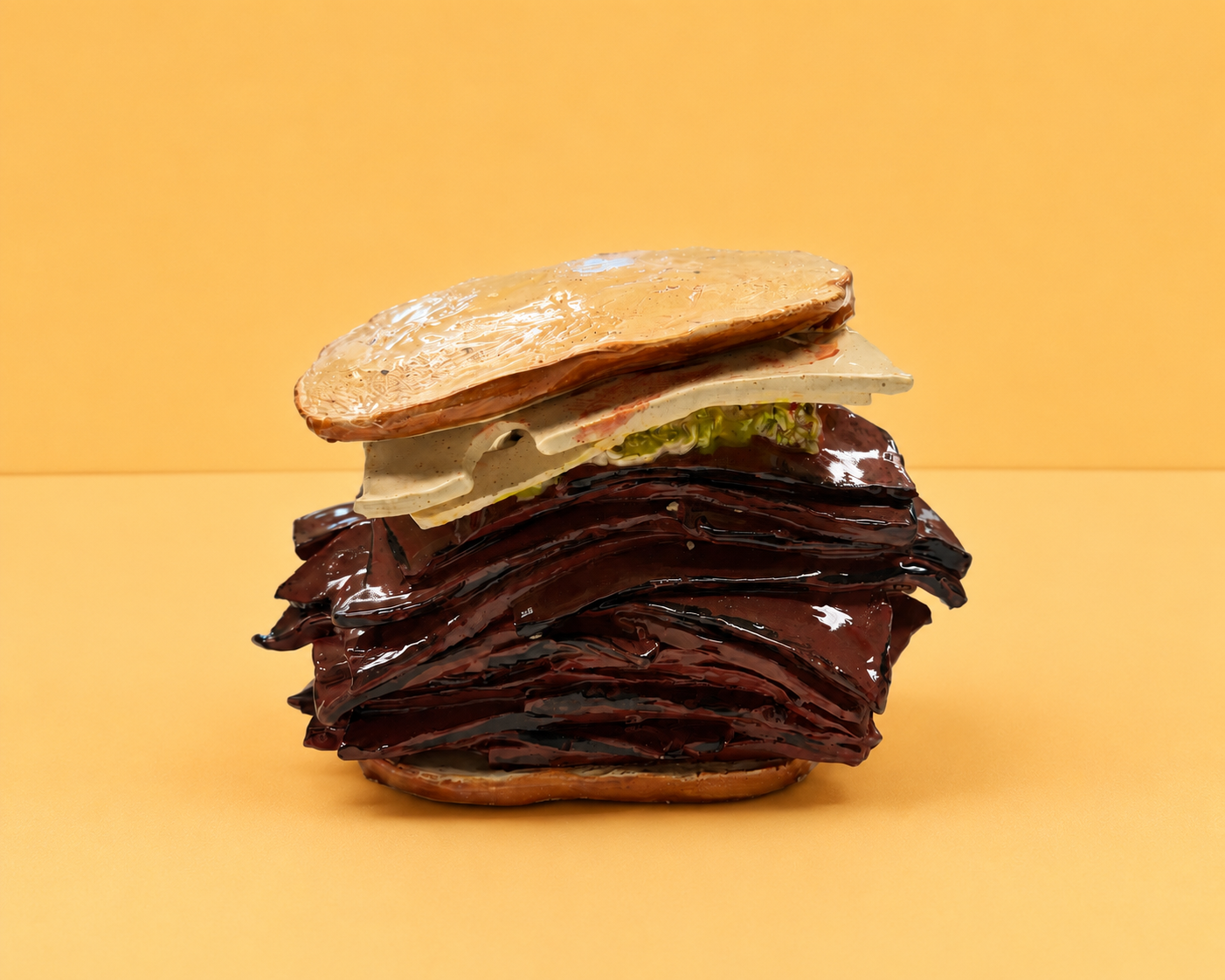
A classic deli sandwich reimagined in glazed stoneware, this sculpture transforms one of the most iconic Jewish deli comfort foods into a permanent object. Towering layers of hand-built Brisket Swiss cheese, coleslaw, Russian dressing, and toasted rye are rendered with meticulous attention to texture, weight, and excess.
Details
Hand-built ceramic
Individually glazed and kiln fired
One-of-a-kind
Intended as a sculptural object
Approx. 5.5 H x 6 L x 4 W in.
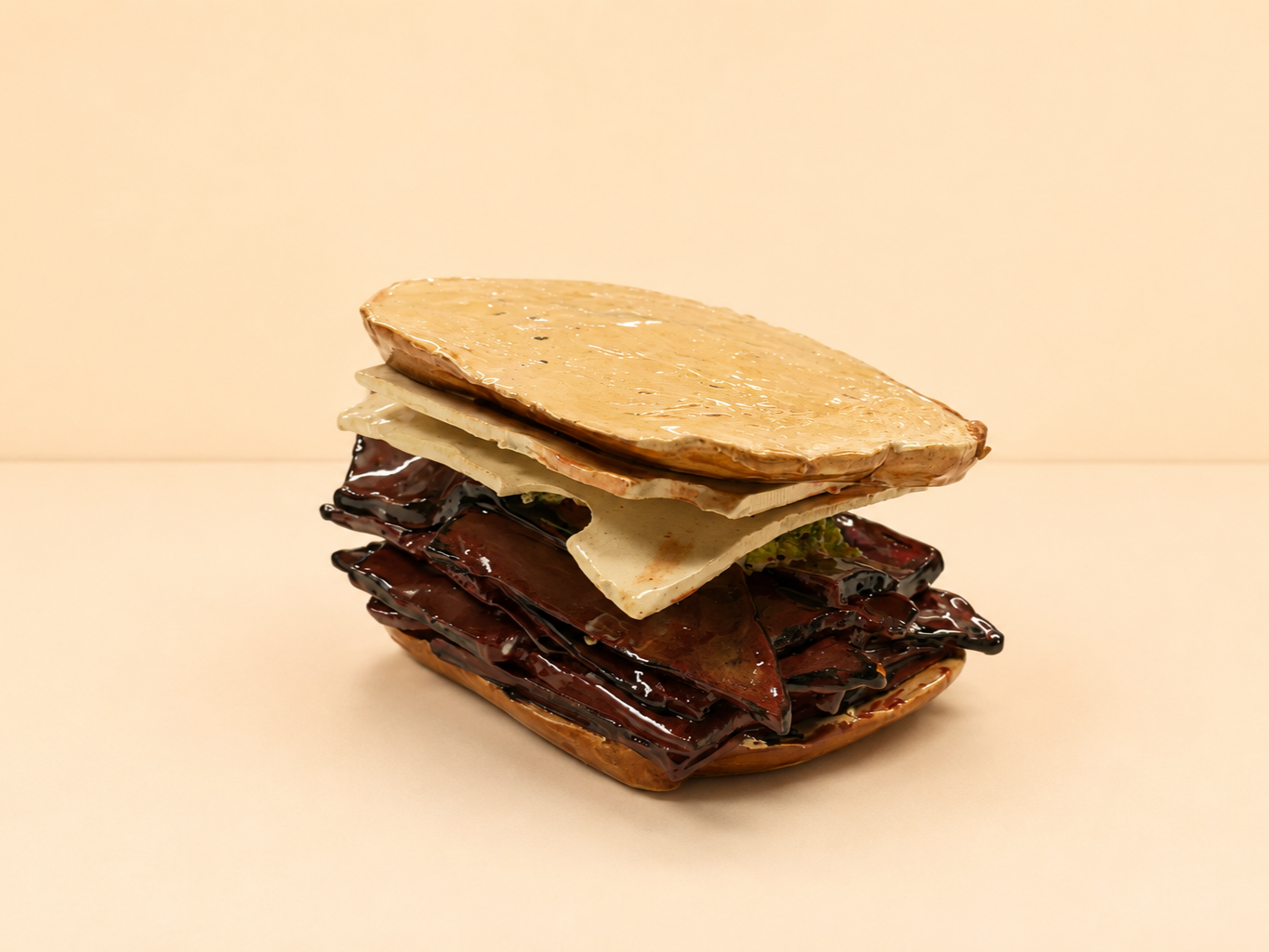
A classic deli sandwich reimagined in glazed stoneware, this sculpture transforms one of the most iconic Jewish deli comfort foods into a permanent object. Towering layers of hand-built Brisket Swiss cheese, coleslaw, Russian dressing, and toasted rye are rendered with meticulous attention to texture, weight, and excess.
Details
Hand-built ceramic
Individually glazed and kiln fired
One-of-a-kind
Intended as a sculptural object
Approx. 3 H x 5.5 L x 3.75 W in.