
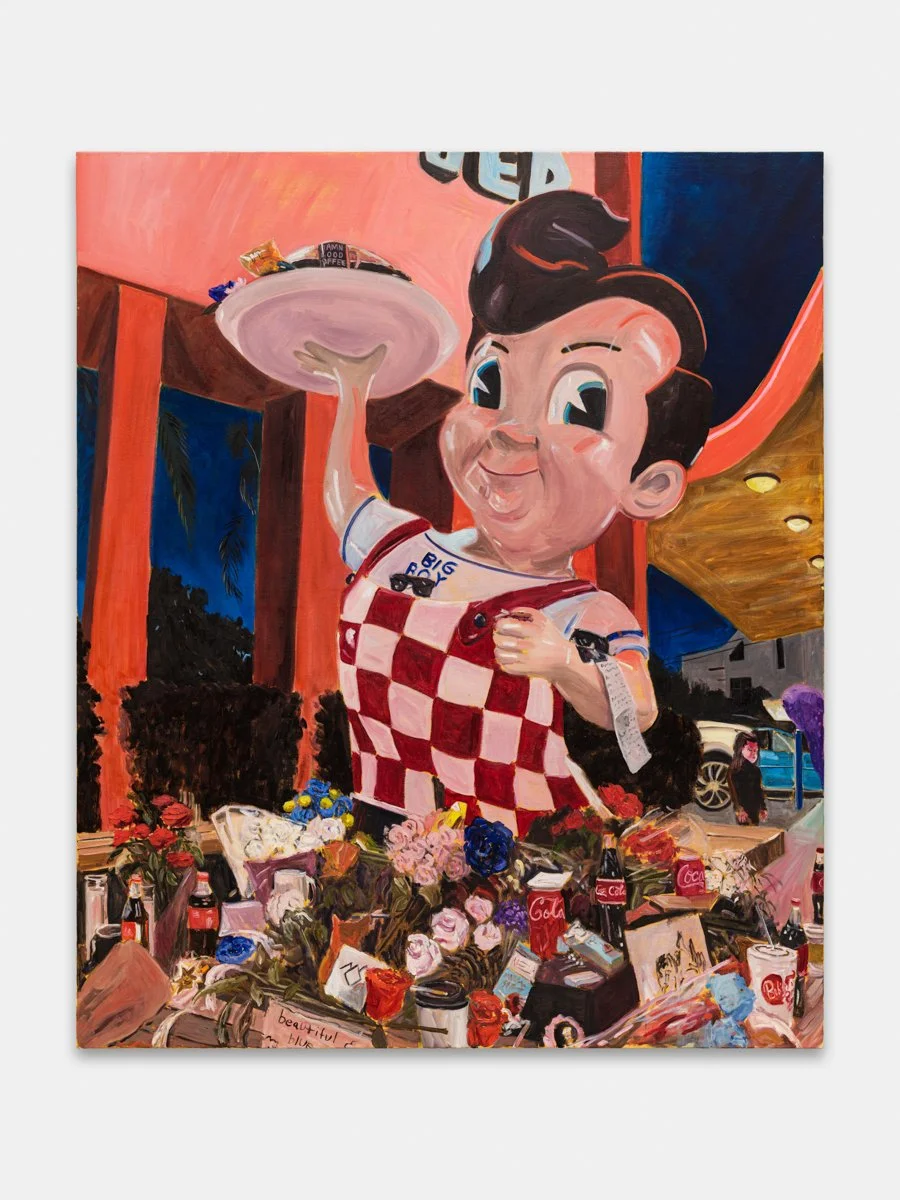
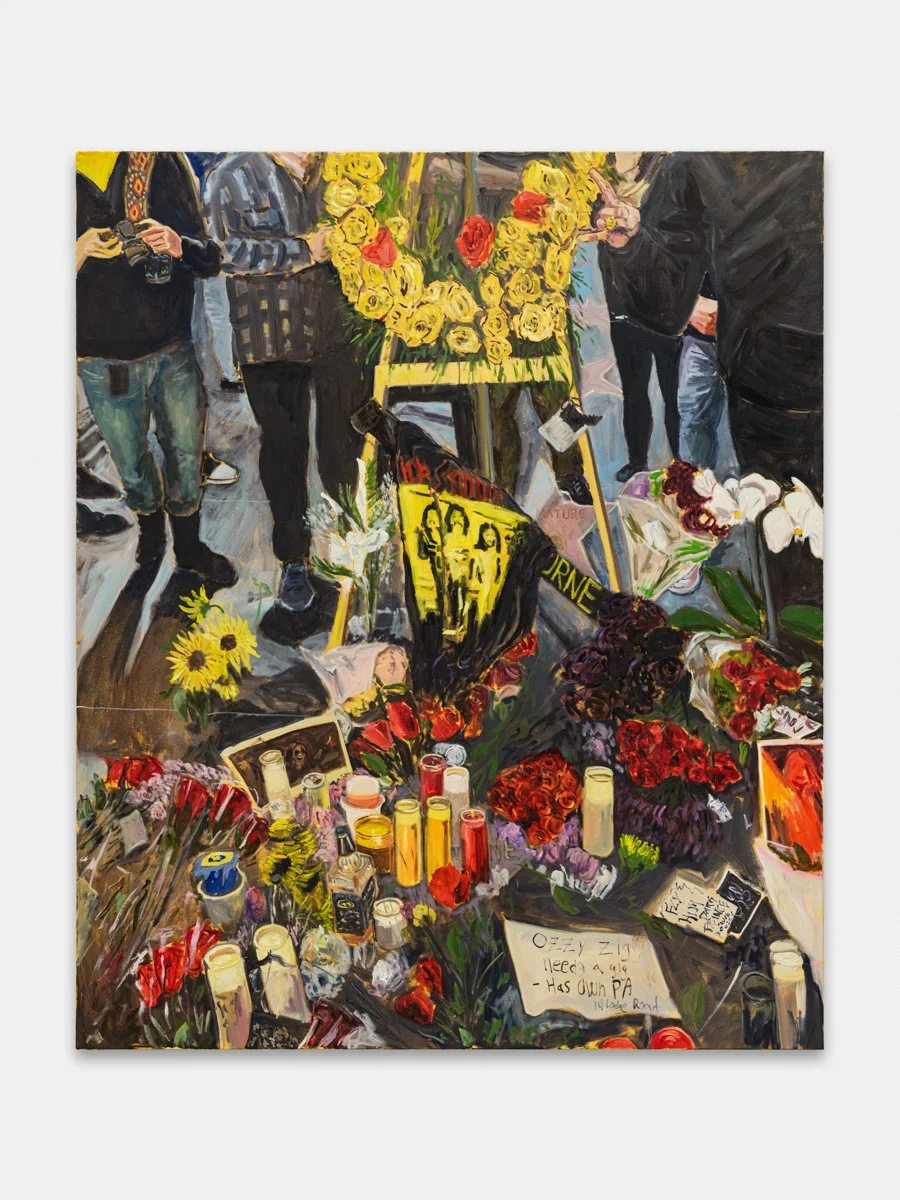
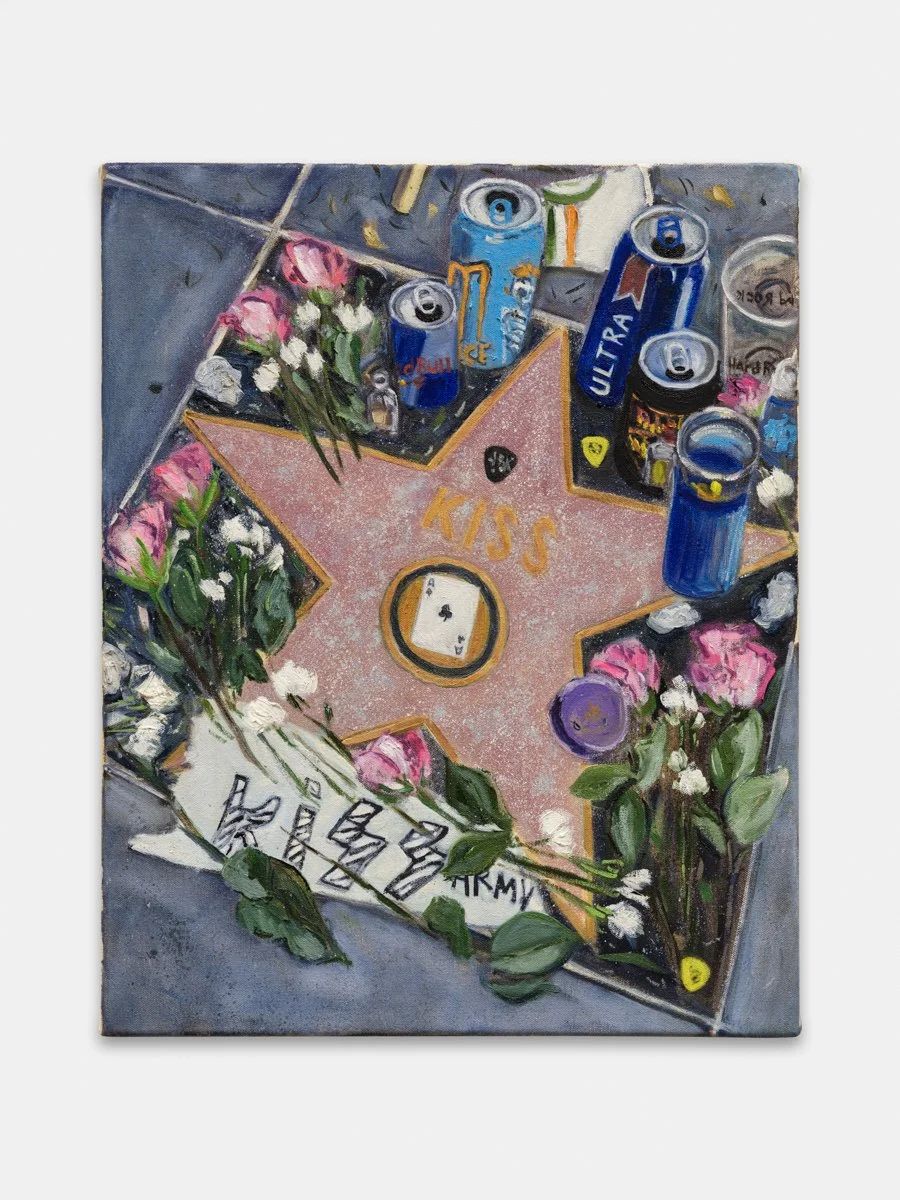
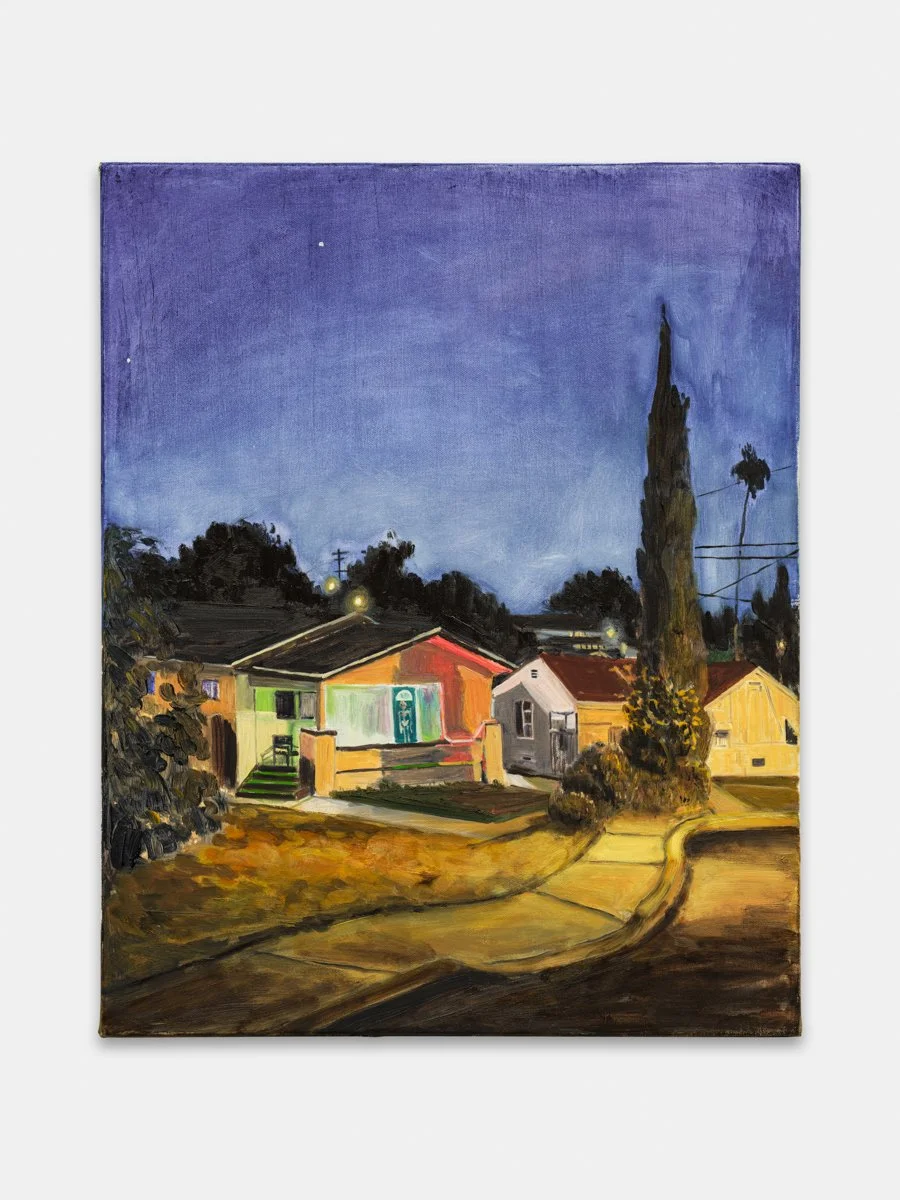
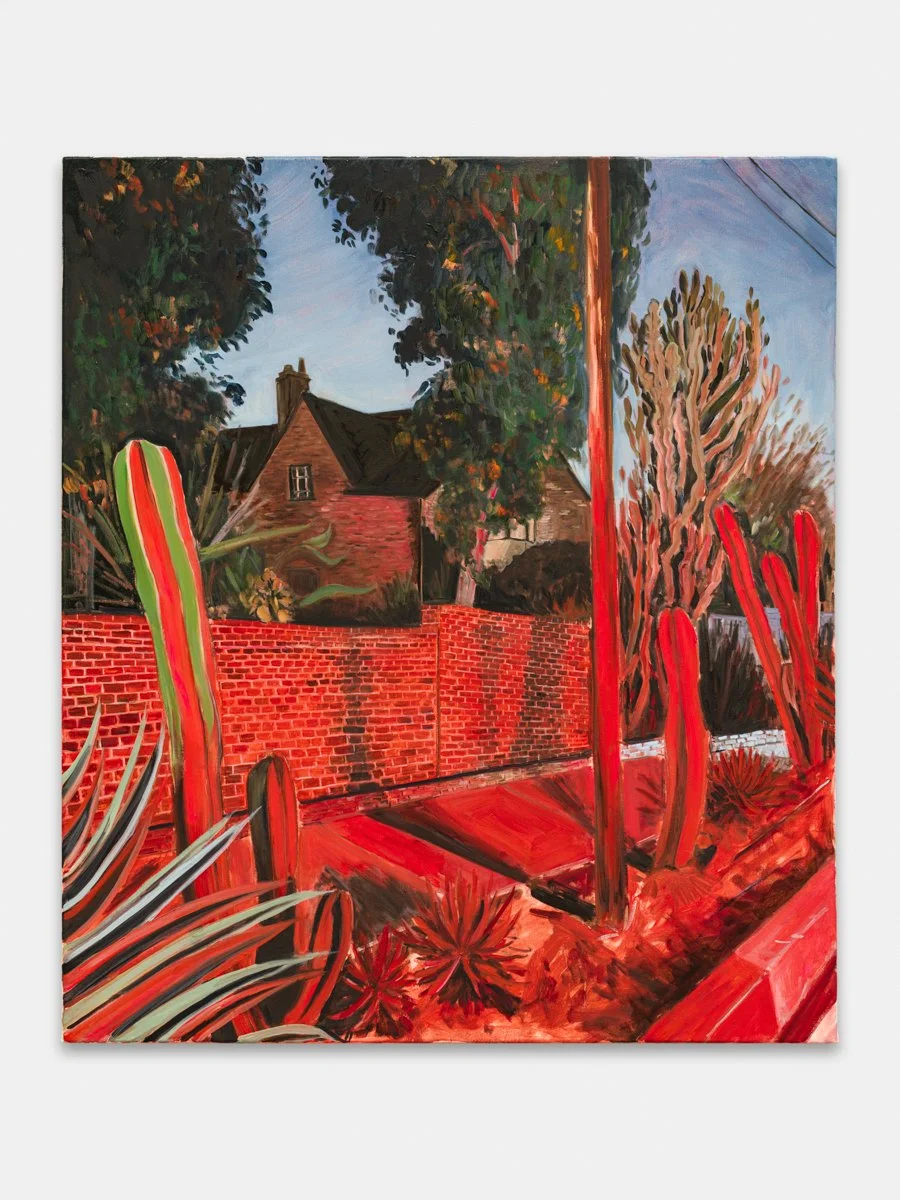
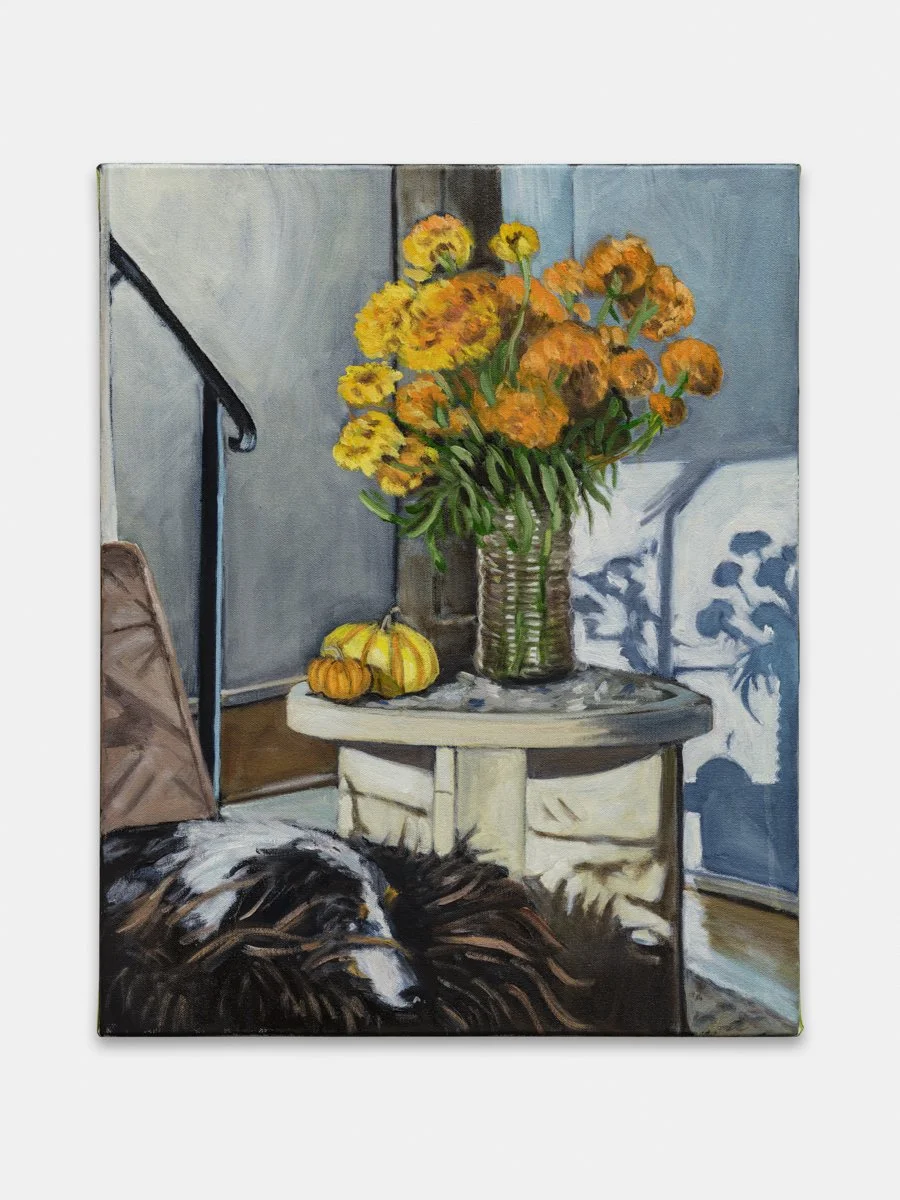
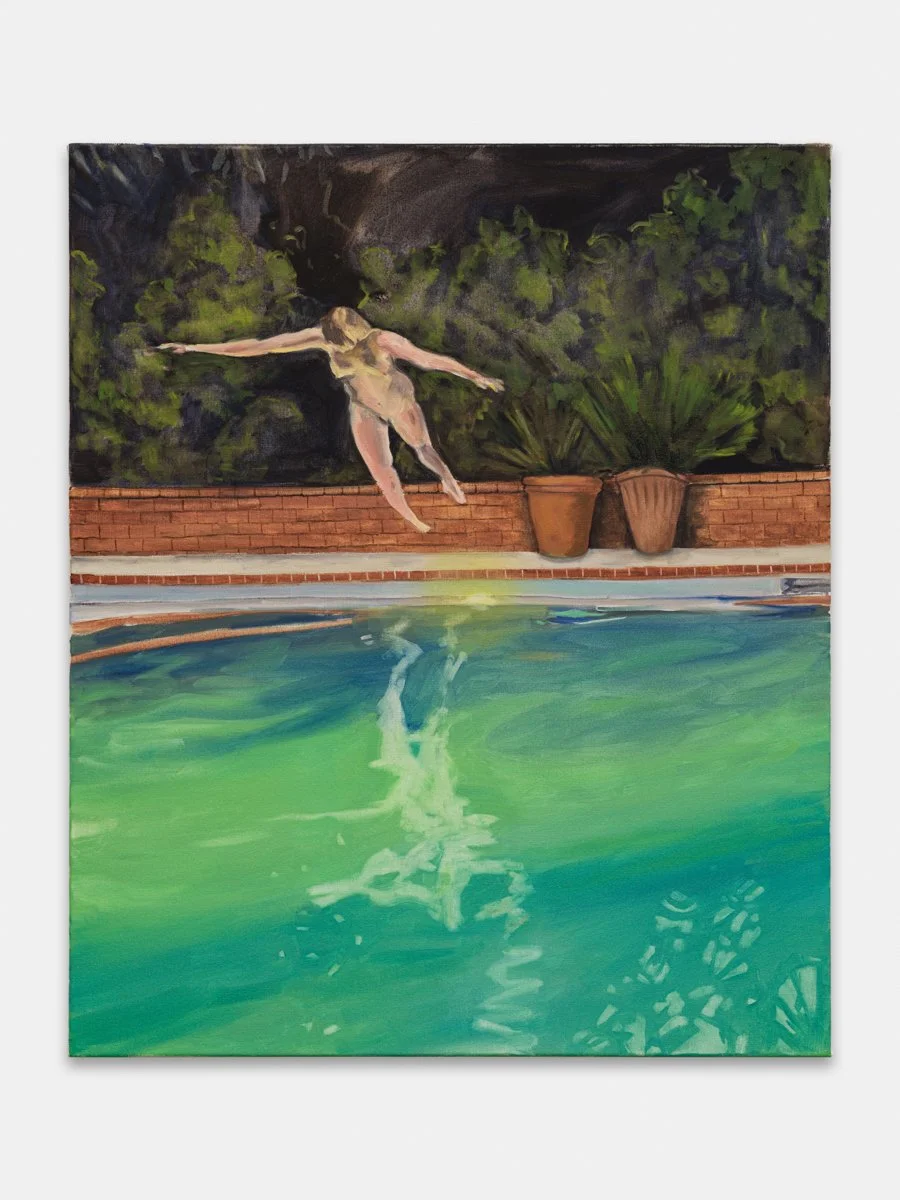
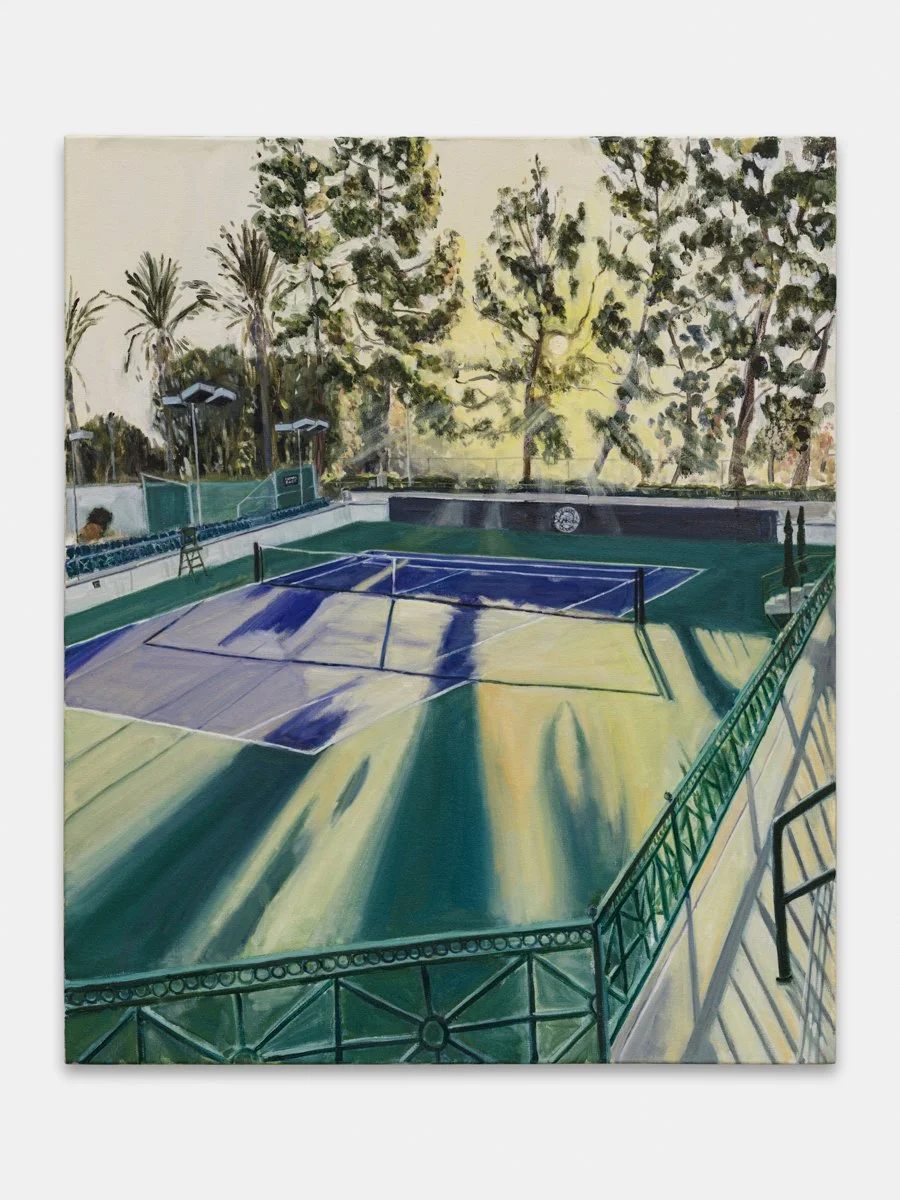
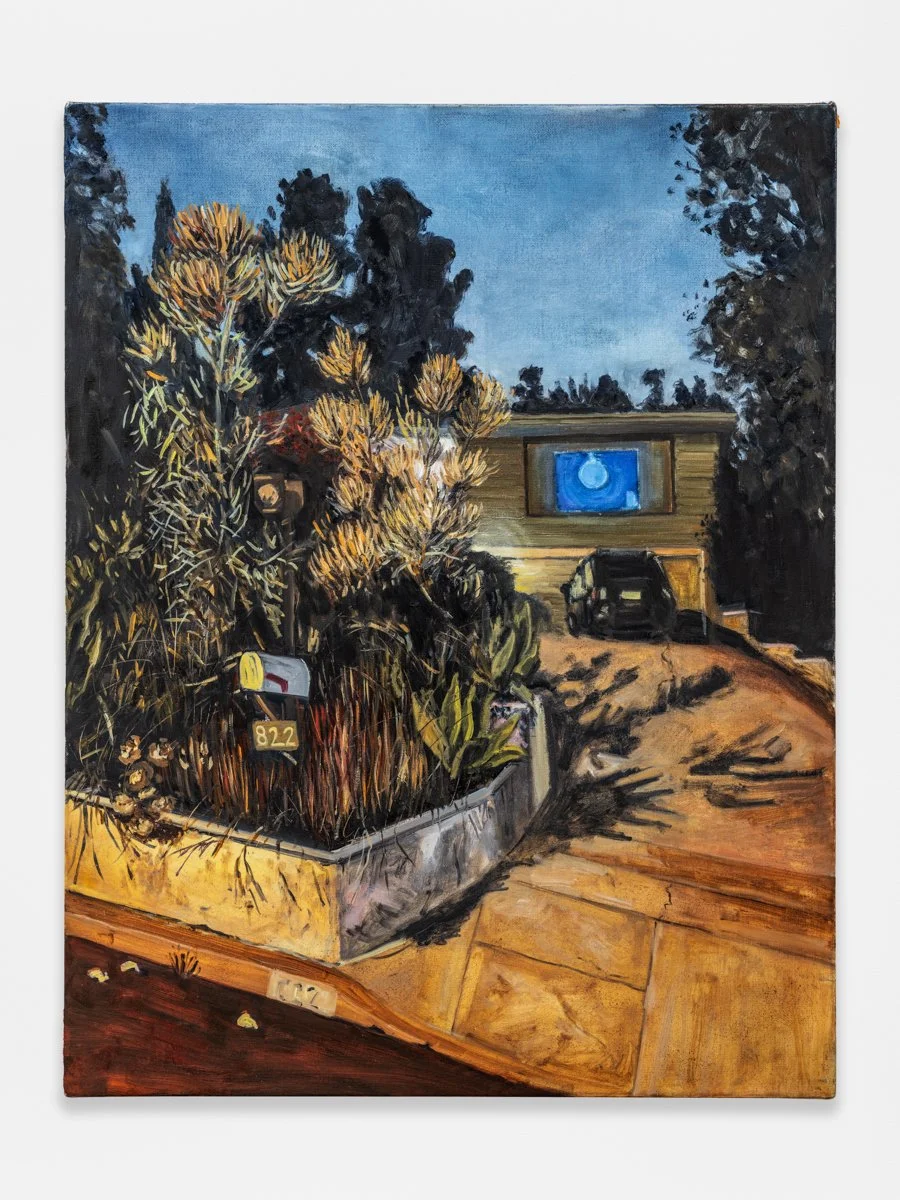
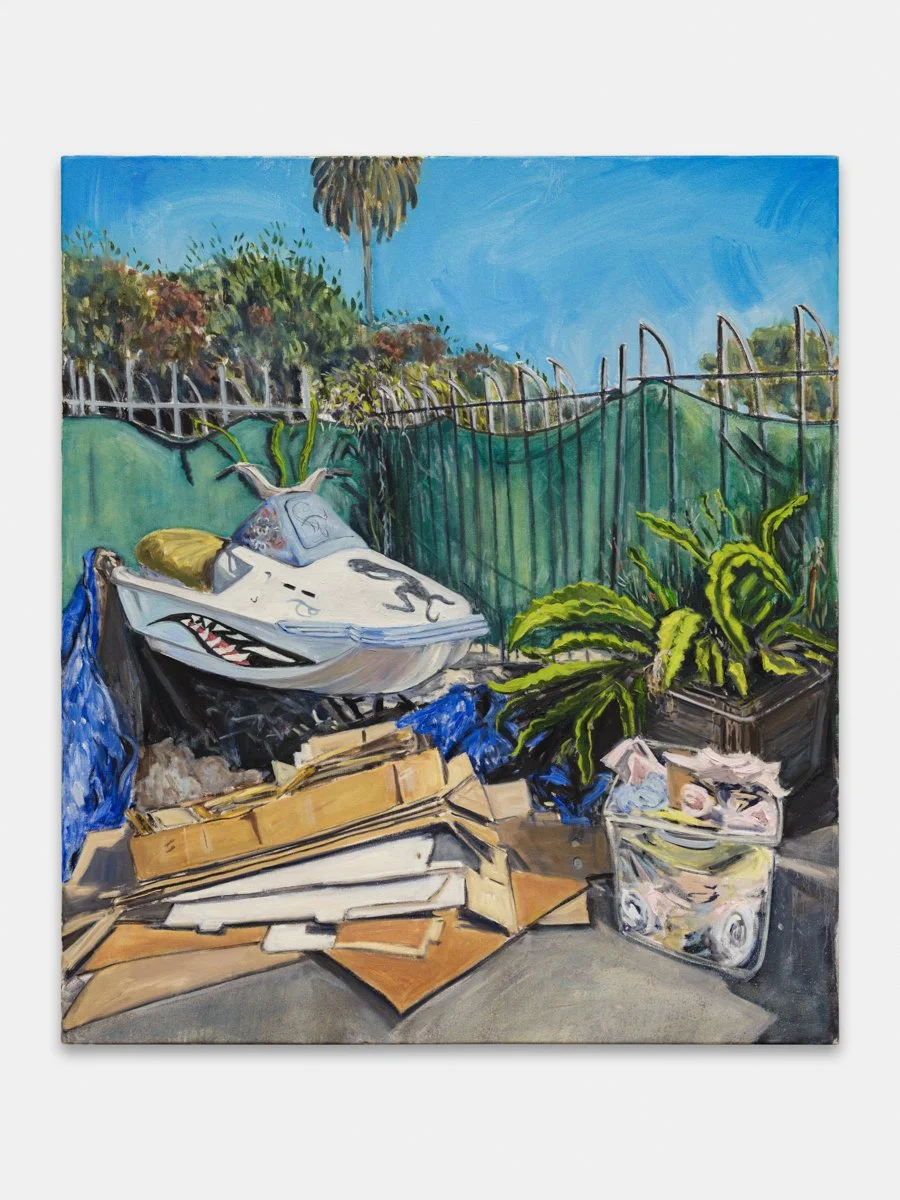
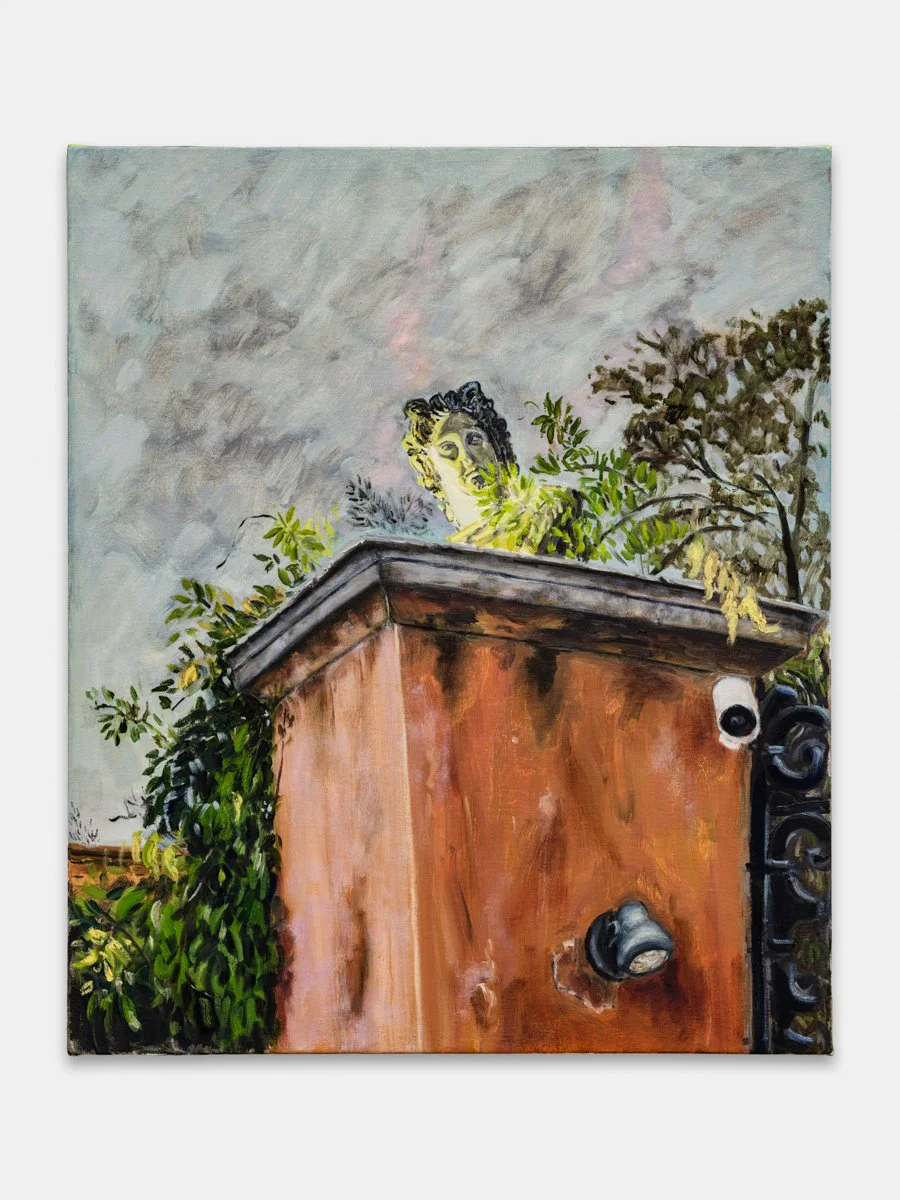
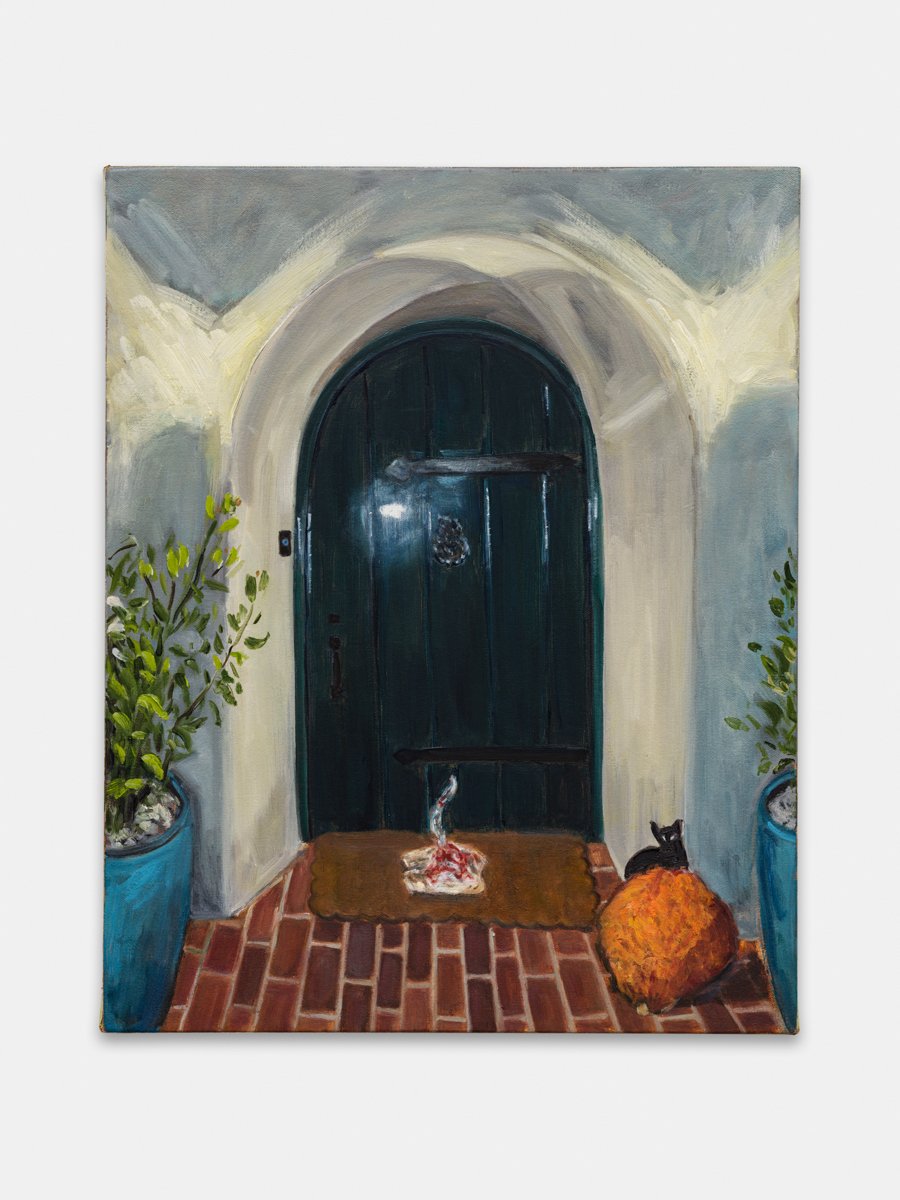
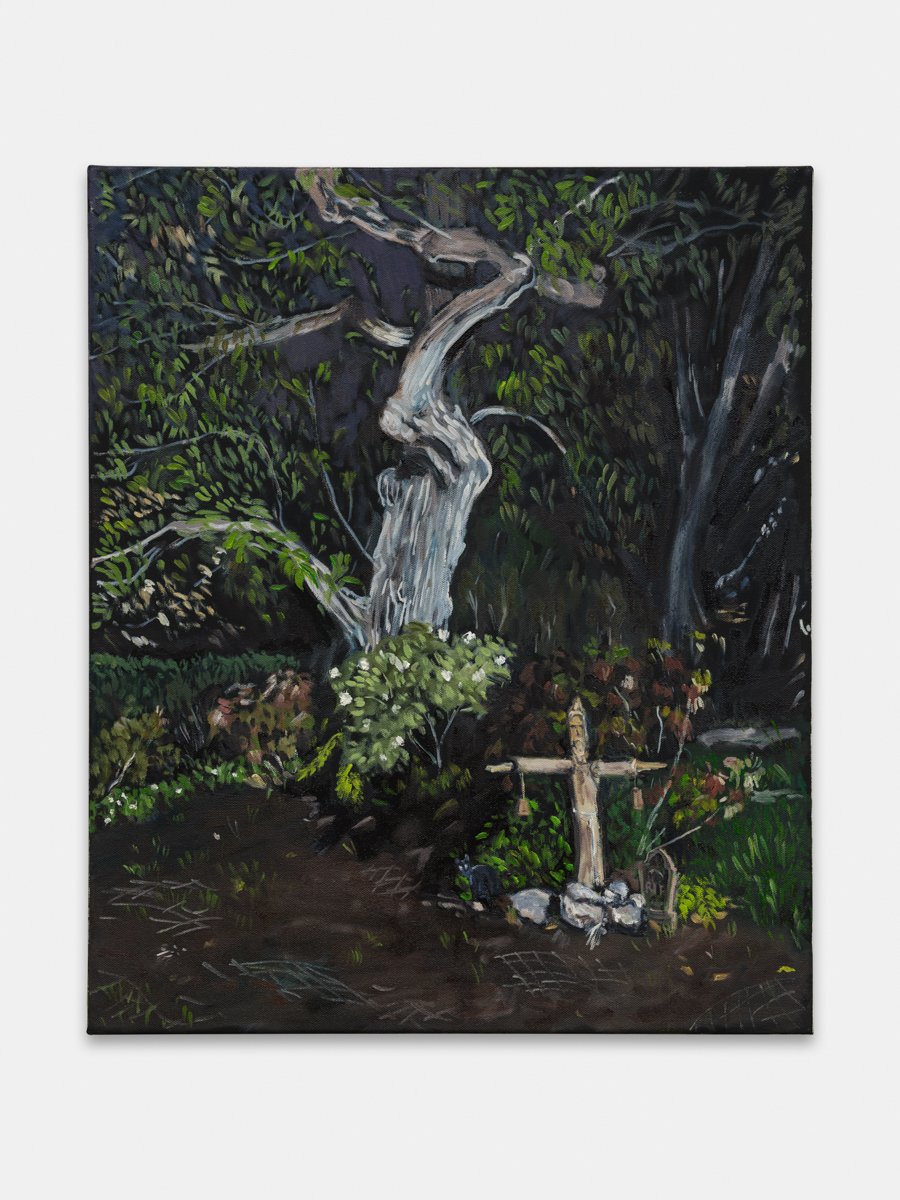
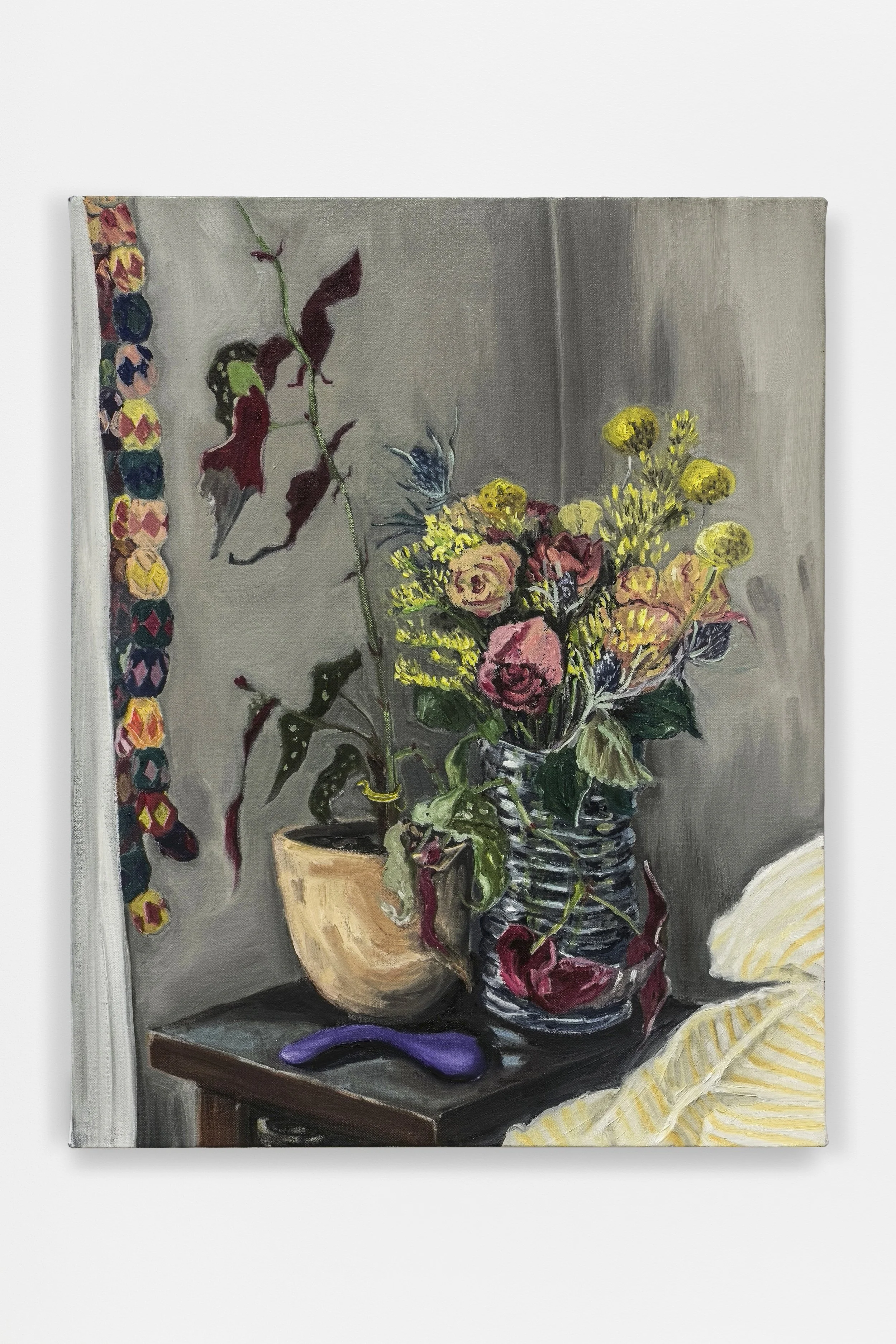
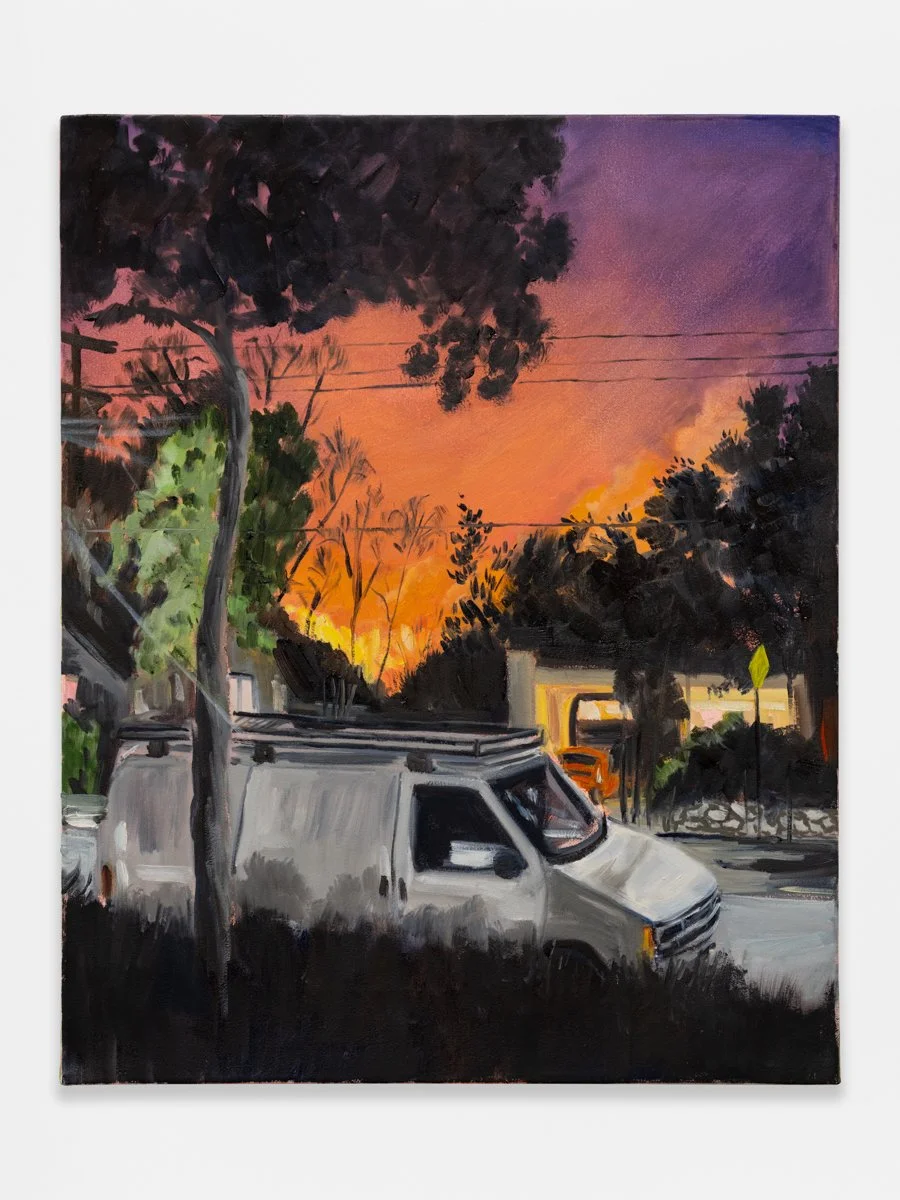
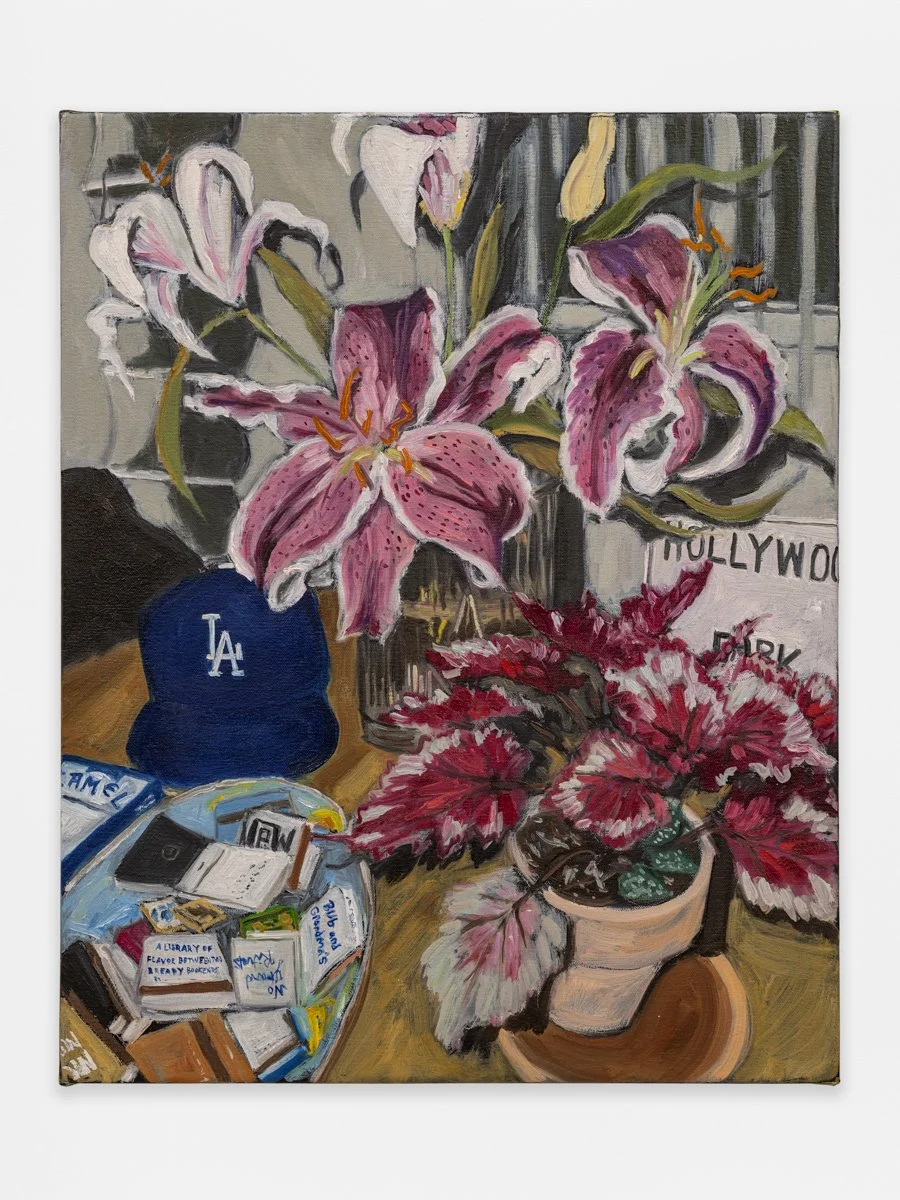
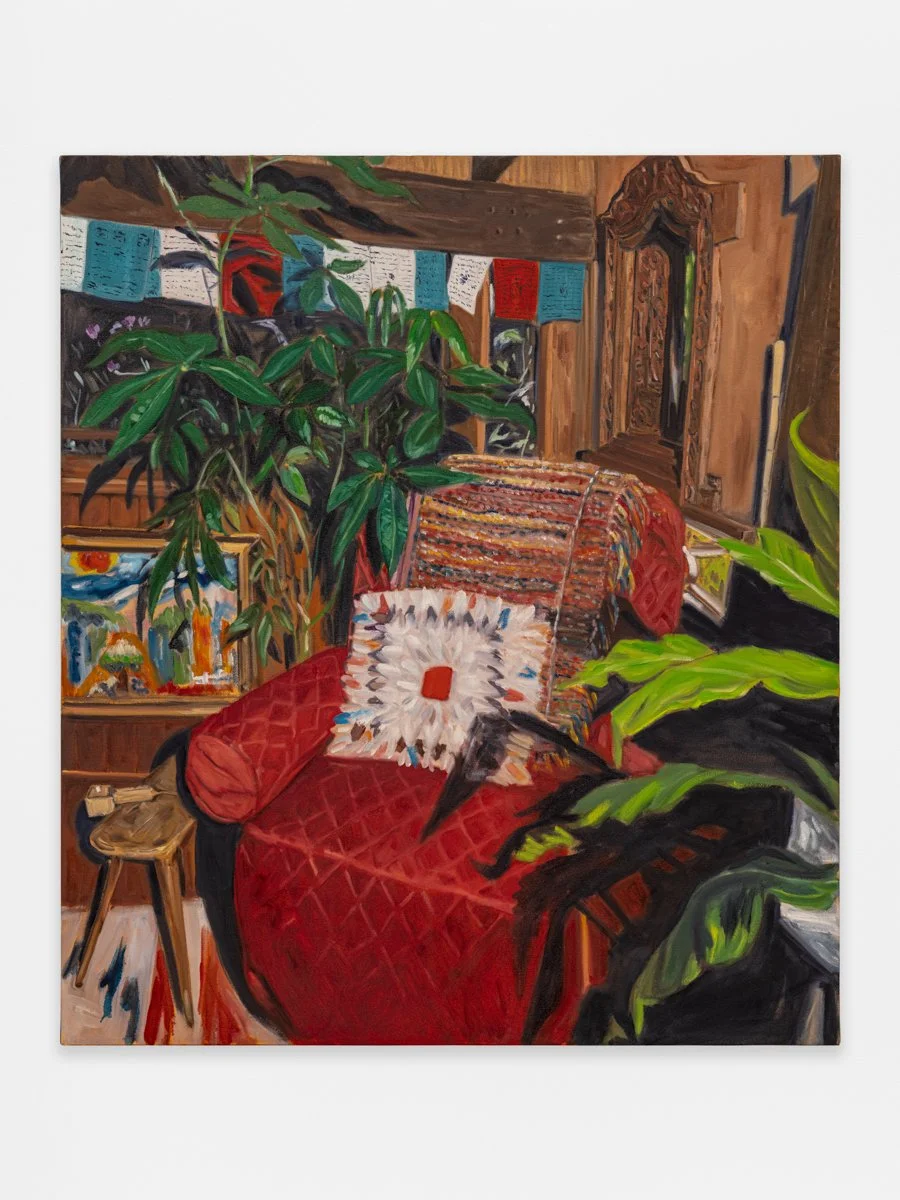
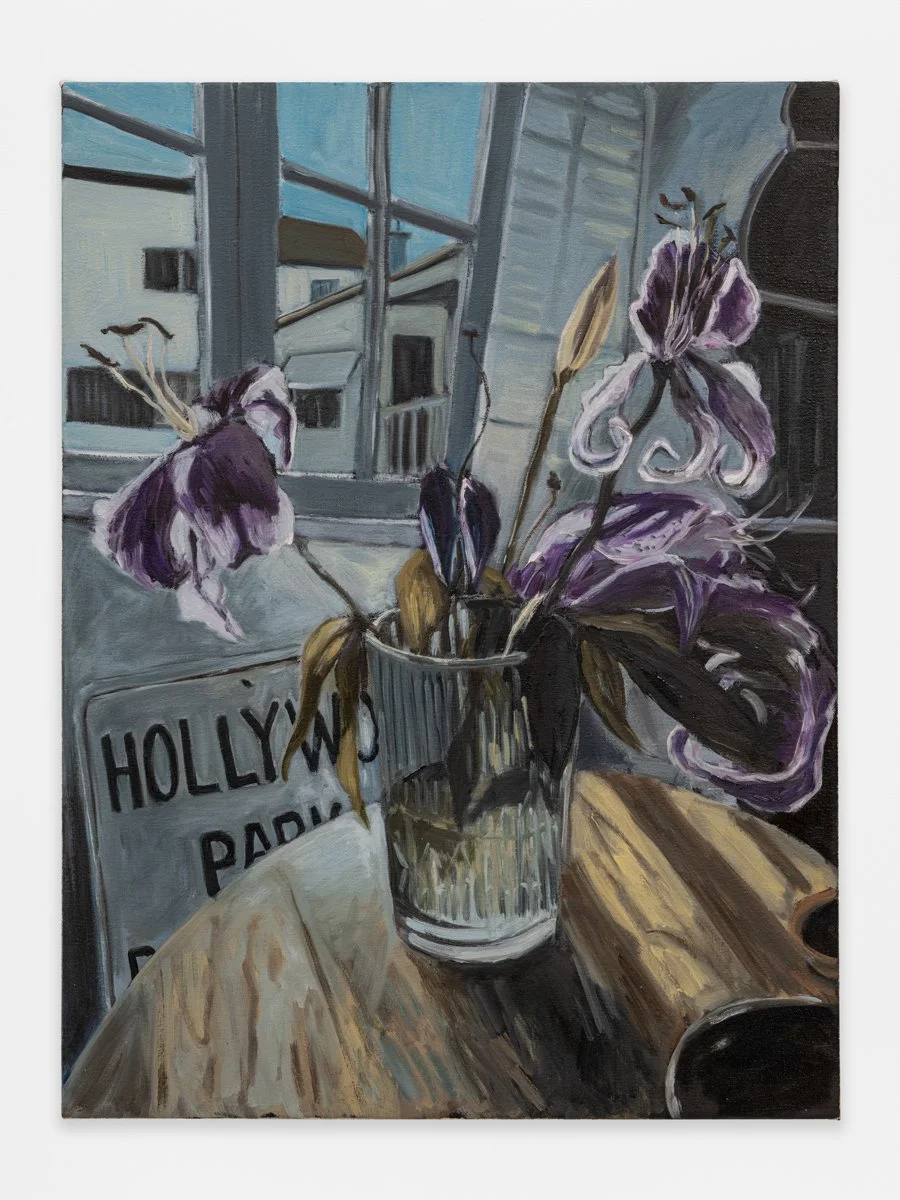
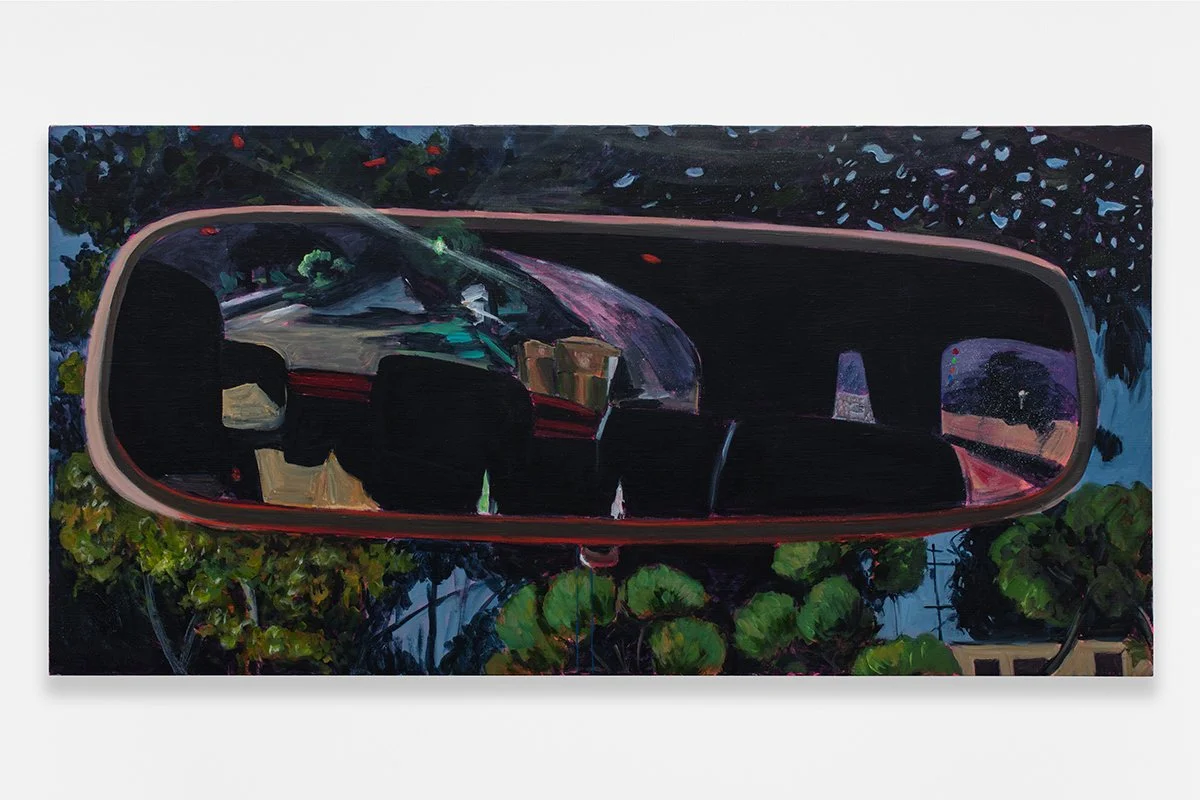
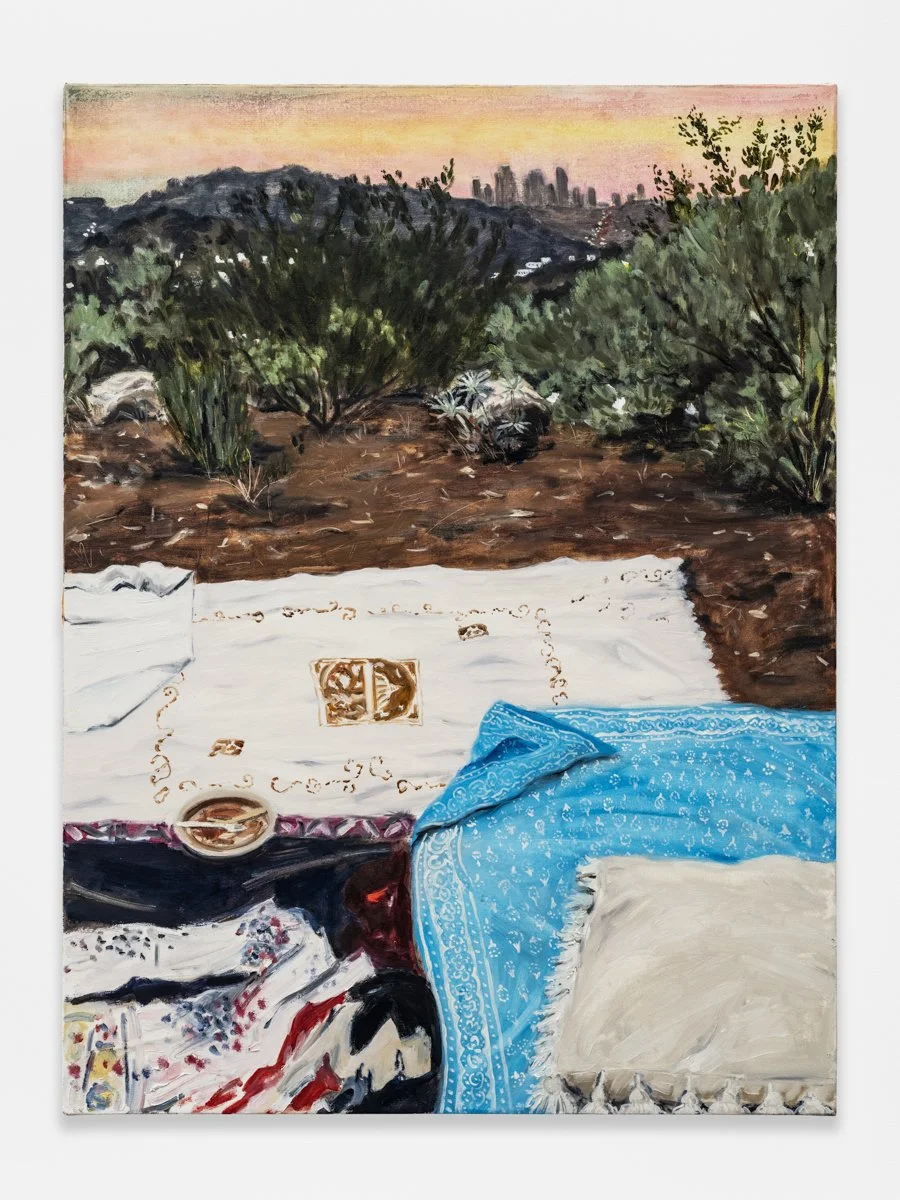
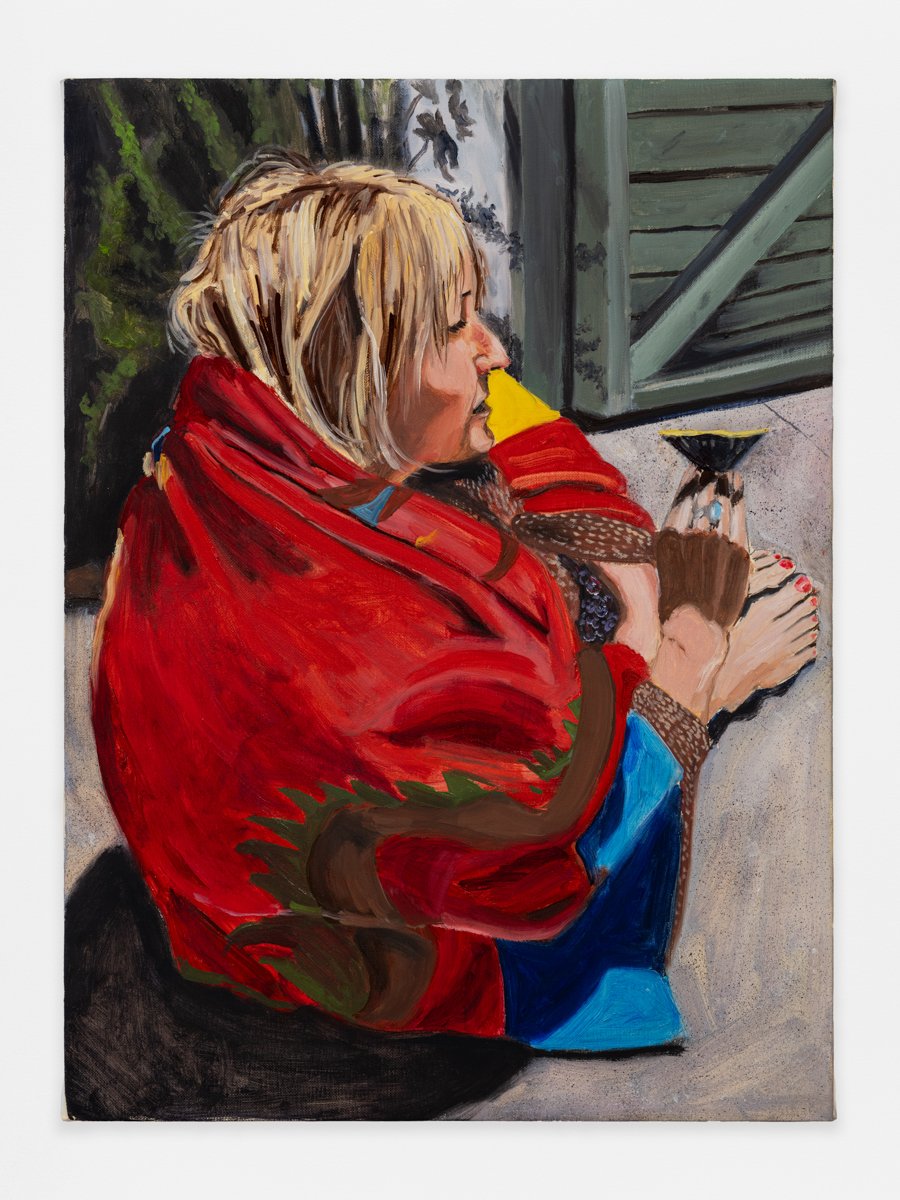
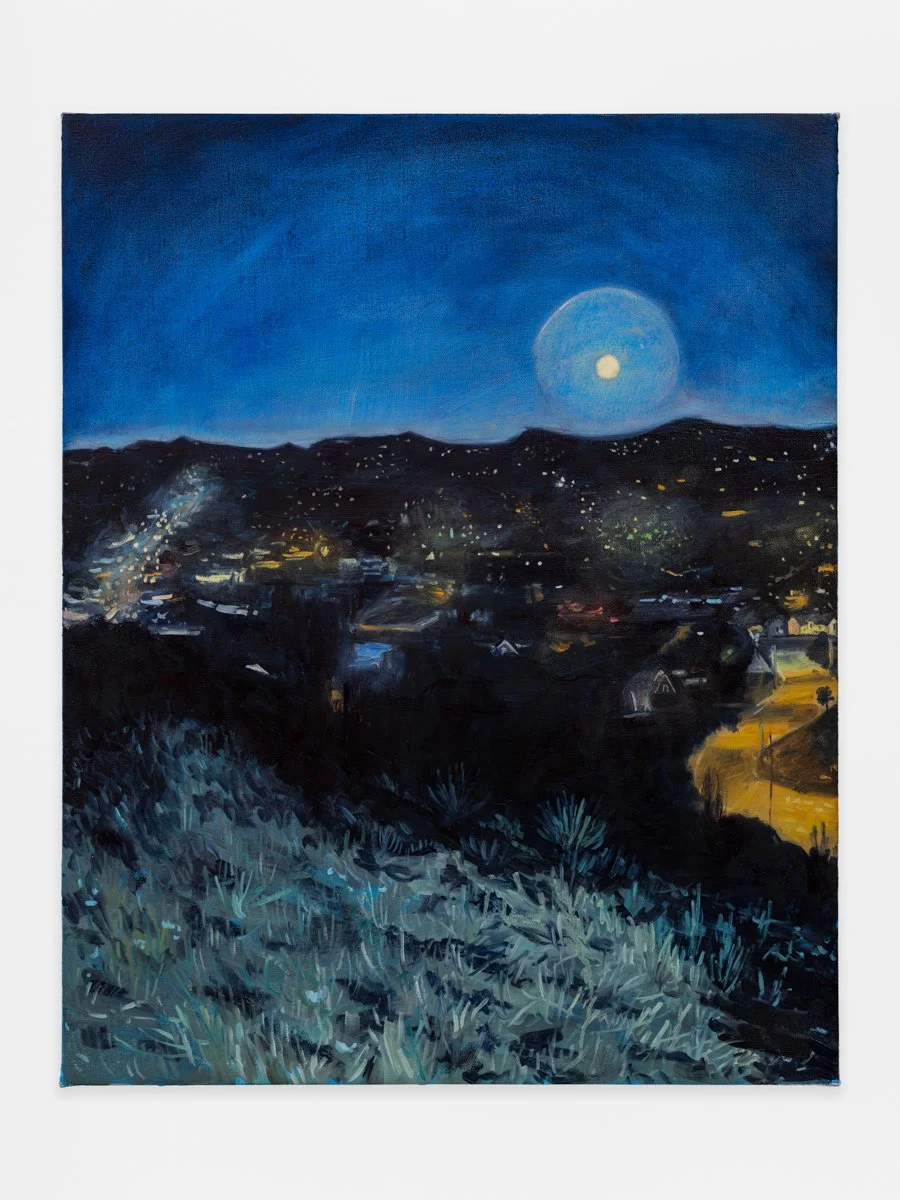
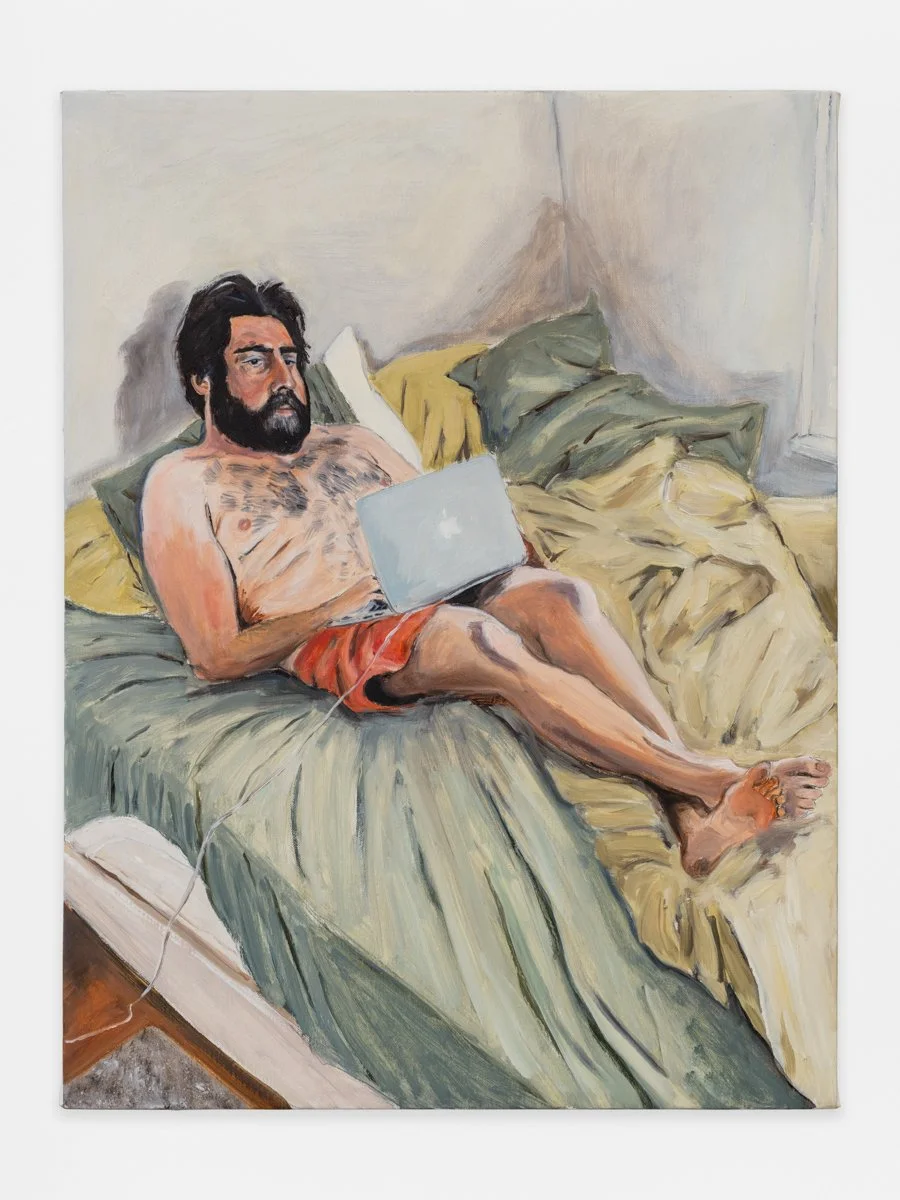
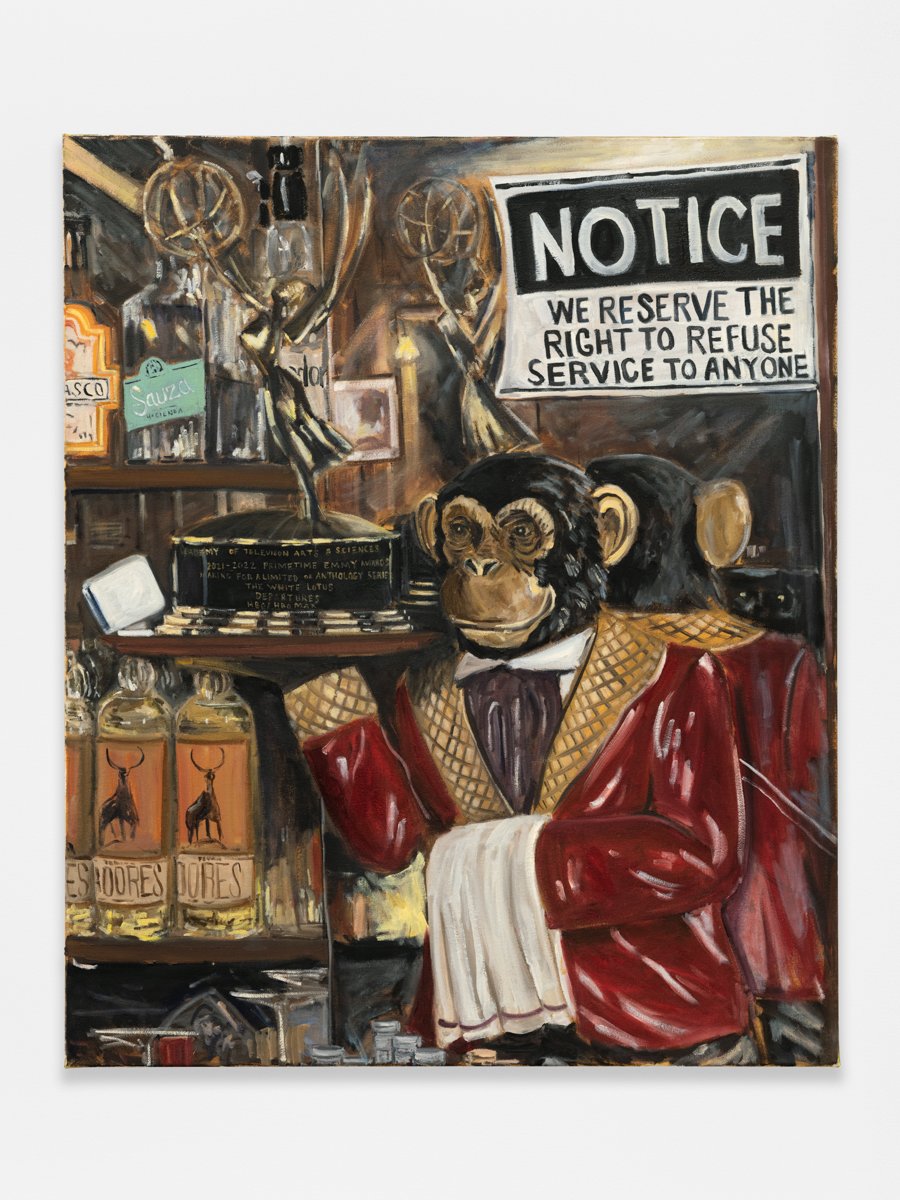
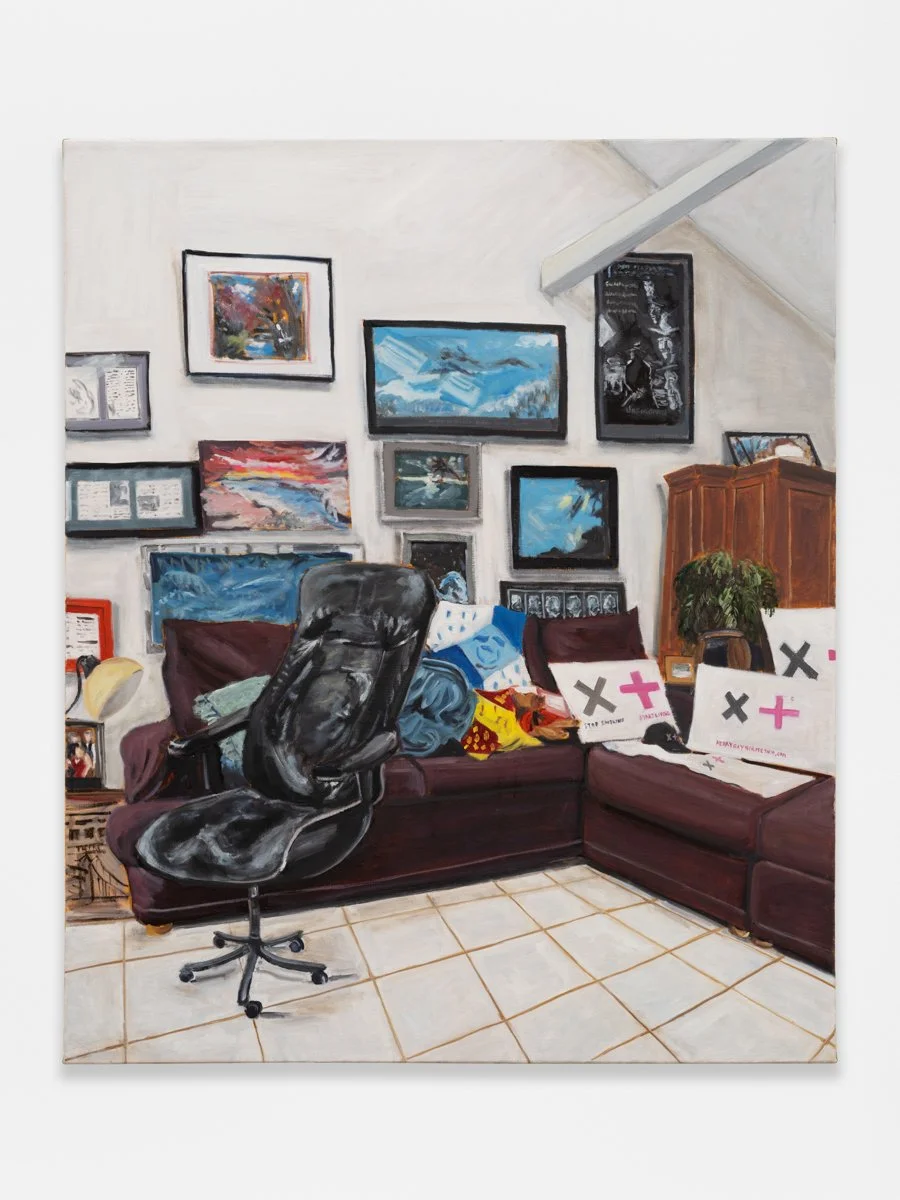
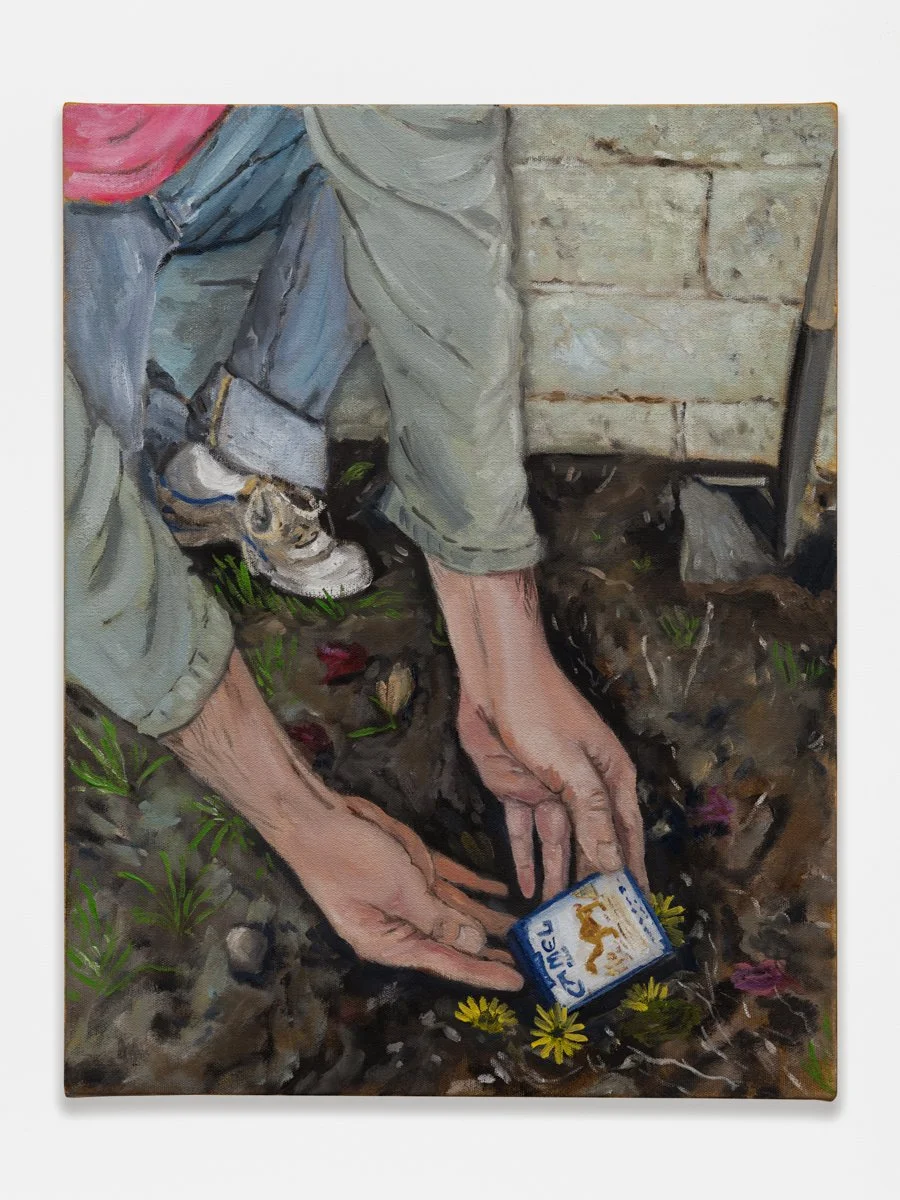
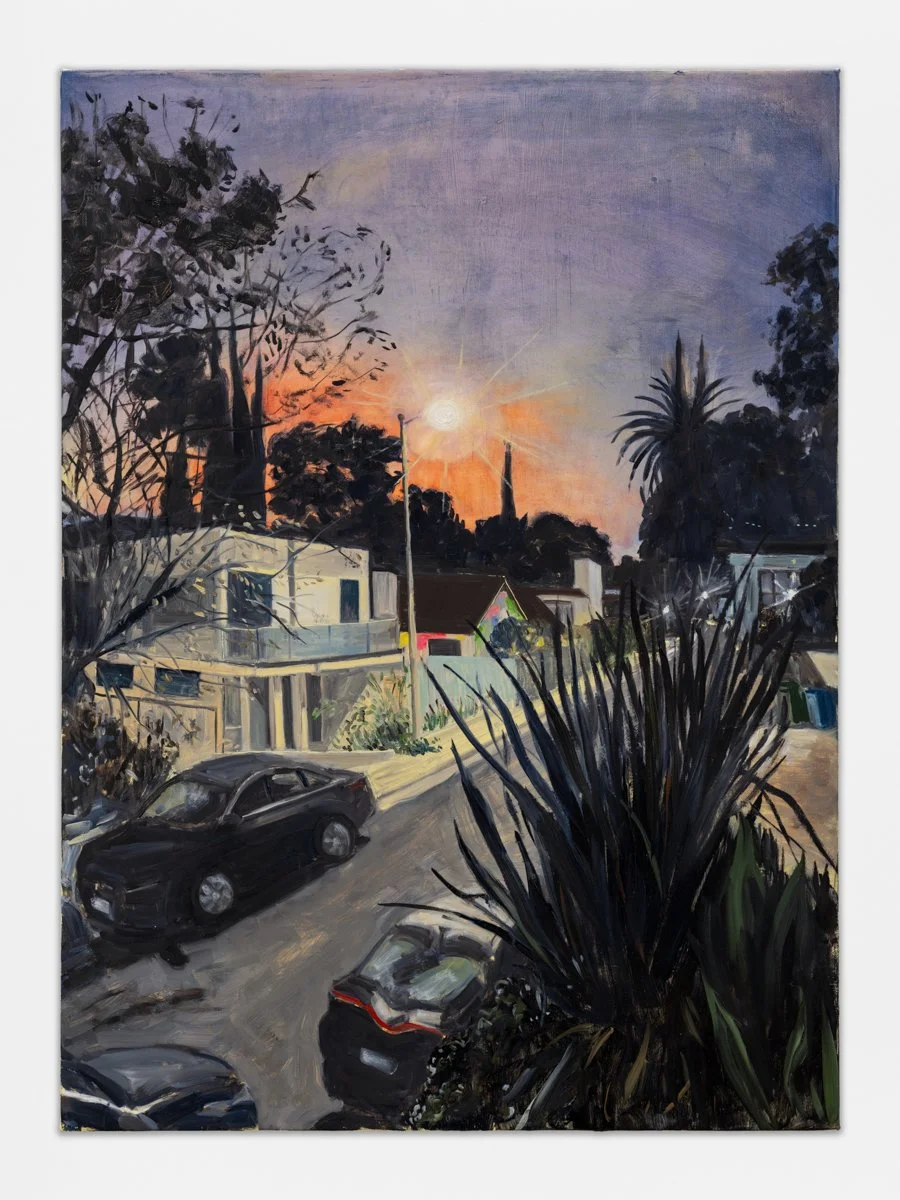
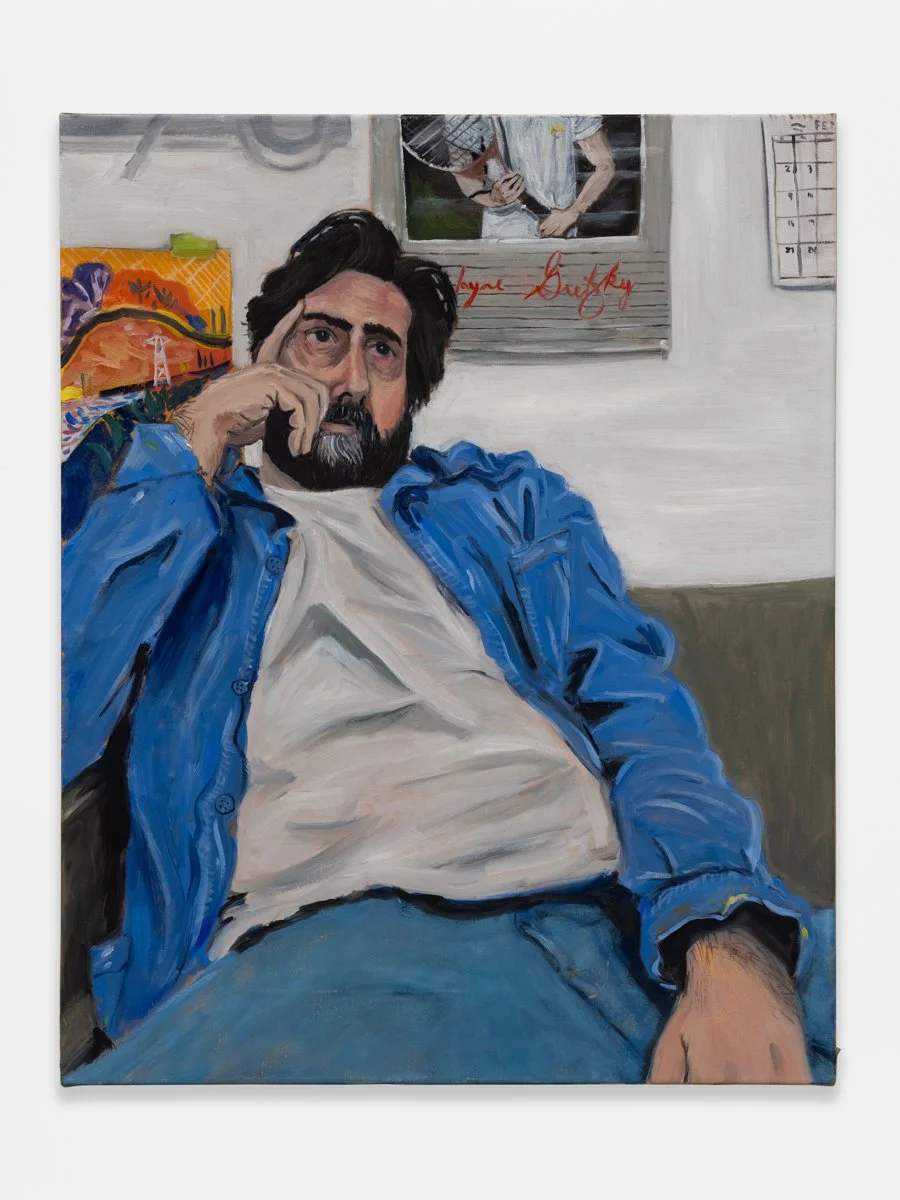
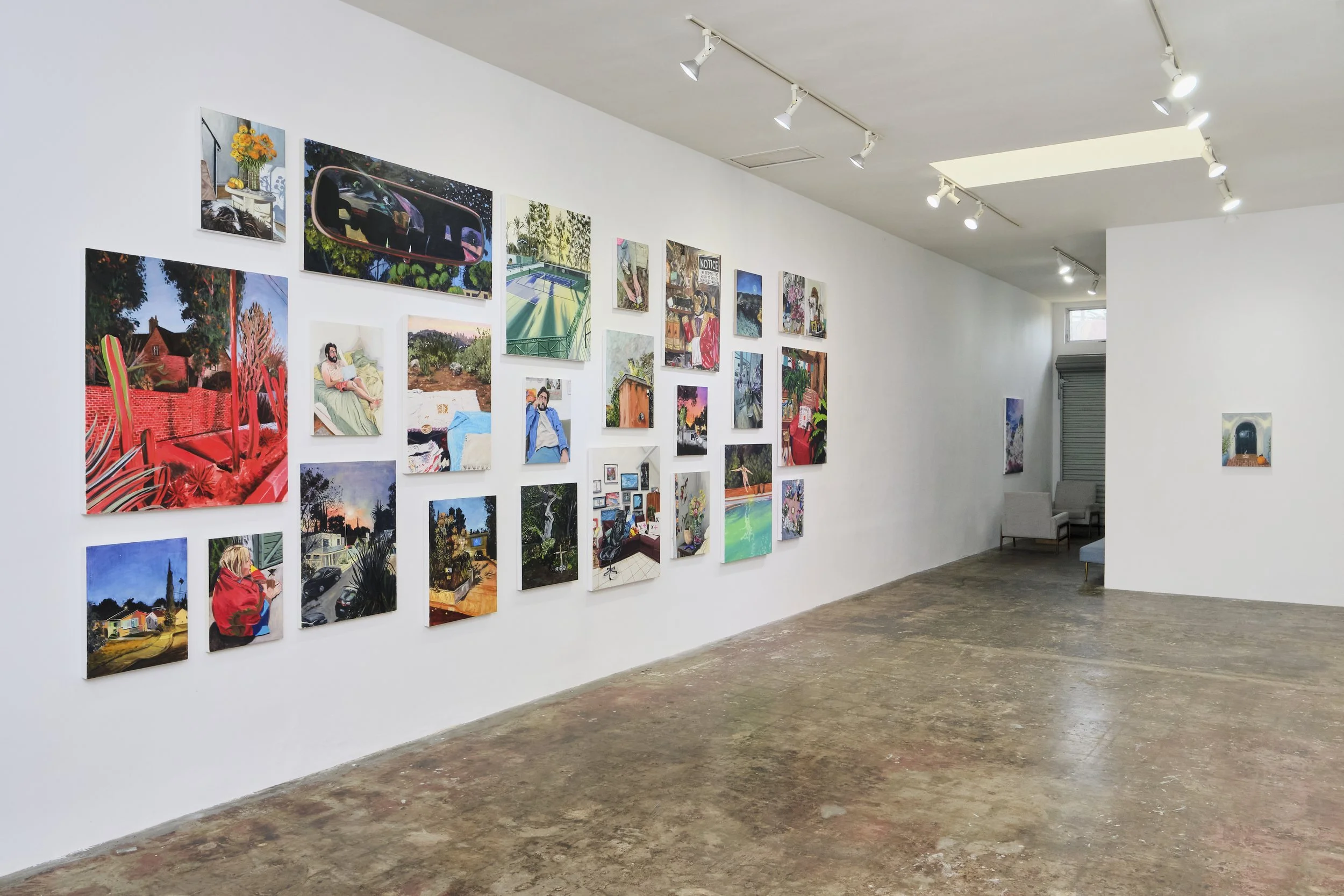
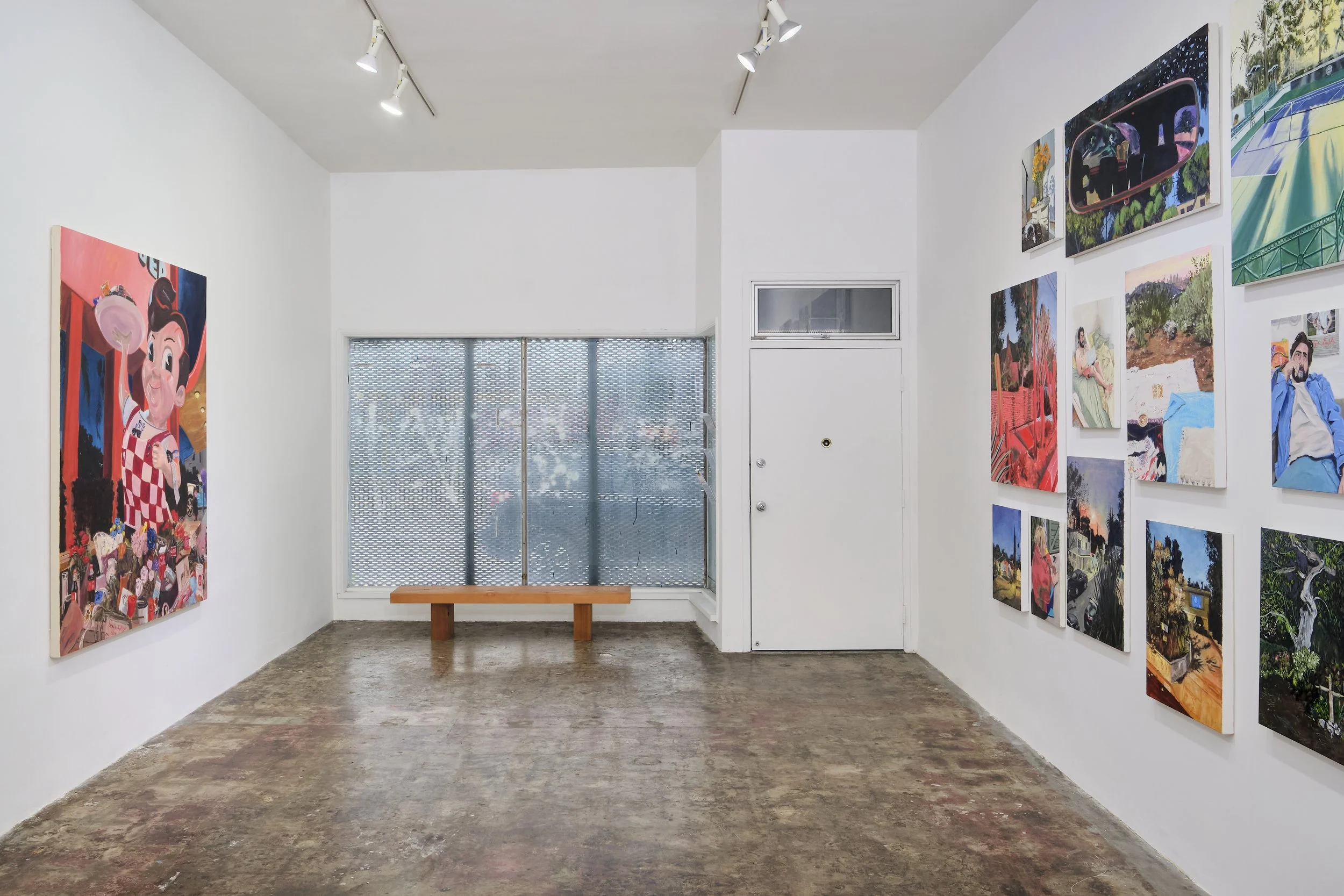
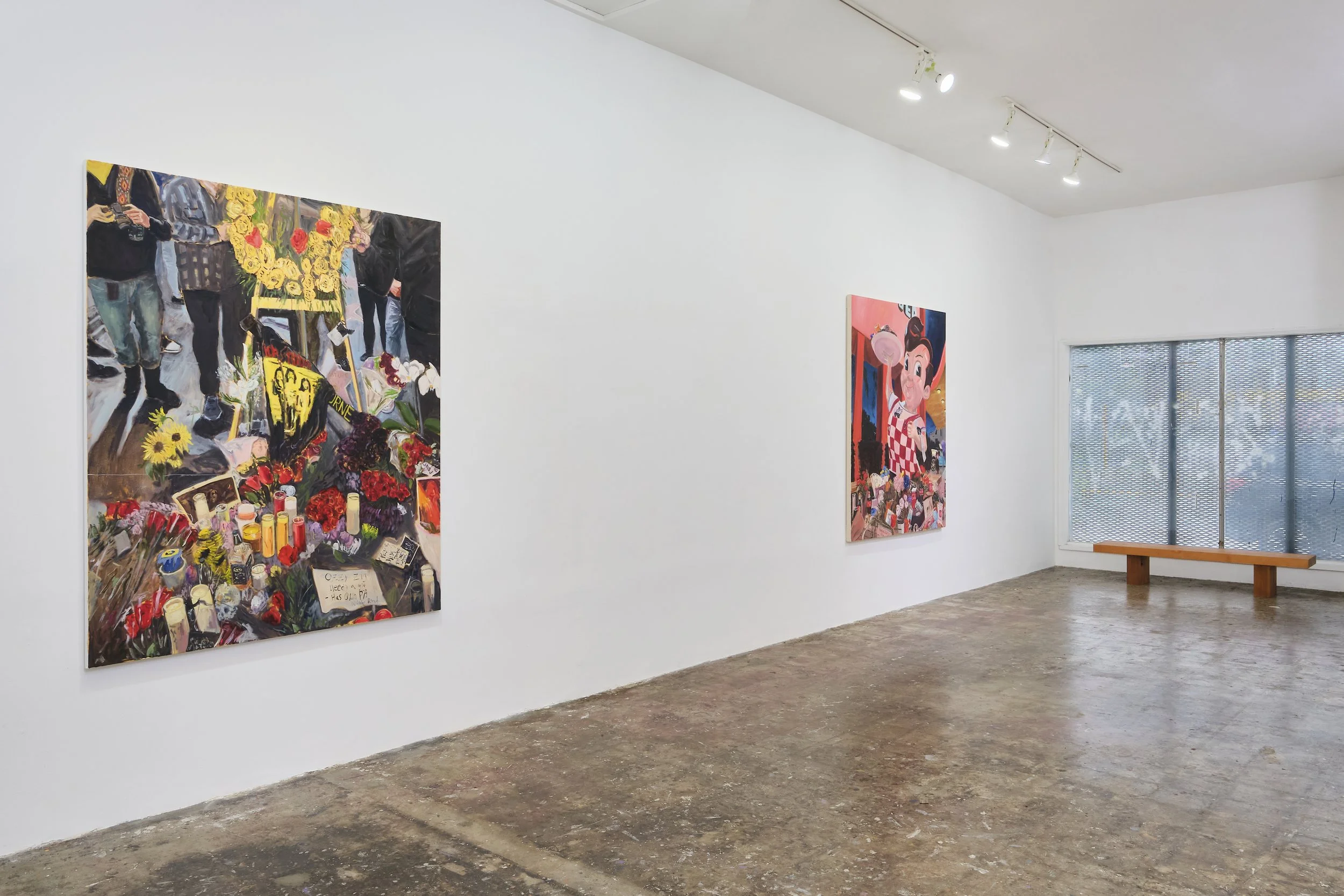
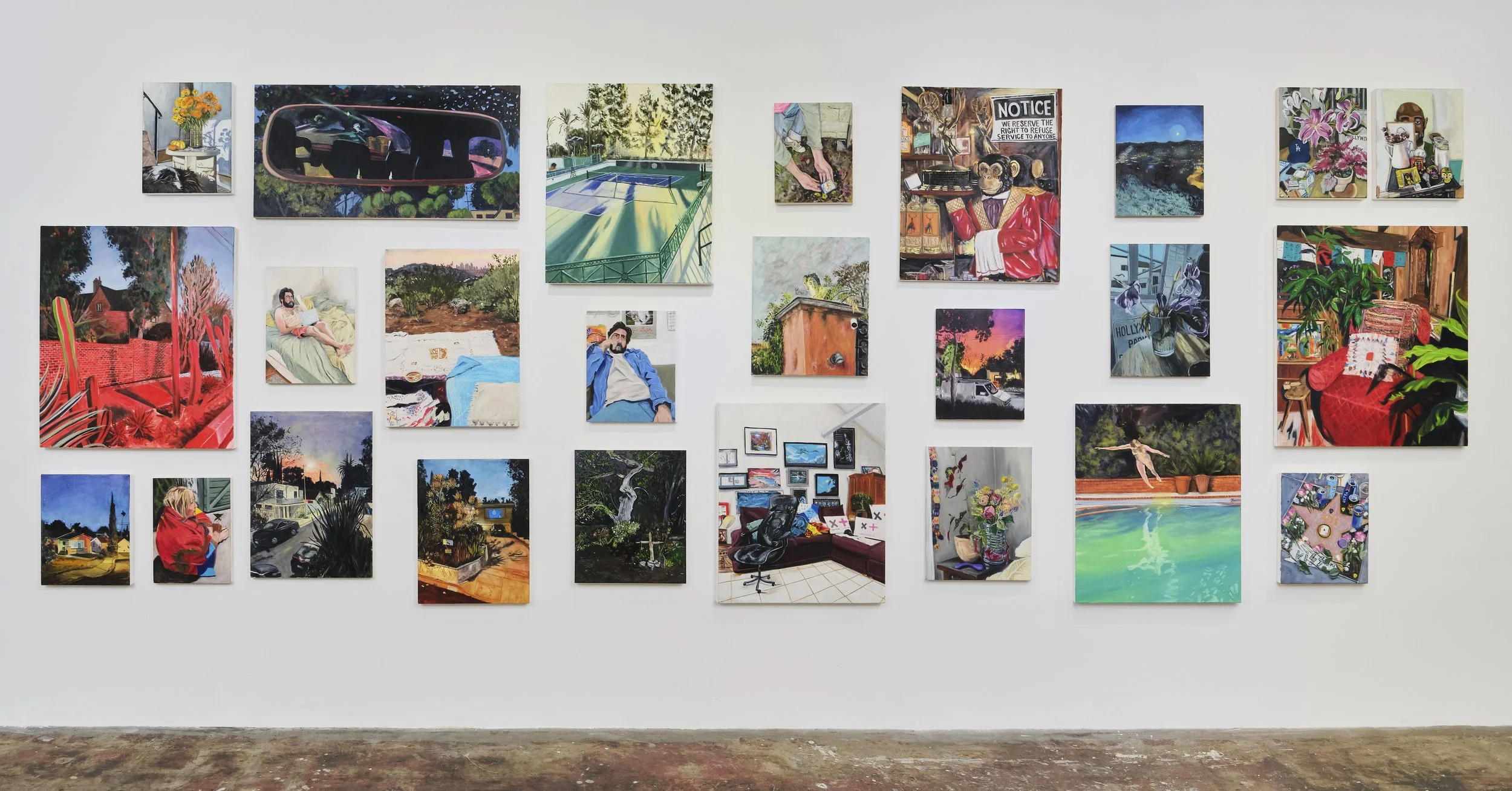
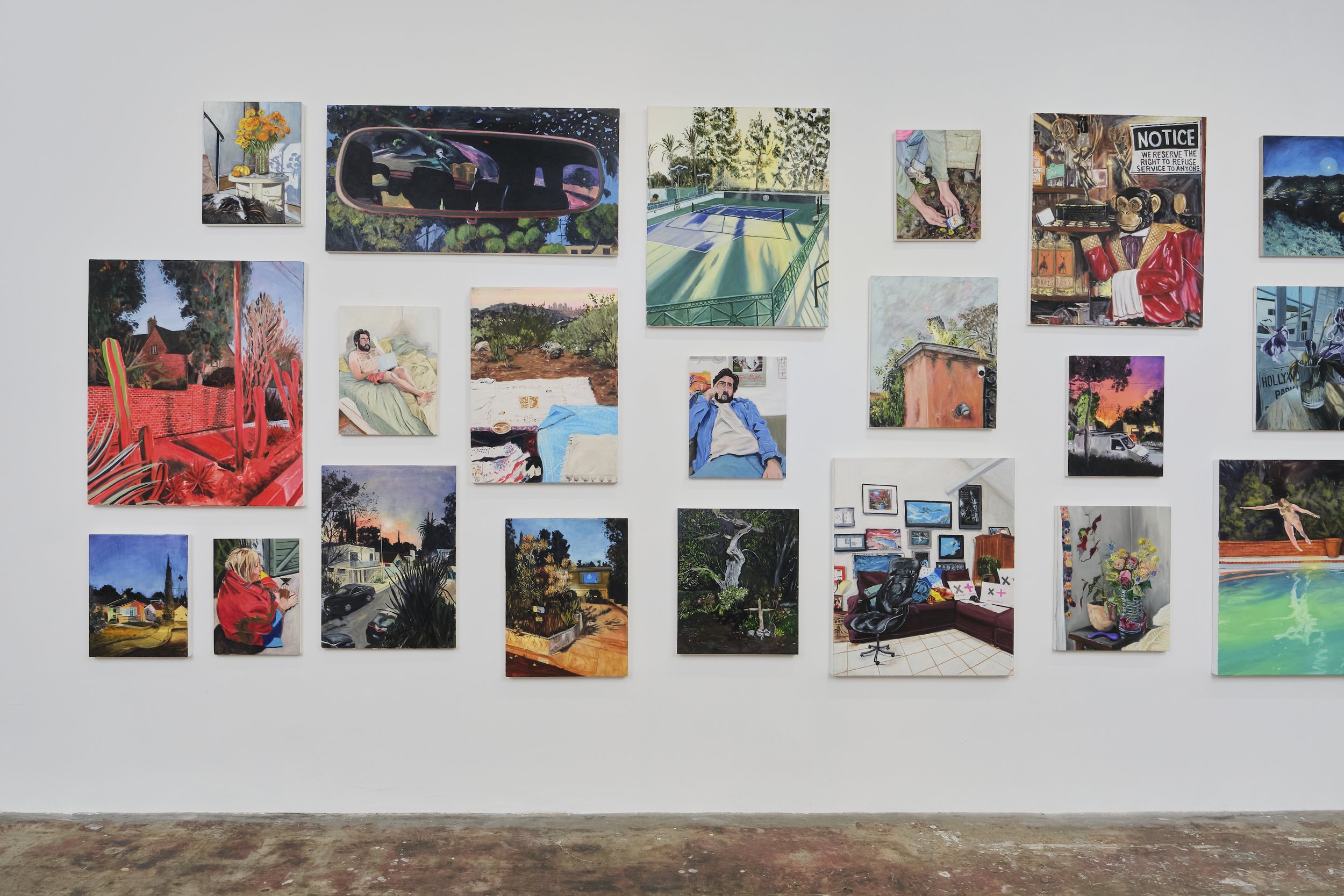
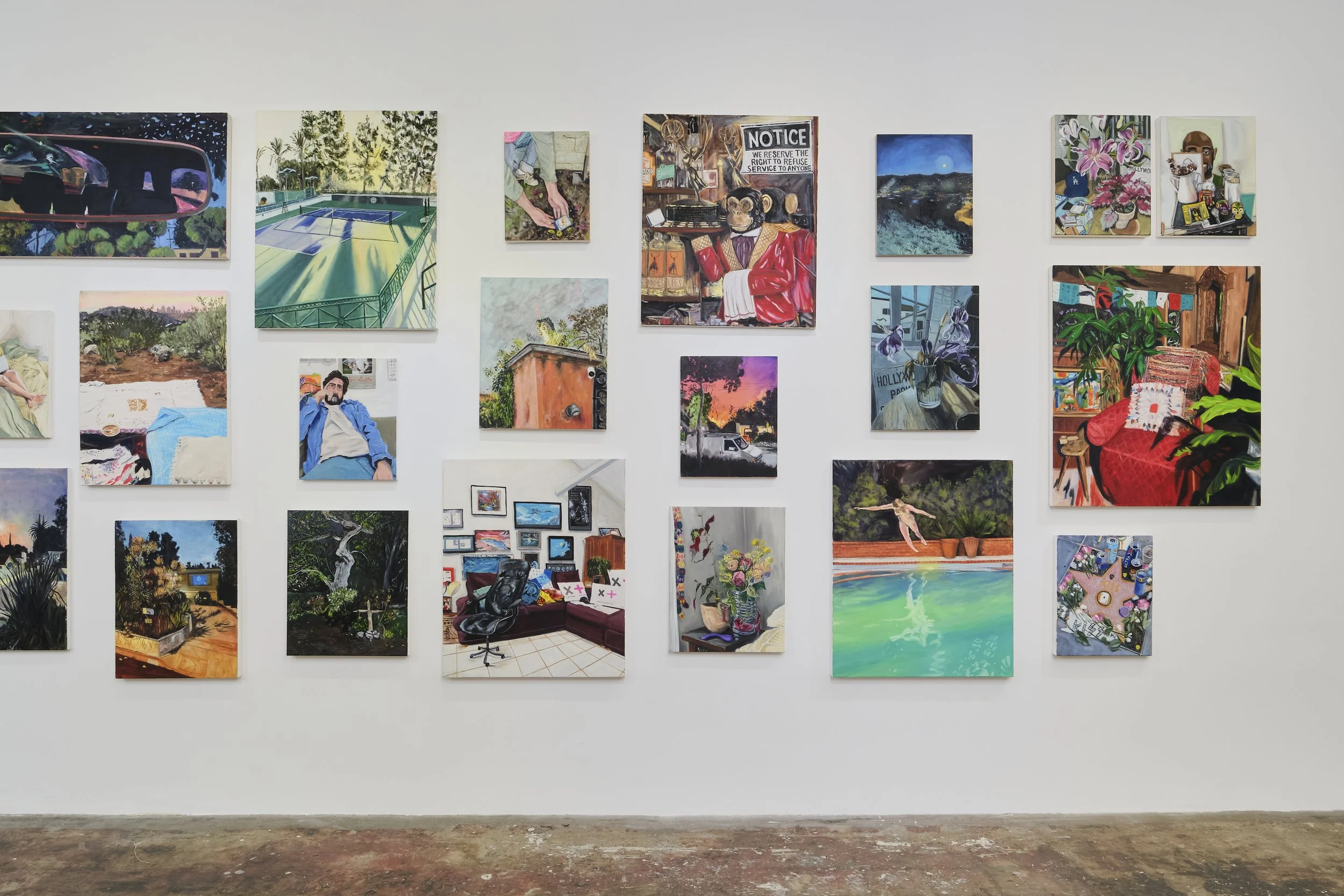
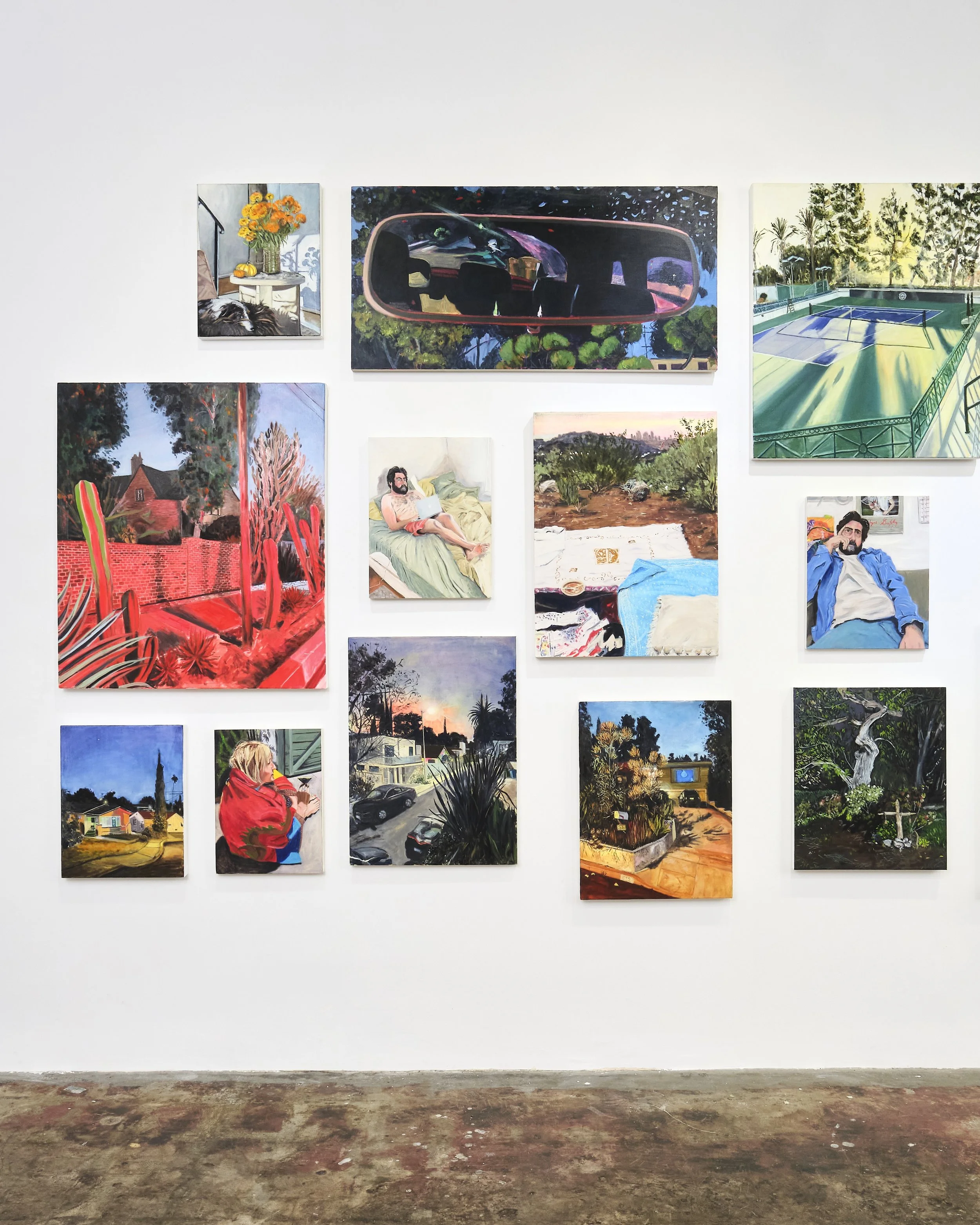
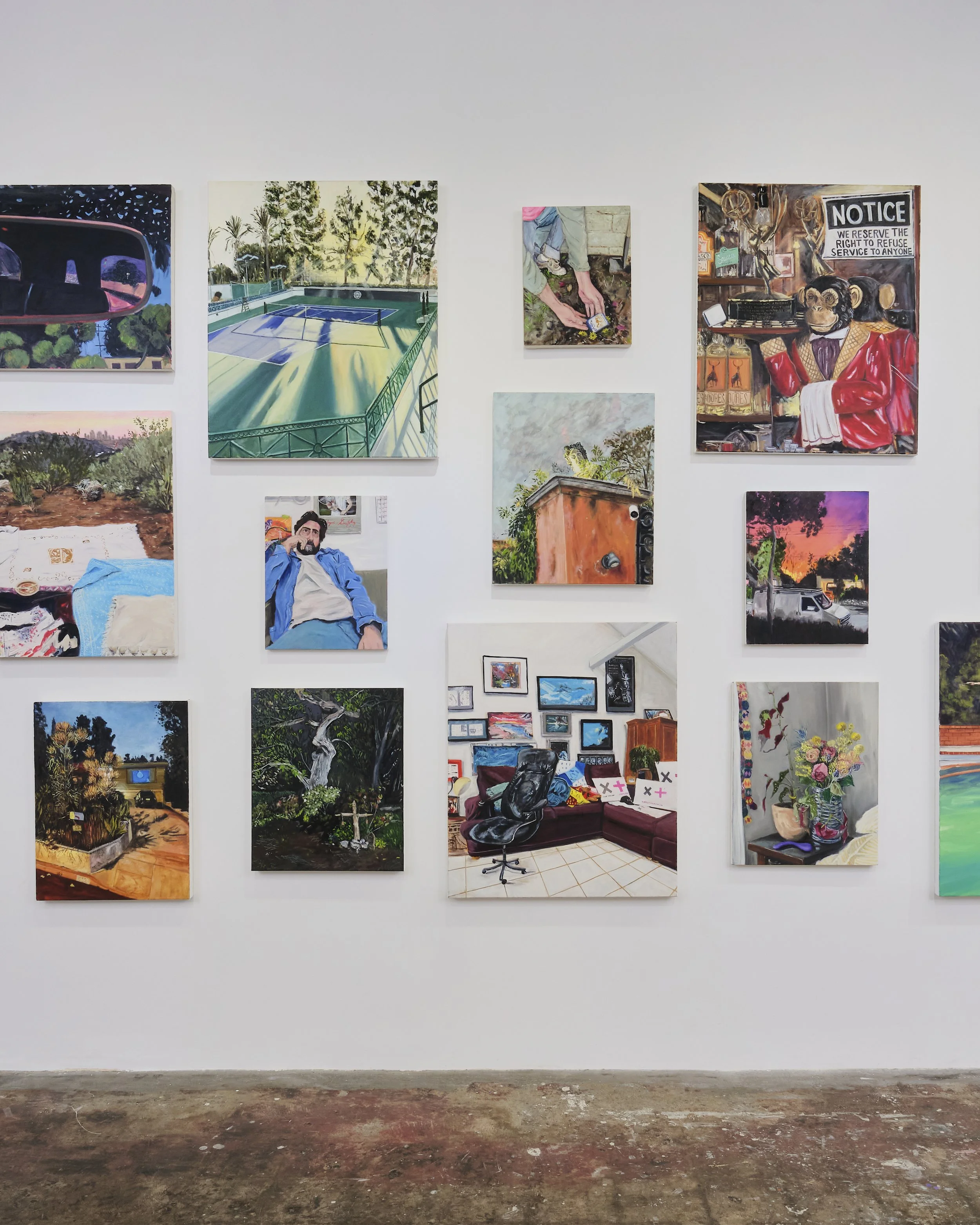
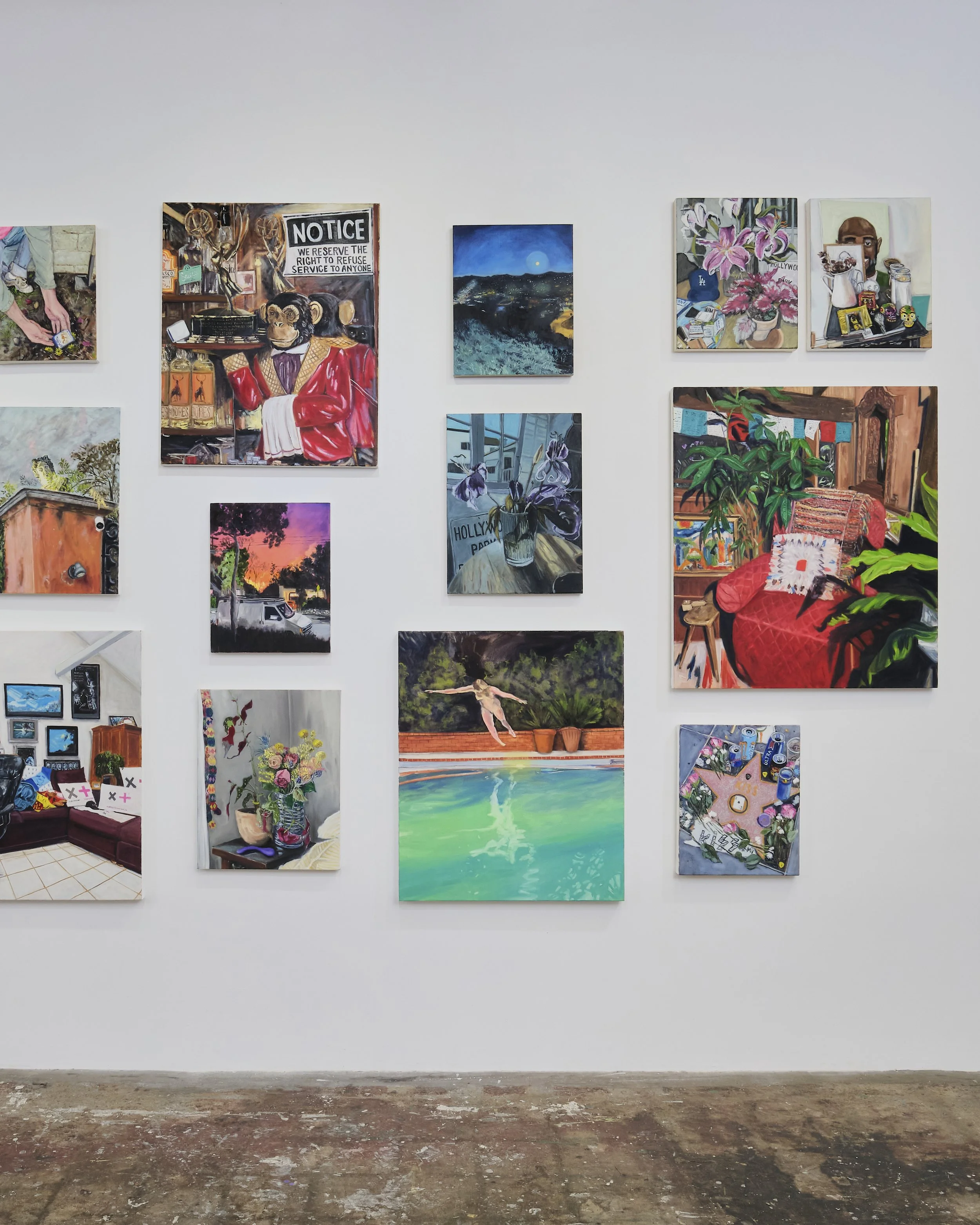
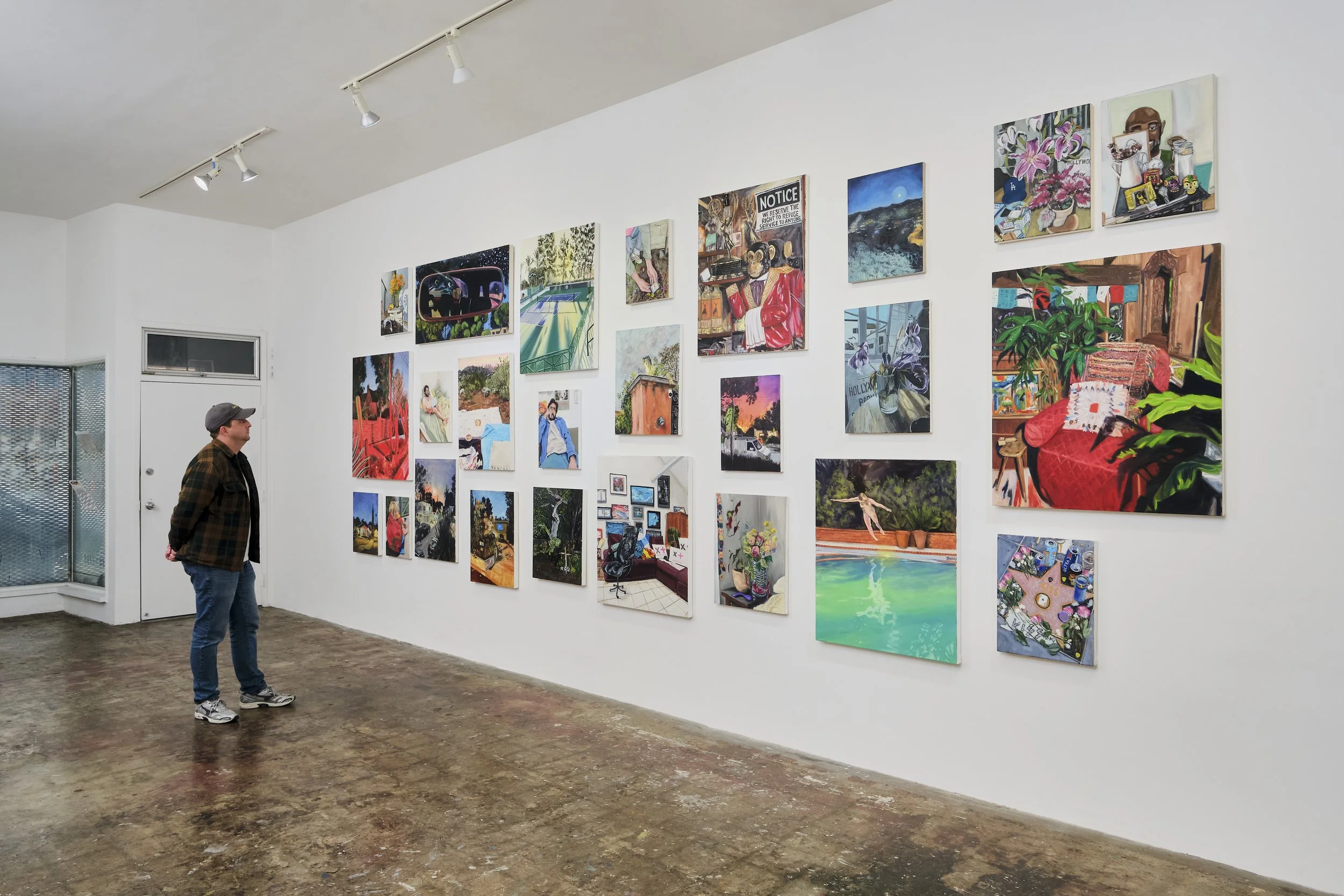
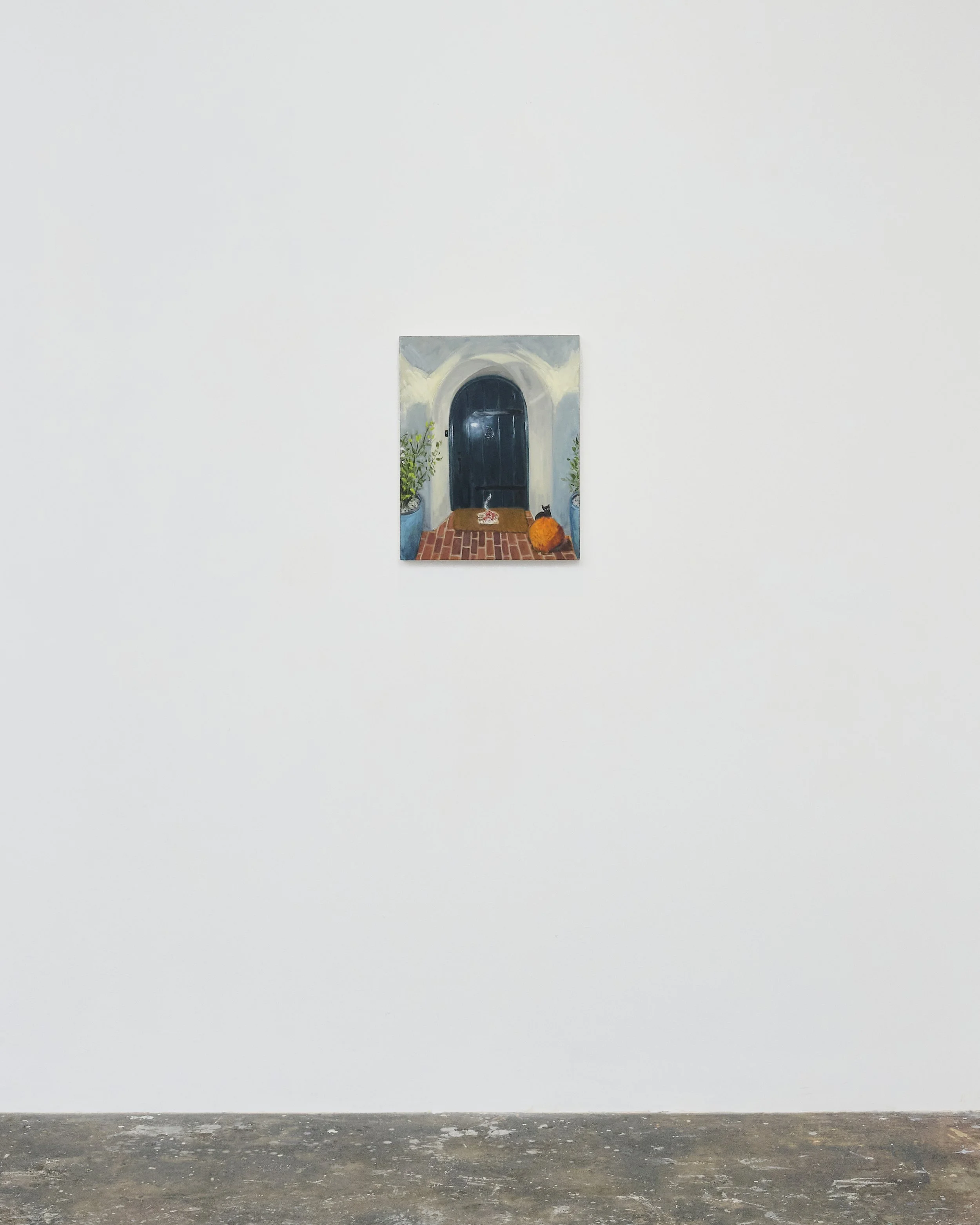
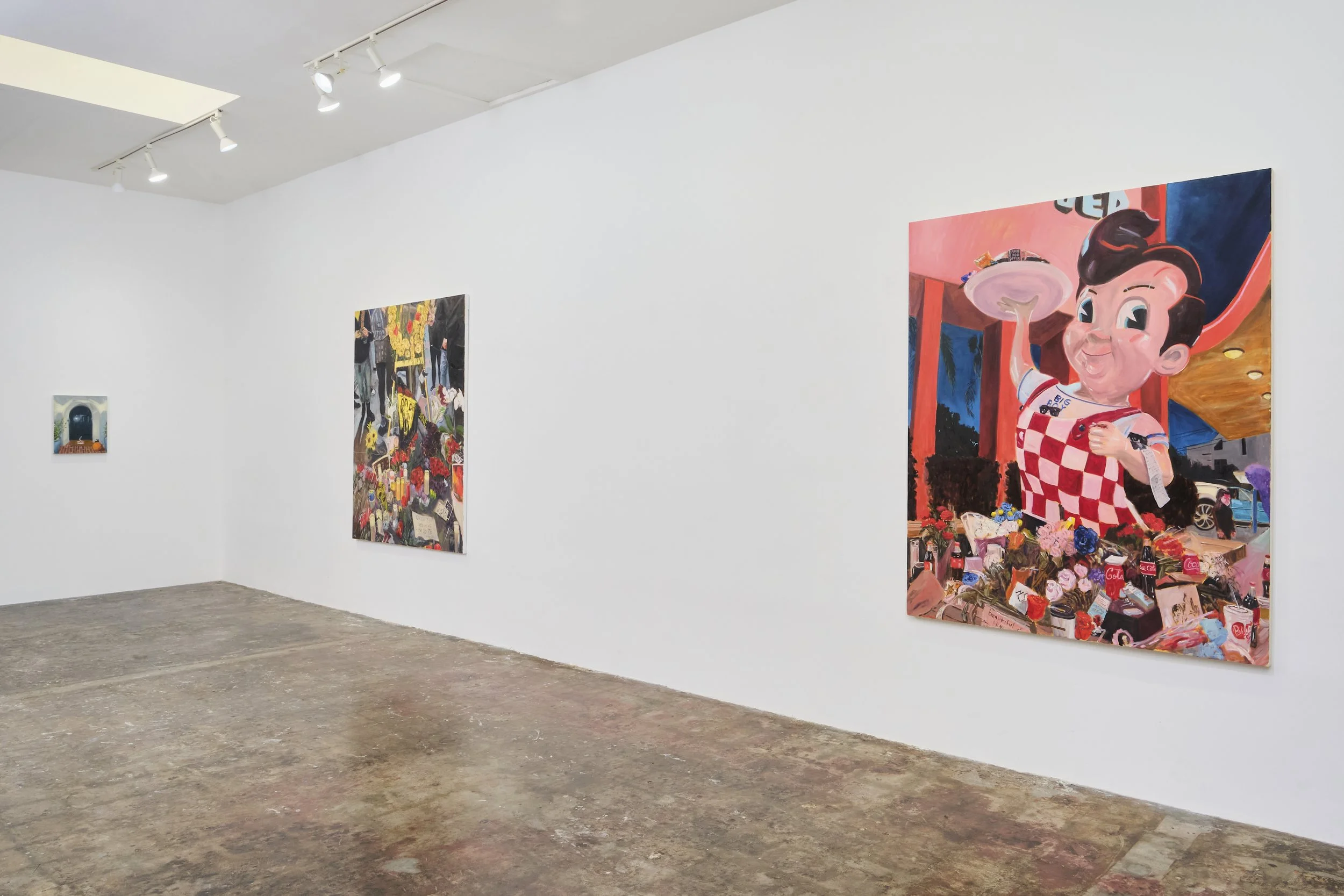
Disappear Here presents a significant group of oil paintings made over the past two years, that are at once autobiographical and a meditation on the city Sheiner grew up in. The exhibition borrows its title from Bret Easton Ellis’s 1985 debut novel Less Than Zero, in which the phrase “Disappear Here” becomes a recurring, ominous motif for the protagonist, Clay, who repeatedly encounters the words emblazoned on a billboard above Sunset Boulevard. In Ellis’s Los Angeles, the phrase reflects the ease with which one can be absorbed, erased, or subsumed by the city’s aspirations and its urban sprawl. Moving through the gallery, the viewer is similarly immersed in Sheiner’s own visual novel of Los Angeles: a city caught between spectacle and entropy, devotion and disposability; yet also familiar, warm, comforting, and deeply uncanny.
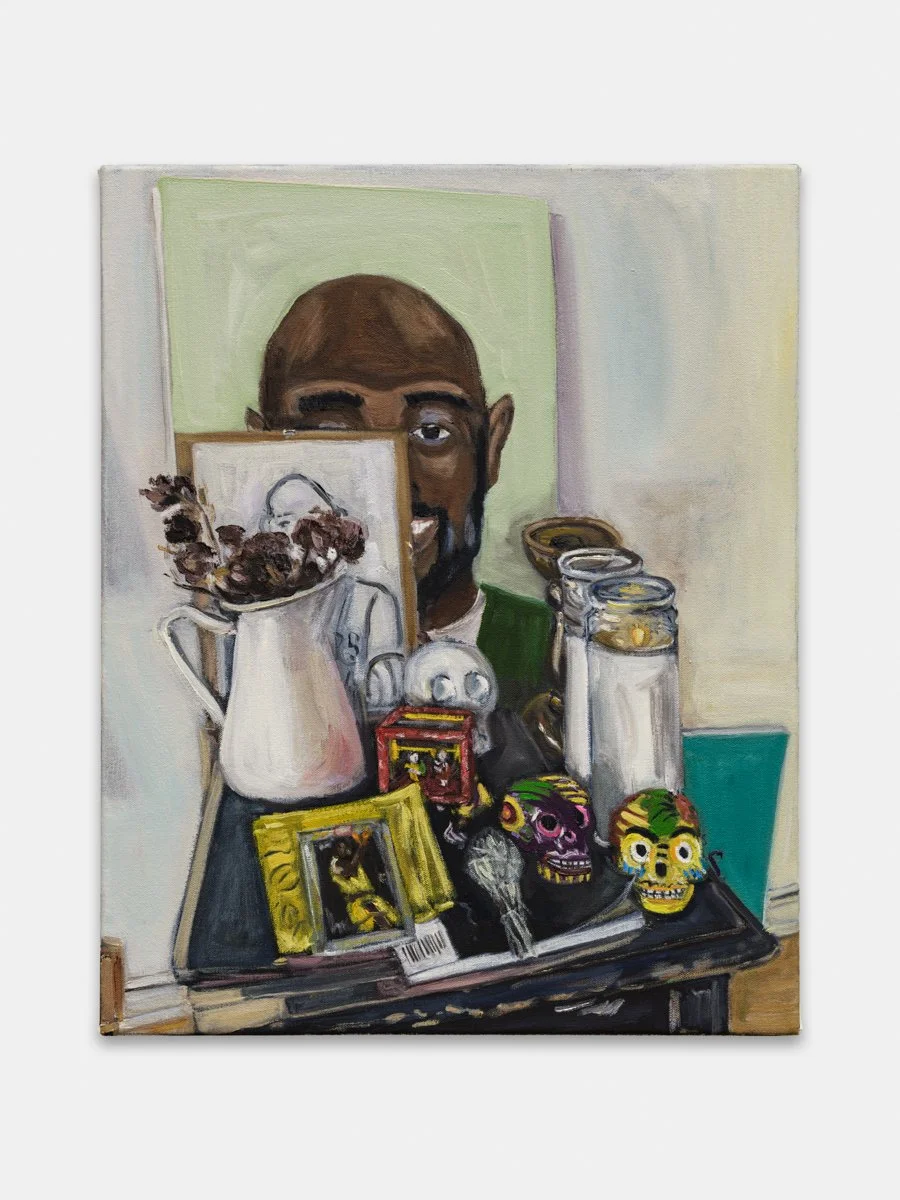
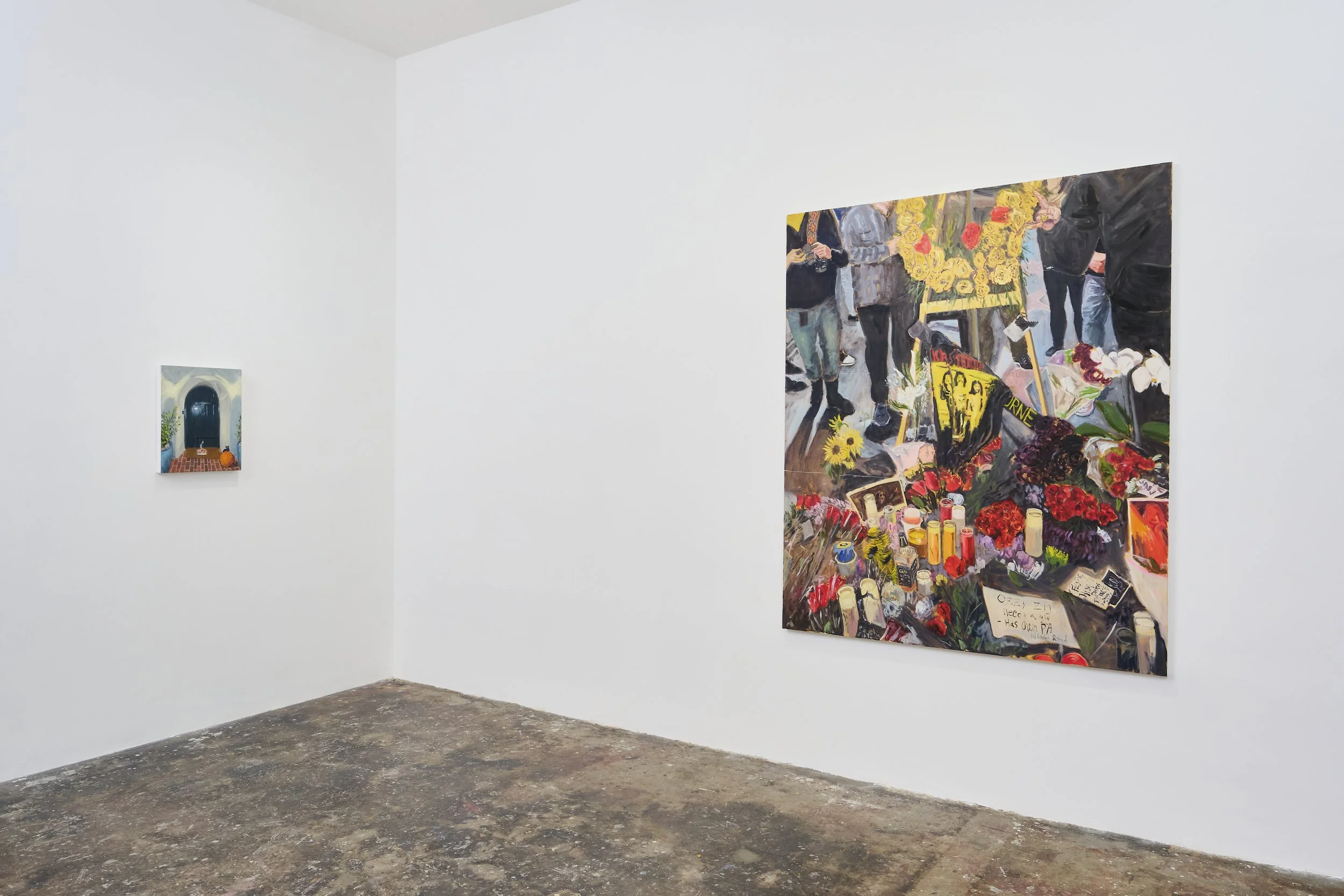
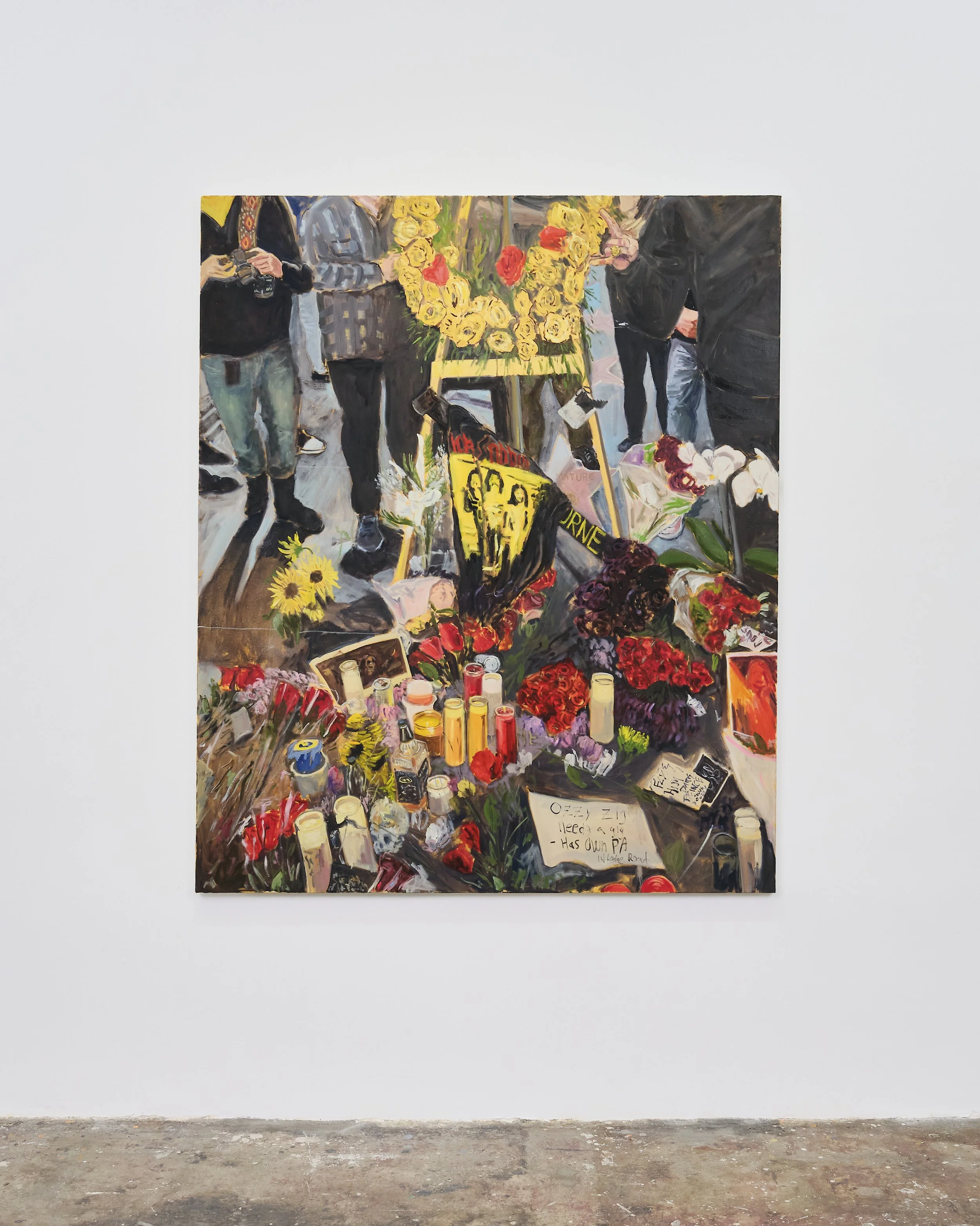
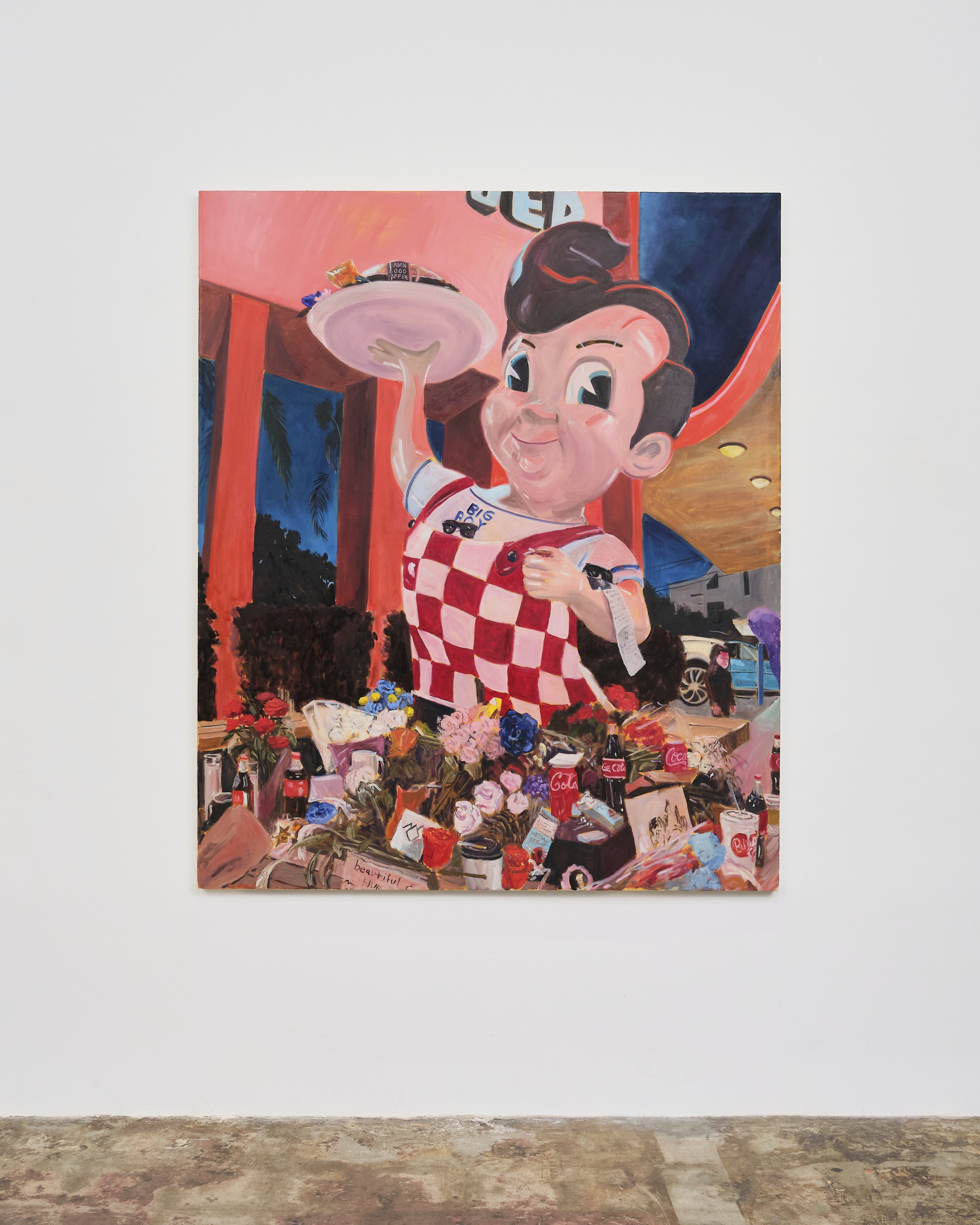
Across these depictions of day-to-day life, Sheiner brings an empathetic gaze and a candid self-reflection, uncovering the mysticism embedded in the city’s surfaces while reworking his own memory, masculinity, joy, and grief. Threaded throughout the exhibition are several memorial paintings the artist refers to as After Lifes. These works document improvised celebrity altars; images built from the leftover symbols a culture uses to grieve in public. Hovering in the uneasy space between sincerity and irony, they reveal how devotion can resemble merchandising, and how mourning often shares a language with fandom. Yet these paintings are not cynical. Sheiner does not mock these gestures of remembrance, even as he makes visible their entanglement with spectacle. Instead, the After Lifes register a collective grief for dying cultural touchstones; icons whose singularity feels increasingly unlikely to reappear within an ever more homogenized society.
Sheiner’s Los Angeles is neither the dreamy, idealized haze of David Hockney nor the cool, noirish detachment of Ed Ruscha. It is less mythic than Hockney, less removed than Ruscha. The work carries a tone, a light, that echoes in the mind like David Lynch’s weather reports: “beautiful blue skies and golden sunshine.” This is an LA of people who drive aimlessly at night, wander into strip malls, wake early to play tennis on municipal courts, order Postmates because they are too tired to cook, build small shrines on sidewalks, and live among the ruins of other people’s aspirations. It is an everyday Los Angeles rendered with immense affection; shot through with humor, tenderness, and unease.